


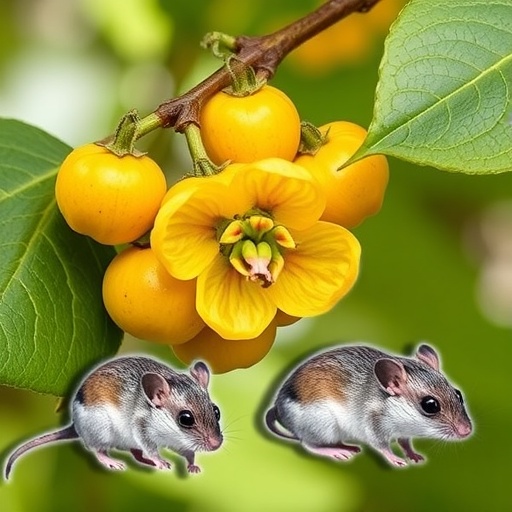
In a finding that could reshape how scientists think about everyday plant-based foods and brain health, researchers in South Korea have reported that an ethanol extract of Kochia scoparia fruit—a plant long used in Korean cuisine and traditional herbal medicine—reversed measurable memory deficits in mice and protected hippocampal nerve cells from chemical injury in the laboratory. The study, published in Food Science and Biotechnology, offers some of the clearest evidence to date that this humble summer herb, known in Korean traditional medicine as a source of the medicinal material Kochiae Fructus, may carry genuine cognitive-enhancing and neuroprotective properties.
The research team, led by You-Chang Oh of the Korea Institute of Oriental Medicine in Daegu, set out to test whether Kochia scoparia fruit ethanol extract, which they abbreviated KFE, could counter two well-established laboratory models of neuronal damage. The first was scopolamine-induced cognitive dysfunction in mice. Scopolamine is a muscarinic acetylcholine receptor antagonist that blocks cholinergic signaling, a neurotransmitter system critical for attention, learning, and memory. Because cholinergic loss is a hallmark of Alzheimer’s disease, scopolamine-treated mice are one of the most widely used animal models for screening potential anti-dementia compounds, and the model has decades of validated use in pharmacological research.
In behavioral testing, the results were striking. Mice that received scopolamine showed the expected deterioration in spatial memory and learning ability, but those treated with KFE performed substantially better in the tasks designed to measure these functions. Spatial memory depends heavily on the hippocampus, the seahorse-shaped structure deep in the brain that serves as the brain’s internal mapping system, and the improvement in these tasks suggests that KFE was acting, at least in part, by preserving or restoring hippocampal function. Working memory, by contrast, showed only a modest improvement—a nuance the authors note honestly, indicating that the extract’s benefits are not uniform across every cognitive domain but appear strongest in the domains most closely tied to hippocampal integrity.
To understand what was happening at the cellular level, the researchers examined brain tissue from the treated animals under a microscope. In the hippocampus and cortex—the two regions most vulnerable in neurodegenerative disease—scopolamine alone caused a visible loss of normal, healthy neurons. KFE treatment suppressed this neuronal loss. The team then turned to molecular analysis to determine the mechanism behind this protection, focusing on a signaling cascade that has become one of the most intensively studied pathways in memory research: the ERK/CREB/Akt axis and its downstream target, brain-derived neurotrophic factor, or BDNF.
The biochemistry here is worth unpacking. ERK, or extracellular signal-regulated kinase, is an enzyme that becomes activated through phosphorylation when neurons receive signals promoting growth and survival. Once activated, ERK can phosphorylate CREB, or cAMP response element-binding protein, a transcription factor that switches on genes needed for long-term memory consolidation. Akt, or protein kinase B, works through a parallel survival pathway, promoting cell survival and metabolism. BDNF, the protein produced when CREB is active, is essentially fertilizer for neurons—it supports dendritic growth, synaptic plasticity, and the formation of new connections that encode memories. When the researchers examined the hippocampal tissue of KFE-treated mice, they found increased activation of ERK, CREB, and Akt alongside elevated BDNF expression. In other words, KFE appeared to be switching on the very molecular machinery that neurons use to learn, remember, and survive.
The second arm of the study moved from the whole animal to the culture dish, using HT22 cells, an immortalized mouse hippocampal neuronal cell line that is a standard tool for studying oxidative stress in neurons. The researchers exposed these cells to glutamate at concentrations that normally trigger a cascade of toxic events. Glutamate is the brain’s principal excitatory neurotransmitter, but at excessive levels it becomes a killer—a phenomenon called excitotoxicity. In HT22 cells, glutamate-induced toxicity proceeds largely through oxidative stress rather than through receptor-mediated calcium influx, depleting the cell’s antioxidant defenses, particularly glutathione, and allowing reactive oxygen species, or ROS, to accumulate to lethal levels.
When KFE was present in the culture medium, the outcome changed dramatically. The extract suppressed glutamate-induced cell death, reduced the release of lactate dehydrogenase—a well-established biochemical marker of membrane damage and cell death—and cut back the production of ROS. These three measurements together form a robust picture of neuroprotection: the cells survived, their membranes stayed intact, and the oxidative burst that normally destroys them was blunted. The findings are consistent with the broader understanding that oxidative damage is a central driver of neuronal loss in conditions ranging from Alzheimer’s disease to Parkinson’s disease and amyotrophic lateral sclerosis, and they align with earlier work showing that natural compounds rich in antioxidants can shield neurons from this kind of injury.
The significance of the work lies partly in what KFE actually is. Kochia scoparia, sometimes called summer cypress or burning bush, is an annual plant whose fruit has been used for centuries in Korean and Chinese traditional medicine, and the plant itself has been consumed as a food ingredient in Korea. Earlier phytochemical studies of the fruit have identified saponins including kochianosides I through IV, as well as triterpenoids like momordin Ic and oleanolic acid and the ecdysteroid 20-hydroxyecdysone, along with flavone glycosides. Many of these compounds have documented anti-inflammatory and antioxidant activities. The new study does not identify which specific molecule within the extract is responsible for the cognitive benefits, and the authors are careful to frame their results as evidence of the extract’s potential rather than as the discovery of a single active drug candidate.
That caveat matters, but it does not diminish the interest of the results. Multi-target approaches to neurodegenerative disease have gained momentum in recent years precisely because single-target drugs have struggled in clinical trials for Alzheimer’s disease. A plant extract that simultaneously modulates neurotrophic signaling, reduces oxidative stress, and preserves neuronal morphology in different experimental systems touches several of the pathological processes implicated in dementia at once. It is a profile that fits the current enthusiasm for natural products and functional foods as sources of complementary strategies for brain health.
There are, of course, substantial distances between a mouse behavior test and a human therapy. The doses used in animal studies do not translate directly to people, the blood-brain barrier poses its own challenges for any orally administered compound, and scopolamine-induced amnesia, while a useful model of cholinergic dysfunction, does not reproduce the full complexity of Alzheimer’s disease, which involves amyloid plaque accumulation, tau pathology, neuroinflammation, and vascular factors in addition to cholinergic loss. Clinical validation would require years of further research, including toxicology, pharmacokinetics, and eventually human trials.
Nevertheless, the study adds Kochia scoparia fruit to a growing list of traditionally used botanical materials that show measurable effects on brain function in rigorous laboratory settings, joining ginseng saponins, green tea catechins, crocin from saffron, and honokiol from magnolia bark, all of which have shown neuroprotective activity in comparable models. For a plant already consumed as food in Korea, the safety profile questions are somewhat less daunting than they would be for a novel synthetic molecule, and previous evaluations of the ethanolic extract of Kochiae Fructus have examined its oral safety and antioxidant properties with encouraging results. The research was funded by the National Research Foundation of Korea and the Korea Institute of Oriental Medicine, and all animal experiments were approved by the institute’s Animal Care and Use Committee. If future studies can pinpoint the active constituents and confirm the effects in higher-order models, the fruit of this ordinary-looking herb may prove to hold something rather extraordinary for the aging brain.
Cite Scienmag News
Cassandra Pierce. (September 4, 2026). Kochia scoparia fruit extract mitigates cognitive impairment and hippocampal neurotoxicity in mice. Scienmag. https://scienmag.com/kochia-scoparia-fruit-extract-mitigates-cognitive-impairment-and-hippocampal-neurotoxicity-in-mice/
Cassandra Pierce. "Kochia scoparia fruit extract mitigates cognitive impairment and hippocampal neurotoxicity in mice." Scienmag, 4 September 2026, https://scienmag.com/kochia-scoparia-fruit-extract-mitigates-cognitive-impairment-and-hippocampal-neurotoxicity-in-mice/. Accessed 4 September 2026.
Cassandra Pierce. "Kochia scoparia fruit extract mitigates cognitive impairment and hippocampal neurotoxicity in mice." Scienmag. September 4, 2026. https://scienmag.com/kochia-scoparia-fruit-extract-mitigates-cognitive-impairment-and-hippocampal-neurotoxicity-in-mice/


