


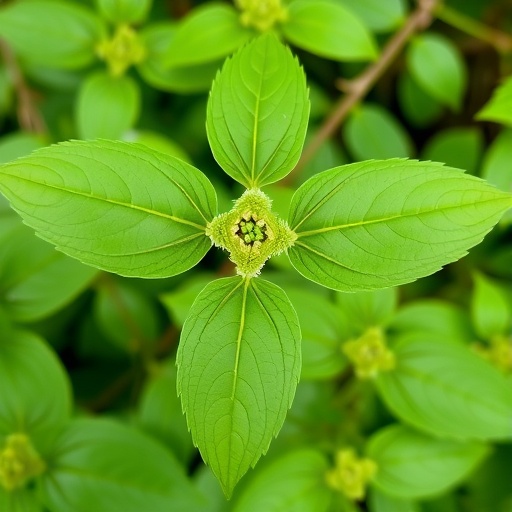
A plant long revered in traditional Ayurvedic medicine has emerged as a surprisingly potent weapon against one of the world’s most dangerous hospital pathogens. In a new study published in 3 Biotech, researchers at the University of Allahabad in India report that leaf extracts of Desmodium gangeticum—a sprawling herb known in Sanskrit as Shaliparni—can kill Staphylococcus aureus bacteria and, more remarkably, tear apart the protective biofilms that make this microbe so stubbornly resistant to antibiotics. Combining laboratory experiments with computational molecular docking, the team identified several plant compounds that bind strongly to key virulence and resistance proteins of the bacterium, offering a molecular rationale for the plant’s traditional use and pointing toward a new generation of anti-biofilm therapeutics derived from nature’s chemistry.
The urgency behind the work is difficult to overstate. Staphylococcus aureus sits at the center of the global antimicrobial resistance crisis, a problem whose scale has been quantified with growing alarm. A 2024 systematic analysis in The Lancet projected that bacterial antimicrobial resistance could be associated with tens of millions of deaths annually by mid-century if current trends continue. Part of what makes S. aureus so difficult to eradicate is its ability to form biofilms—structured communities of cells encased in a self-produced matrix of extracellular polymeric substances. Within these slimy fortresses, bacteria can tolerate antibiotic concentrations hundreds to thousands of times higher than their free-floating planktonic counterparts would survive. Biofilms on catheters, implants, heart valves, and chronic wounds effectively shield the pathogens from both immune attack and conventional drugs, making biofilm disruption a central goal of modern anti-infective research.
Desmodium gangeticum, a member of the legume family Fabaceae, has been used for centuries across the Indian subcontinent and Southeast Asia in formulations for fever, inflammation, wounds, and digestive ailments. Previous pharmacological investigations have attributed anti-inflammatory, antioxidant, antileishmanial, cardioprotective, and even anticancer properties to its roots and aerial parts, and earlier work had hinted at quorum-quenching activity in related contexts. What remained unclear was precisely which chemical constituents drive antibacterial activity against S. aureus, whether extraction solvent influences that activity, and whether the plant’s chemistry can physically disable the machinery the bacterium uses to adhere, colonize, and regulate virulence. The new study set out to answer these questions systematically.
The research team prepared three different leaf extracts using solvents of increasing polarity—acetone, ethyl acetate, and methanol—and subjected each to a battery of phytochemical and biological assays. Solvent choice matters enormously in natural product chemistry because different classes of secondary metabolites dissolve preferentially in different media: polar methanol tends to pull out phenolics and flavonoids, while intermediate-polarity ethyl acetate often extracts terpenoids and sterols. Gas chromatography–mass spectrometry (GC-MS) profiling of the extracts revealed a rich pharmacological repertoire, including the triterpene lupeol, the isoprenoid squalene, Vitamin E (alpha-tocopherol), the phytosterol stigmasterol, palmitic acid, the indole-containing compound 1-(6-fluoro-1H-indol-3-yl)propan-2-amine, and alpha-tocospiro B. Several of these molecules already carry documented antimicrobial or anti-inflammatory credentials, giving the extracts a plausible mechanistic foundation.
On the antioxidant front, the methanolic extract proved the clear champion. In the DPPH (2,2-diphenyl-1-picrylhydrazyl) radical-scavenging assay, a standard colorimetric test in which antioxidant capacity is expressed as the concentration needed to quench half of the stable free radicals, the methanolic extract achieved an IC50 of 84.37 ± 4.5 micrograms per milliliter. In the phosphomolybdenum total antioxidant capacity assay, it delivered 159.1 ± 13.68 micrograms of ascorbic acid equivalents per milligram of dried extract—a substantial figure indicating that a single milligram of the dried extract carries antioxidant reducing power equivalent to roughly 159 micrograms of vitamin C. These results align with the high total phenolic and flavonoid content typically recovered in methanolic extracts and suggest the plant could also be valuable as a source of natural antioxidant preservatives or nutraceutical ingredients.
But it is the antibacterial and antibiofilm results that carry the most immediate clinical significance. When the extracts were tested against S. aureus using broth microdilution methods to determine minimum inhibitory concentrations (MIC) and minimum bactericidal concentrations (MBC), the ethyl acetate extract outperformed its counterparts, inhibiting bacterial growth at the remarkably low concentration of 0.61 ± 0.2 milligrams per milliliter and achieving complete bacterial killing at an MBC of 3 milligrams per milliliter. An MBC within roughly fourfold of the MIC indicates genuinely bactericidal rather than merely bacteriostatic activity—a distinction that matters when designing therapies for immunocompromised patients who cannot rely on their own immune systems to finish the job.
Even more striking was the biofilm disruption data. Mature S. aureus biofilms, once established, are notoriously recalcitrant to treatment, yet the ethyl acetate extract disrupted an average of 88.95 ± 0.77 percent of established biofilm biomass in vitro. The researchers corroborated this quantitative result with scanning electron microscopy, which qualitatively revealed the structural devastation inflicted on the biofilm architecture—the dense, multilayered bacterial communities and their extracellular matrix visibly dismantled in the presence of the extract. Disrupting existing biofilms is generally considered a harder problem than preventing biofilm formation in the first place, and an activity approaching ninety percent against mature structures places this plant extract among the more promising natural anti-biofilm candidates described in recent literature.
To move from observation to mechanism, the team turned to computational structural biology. The major compounds identified by GC-MS were docked against a panel of eight S. aureus proteins that occupy central positions in the bacterium’s virulence and resistance networks: accessory gene regulator A (AgrA) and accessory gene regulator C (AgrC), which together form the quorum-sensing two-component system controlling virulence factor expression; clumping factor A and clumping factor B, surface adhesins that mediate attachment to host tissues and biomaterials; dehydrosqualene synthase, an enzyme in the staphyloxanthin pigment pathway that helps the bacterium survive oxidative attack by host immune cells; fibronectin-binding protein A, another key invasion factor; penicillin-binding protein 2, the transpeptidase targeted by beta-lactam antibiotics including methicillin; and Staphylococcus accessory regulator A (SarA), a global transcriptional regulator of exoprotein and adhesin genes. Using AutoDock Vina-based docking protocols, the analysis demonstrated high binding affinities of the plant compounds for these targets, with several ligand–protein pairs showing binding energies competitive with known inhibitors.
The in silico picture is internally consistent with the in vitro observations. AgrA, AgrC, and SarA collectively orchestrate the regulatory switch that drives biofilm maturation and toxin production, so compounds binding these regulators would be expected to weaken biofilm integrity—precisely the near-total disruption observed experimentally. Similarly, strong docking poses at clumping factors and fibronectin-binding protein A predict impaired initial surface adherence, while activity at penicillin-binding protein 2 hints at a direct hit on cell-wall synthesis, the same vulnerability exploited by frontline antibiotics that many clinical strains have learned to evade. Docking predictions of this kind are, of course, hypotheses rather than proof—binding energies computed in silico do not guarantee inhibition in living cells—and the authors are appropriately cautious, emphasizing that further pharmacological and clinical validation is required before any therapeutic claims can be made.
Even so, the convergence of evidence is compelling. This is not a study of a single crude extract showing vaguely antibacterial activity; it is a solvent-stratified phytochemical analysis paired with quantitative bactericidal testing, biofilm disruption assays, electron microscopy, and target-level computational modeling, all pointing in the same direction. The identified lead compounds—lupeol, squalene, Vitamin E, and stigmasterol—are themselves well-characterized molecules with existing safety and toxicology literature, which could accelerate any downstream development. Lupeol in particular has recently attracted attention for its ability to modulate bacterial efflux pumps and attenuate biofilm formation in other pathogens, and squalene has been reported to inhibit S. aureus virulence in food-borne contexts, findings that resonate with the docking results reported here.
The broader lesson may extend beyond one plant and one pathogen. As the pharmaceutical pipeline for antibiotics thins and multidrug-resistant S. aureus strains, including MRSA, continue to spread through hospitals and communities worldwide, medicinal plants with documented ethnopharmacological use represent an enormous, largely untapped library of bioactive chemistry. Desmodium gangeticum exemplifies the strategy: a species whose traditional credentials guided modern screening, whose chemistry yielded concrete molecular leads, and whose extracts attack the pathogen on multiple fronts—oxidative stress, cell viability, and biofilm architecture—simultaneously. The next steps will be demanding: isolation and testing of individual compounds, synergy studies, toxicity and ADME profiling, and ultimately in vivo efficacy models. But for a pathogen that has outmaneuvered nearly every antibiotic class humans have deployed, an ancient legume leaf that dismantles its fortresses nearly ninety percent is news worth taking seriously.
Cite Scienmag News
Gregory Coleman. (September 4, 2026). Desmodium gangeticum leaf extracts show antioxidant and antibacterial activity against Staphylococcus aureus. Scienmag. https://scienmag.com/desmodium-gangeticum-leaf-extracts-show-antioxidant-and-antibacterial-activity-against-staphylococcus-aureus/
Gregory Coleman. "Desmodium gangeticum leaf extracts show antioxidant and antibacterial activity against Staphylococcus aureus." Scienmag, 4 September 2026, https://scienmag.com/desmodium-gangeticum-leaf-extracts-show-antioxidant-and-antibacterial-activity-against-staphylococcus-aureus/. Accessed 4 September 2026.
Gregory Coleman. "Desmodium gangeticum leaf extracts show antioxidant and antibacterial activity against Staphylococcus aureus." Scienmag. September 4, 2026. https://scienmag.com/desmodium-gangeticum-leaf-extracts-show-antioxidant-and-antibacterial-activity-against-staphylococcus-aureus/


