


None
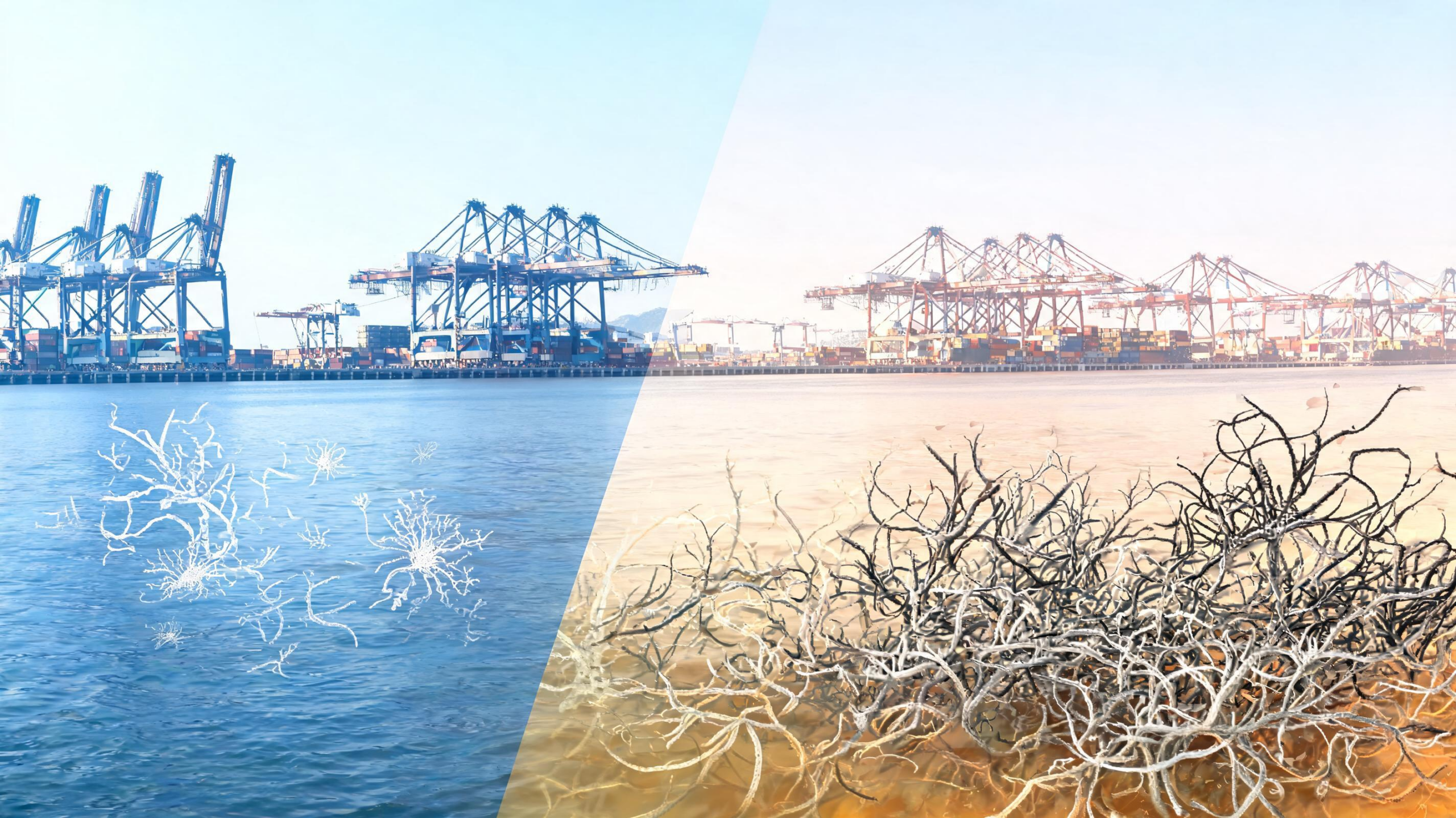
The discovery that water temperature acts as the dominant organizing force for fungal communities in Yangshan Deep-Water Harbor carries implications that extend well beyond this single harbor. Temperature shapes microbial life at every level, from the kinetics of individual enzymes to the rates of nutrient cycling that sustain entire food webs. In aquatic environments, fungi serve as decomposers of complex organic polymers, parasites of algae and other microorganisms, and links in the trophic chain between dissolved organic matter and higher organisms. When temperature shifts reorganize which fungal species dominate a habitat, the consequences ripple through carbon processing, pathogen dynamics, and the overall resilience of the ecosystem. The finding that communities at 20 °C resembled those at 10 °C more than those at 30 °C suggests a nonlinear response, possibly reflecting a threshold beyond which warm-adapted opportunists gain a decisive advantage.
This nonlinearity is particularly intriguing because the harbor spans a seasonal temperature range that roughly brackets the transition observed in the data. At cooler temperatures, fungal assemblages may be constrained by slower metabolic rates and a narrower pool of viable colonists, producing communities dominated by cosmopolitan taxa capable of tolerating brackish conditions. As temperatures climb toward 30 °C, the metabolic pace of microbial life accelerates dramatically, shortening generation times and intensifying competition. Species with rapid growth rates and broad substrate tolerances, such as many yeasts in the Candida clade, can then outpace slower-growing filamentous fungi and capture a disproportionate share of available resources. The more than 60 percent sequence share held by Candida parapsilosis in the warm-season samples is consistent with this kind of competitive release under favorable thermal conditions.
The ecological interpretation of that dominance deserves careful attention. Candida parapsilosis is an opportunistic yeast frequently recovered from hospital environments, medical devices, human skin, and contaminated water systems, and it ranks among the leading causes of invasive candidiasis in some clinical settings. Its abundance in harbor surface water at 20 °C does not prove that the harbor is a reservoir of active infection risk, but it does indicate that conditions in the port, together with inputs from surrounding urban and industrial landscapes, can sustain a substantial population of a recognized human pathogen. The authors’ attribution of this input to human-impacted coastal freshwater sources fits the harbor’s geography, since the Yangtze River drains one of the most densely populated and industrially intensive regions on Earth before mixing into the estuary where the harbor sits.
The salinity gradient documented in the harbor, ranging roughly from 10 to 23 parts per thousand, places it squarely within the brackish zone where freshwater and marine microbial assemblages intermingle. Brackish systems are inherently dynamic because the balance between river discharge and tidal exchange shifts with season, weather, and upstream water management. Fungi face distinct osmotic challenges on either end of this gradient, and only taxa with sufficient physiological flexibility can persist across it. The observation that harbor communities more closely resemble seawater assemblages than freshwater ones suggests that marine influence, likely mediated by tidal exchange with the East China Sea, exerts a stronger filtering effect than riverine input, even though the river supplies the nutrient and sediment loads that make the harbor biologically productive.
The contribution of bacterial communities to fungal diversity adds an important biotic dimension to the picture. Bacteria and fungi interact in myriad ways: bacteria can consume fungal exudates, inhibit fungal growth through antibiotic production, facilitate fungal access to nutrients, or form biofilms in which both groups jointly structure the microenvironment. Prior work in the harbor has documented extraordinary viral diversity, and viruses can regulate bacterial populations that in turn shape fungal success. The finding that bacterial community structure co-influences fungal patterns indicates that fungal assembly in the harbor is not governed by temperature alone but emerges from a web of cross-kingdom interactions. Such coupled dynamics are increasingly recognized in microbiome research, where the stability of a community often depends on the integrity of multiple interacting subsets rather than on any single taxonomic group.
The relatively low ecological stability observed in the harbor’s fungal assemblages is noteworthy in this context. Stability in microbial ecology refers to the degree to which a community resists perturbation or returns to its original composition after disturbance. Habitats subjected to frequent physical, chemical, and biological disturbances, such as dredging, ship traffic, sediment resuspension, and fluctuating freshwater input, tend to host communities that never settle into a predictable steady state. The harbor experiences approximately one hundred vessel arrivals each day, and its bed accumulates sediment seasonally as the Yangtze delivers its load. Each of these events can rework the microbial landscape, and a community already destabilized by strong temperature-driven turnover may have limited capacity to buffer additional shocks.
Methodologically, the study’s reliance on the internal transcribed spacer 1 region reflects standard practice in fungal environmental sequencing, and it carries both strengths and limitations worth appreciating. The ITS region is variable enough to discriminate most fungal species, which is why it was designated the official fungal barcode marker. However, ITS copy number varies widely among taxa, so sequence abundance is an imperfect proxy for organismal abundance. Furthermore, the finding that 1,344 operational taxonomic units, representing more than half of all recovered sequences, remained unclassified underscores how poorly inventoried aquatic mycobiomes remain. A large fraction of these unclassified lineages may belong to understudied marine clades whose ecological roles are still unknown, hinting at substantial undiscovered fungal diversity in coastal waters.
The dominance of Ascomycota and Basidiomycota aligns with patterns reported from other coastal and offshore systems worldwide. Ascomycetes, which include many yeasts and filamentous decomposers, often dominate planktonic and coastal waters where labile organic matter is plentiful. Basidiomycetes, including the marine-derived yeasts of the class Agaricomycotina and the enigmatic deep-sea lineages, tend to occupy niches associated with more recalcitrant substrates or deeper waters. The harbor’s mixed character, receiving both estuarine particulates and offshore water, likely supports representatives of both phyla in proportions that shift with season and hydrographic conditions, making it a natural laboratory for studying how marine and terrestrial fungal lineages partition a shared habitat.
From a public health perspective, the presence of opportunistic fungal pathogens in a major port raises questions about surveillance and management that coastal authorities are only beginning to confront. Ports concentrate shipping traffic from around the globe, and ballast water discharge is a well-established vector for transferring microorganisms between distant ecosystems. Whether pathogenic yeasts detected in harbor water arise primarily from local freshwater inputs, from ship-associated sources, or from a combination of both remains an open question that the study’s source-attribution analysis only partially resolves. The possibility that warming trends could increase the seasonal window during which thermotolerant opportunists thrive adds urgency, since many Candida species grow optimally near mammalian body temperature, a trait that underlies their pathogenic potential.
The study’s temperature-stratified design, sampling at 10, 20, and 30 degrees Celsius across the harbor and at adjacent freshwater and seawater reference sites, provides a template for future comparative work in anthropogenically influenced coastal systems. Few studies have paired a major port with matched freshwater and marine reference locations, and the ability to compare communities across these three habitats at equivalent temperatures strengthens causal inference about sources and sinks of fungal diversity. Composite sampling that pooled water from representative sites helped average out small-scale heterogeneity, an important consideration in turbulent harbor waters where patchiness can be extreme.
Broader environmental change scenarios lend this work additional significance. Coastal water temperatures in the East China Sea have been rising in concert with regional and global trends, and estuarine systems like the Yangtze mouth face compounding pressures from altered river discharge, nutrient enrichment, and continued shoreline development. If temperature indeed governs fungal community structure as strongly as this study suggests, then gradual warming could progressively shift these communities toward warm-adapted assemblages, with unknown consequences for organic matter processing, algal bloom dynamics, and pathogen prevalence. Monitoring programs that track fungal assemblages alongside bacterial and viral ones, using standardized barcode sequencing and consistent seasonal sampling, would help distinguish long-term directional change from the natural variability of a naturally unstable habitat.
Finally, the study contributes to a growing appreciation that fungi, long understudied relative to bacteria in marine systems, deserve a central place in coastal microbiology. The harbor’s fungal communities, shaped simultaneously by temperature, salinity, bacterial interactions, hydrodynamic exchange, and human activity, exemplify the multicausal nature of microbial biogeography. Understanding these interacting forces in one of the world’s busiest container ports offers a lens on how coastal ecosystems everywhere may respond as human pressures on the marine environment continue to intensify.
Subject of Research: Temperature-driven shifts in fungal community structure and potential pathogen prevalence in the surface water of Yangshan Deep-Water Harbor
Article Title: Temperature-driven shifts in fungal community structure and potential pathogen prevalence in the surface water of Yangshan Deep-Water Harbor
Article References: Wang, X., Xiao, J., Han, J., Pan, W., Liao, W., Bo, P., & Wang, Y. (2026). Temperature-driven shifts in fungal community structure and potential pathogen prevalence in the surface water of Yangshan Deep-Water Harbor. Ocean Microbiology, 2(1), Article 2. https://doi.org/10.1186/s44375-026-00009-1
Image Credits: AI Generated
DOI: 10.1186/s44375-026-00009-1
Keywords: Temperature-driven, shifts, fungal, community, structure, potential, pathogen, prevalence, surface, water, Yangshan, Deep-Water
Cite Scienmag News
Morgan Morrow. (September 3, 2026). Temperature-driven shifts in fungal community structure and potential pathogen prevalence in the surface water of Yangshan Deep-Water Harbor. Scienmag. https://scienmag.com/temperature-driven-shifts-in-fungal-community-structure-and-potential-pathogen-prevalence-in-the-surface-water-of-yangshan-deep-water-harbor/
Morgan Morrow. "Temperature-driven shifts in fungal community structure and potential pathogen prevalence in the surface water of Yangshan Deep-Water Harbor." Scienmag, 3 September 2026, https://scienmag.com/temperature-driven-shifts-in-fungal-community-structure-and-potential-pathogen-prevalence-in-the-surface-water-of-yangshan-deep-water-harbor/. Accessed 3 September 2026.
Morgan Morrow. "Temperature-driven shifts in fungal community structure and potential pathogen prevalence in the surface water of Yangshan Deep-Water Harbor." Scienmag. September 3, 2026. https://scienmag.com/temperature-driven-shifts-in-fungal-community-structure-and-potential-pathogen-prevalence-in-the-surface-water-of-yangshan-deep-water-harbor/


