


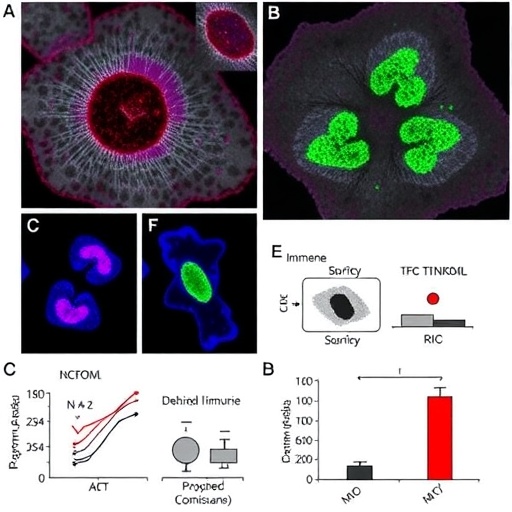
The human brain’s favorite calming chemical has turned up in an unexpected place: the front lines of a parasitic worm infection. A new study published in Parasites & Vectors reveals that gamma-aminobutyric acid, better known as GABA, plays a previously underappreciated role in how dendritic cells respond to Trichinella spiralis, the food-borne parasite responsible for trichinellosis worldwide. The findings suggest that the GABAergic system, long studied in the context of neurotransmission, is an active participant in the immune signaling that unfolds when the body encounters this invasive nematode, and that manipulating it pharmacologically could reshape the inflammatory response.
Trichinella spiralis is a parasitic roundworm acquired most often through the consumption of raw or undercooked meat, particularly pork and wild game. Once ingested, the parasite invades the intestinal epithelium, releases larvae into the bloodstream, and establishes infection in skeletal muscle. What makes the worm especially interesting to immunologists is its ability to modulate the host immune system, dampening inflammatory responses in ways that allow it to survive while simultaneously triggering enough pathology to cause disease. Understanding how the parasite accomplishes this immune manipulation has been a central question in helminth immunology, and the new research points to a surprising molecular player.
The study, led by researchers at College of Veterinary Medicine, Northeast Agricultural University in Harbin, China, focused on dendritic cells, the sentinels of the immune system that sample their environment, process antigens, and present them to T lymphocytes to initiate adaptive immune responses. Dendritic cells sit at the crossroads between innate and adaptive immunity, and their behavior during infection largely determines whether the host mounts a protective inflammatory response or a more tolerant, regulatory one. Because Trichinella spiralis depends on dampening host defenses, dendritic cells are a logical target for the parasite’s immunomodulatory strategies.
What the Chinese research team discovered is that these immune sentinels possess a complete GABAergic system, meaning they can produce GABA, respond to it through specific receptors, and regulate its levels through transport and enzymatic breakdown. This is not entirely unprecedented, as previous research had hinted that immune cells could respond to GABA, but the systematic demonstration that this signaling system is functionally engaged during Trichinella infection adds an entirely new dimension to parasite immunology.
The experimental work combined in vitro and in vivo approaches. In cell culture, the researchers used DC2.4 cells, a well-characterized dendritic cell line, and exposed them to excretory-secretory products from Trichinella spiralis, the mixture of molecules the parasite releases into its surroundings. They then measured changes in GABAergic signaling components alongside the production of inflammatory cytokines, using quantitative real-time PCR to track gene expression and Western blotting to measure protein levels. Cell viability assays ensured that the observed effects were genuine regulatory changes rather than simple toxicity.
The results were striking. Exposure to parasite excretory-secretory products altered both the inflammatory profile and the GABAergic system of dendritic cells in a concentration-dependent and time-dependent manner, indicating that the parasite actively reshapes this signaling axis rather than merely triggering a nonspecific stress response. When the researchers supplemented the cultures with exogenous GABA, or with muscimol, a selective agonist of the GABA-A receptor, they observed a notable suppression of the TLR4/MyD88/NF-κB pathway, a canonical inflammatory signaling cascade that dendritic cells rely upon to mount antimicrobial responses. The activation of this pathway, which begins with the Toll-like receptor 4 recognizing pathogen-associated molecular patterns and proceeds through the adaptor protein MyD88 to activate the transcription factor NF-κB, drives the production of pro-inflammatory cytokines. Its suppression by GABAergic signaling suggests a mechanism through which GABA tone could limit the destructive inflammation associated with trichinellosis.
Importantly, the dampening of this pathway was not accompanied by a wholesale shutdown of immune activity. Instead, the researchers observed a rebalancing of inflammatory and anti-inflammatory cytokines, a shift that could help resolve tissue damage while still allowing the immune system to keep the parasite in check. This distinction matters clinically, because much of the pathology associated with parasitic infections arises not from the parasite itself but from the collateral damage inflicted by an overzealous inflammatory response.
To confirm that these cellular findings translated into living organisms, the team established a Trichinella spiralis infection model in BALB/c mice. When GABA was administered by oral gavage before infection, the treated animals showed activation of splenic dendritic cells, reduced pathological damage, and a more regulated immune response compared to untreated infected controls. The in vivo data reinforce the idea that the GABAergic system is not merely a laboratory curiosity but a genuine physiological lever that influences the course of parasitic disease.
The implications of this work extend beyond trichinellosis. GABA has been implicated in immune regulation across a range of conditions, including type 1 diabetes and multiple sclerosis, and the growing recognition that dendritic cells possess a full GABAergic apparatus suggests a broader principle: that neurotransmitter-like signaling molecules participate directly in immune decision-making. If GABAergic tone shapes how dendritic cells interpret threats, then pharmacological manipulation of this system could offer a way to tilt the immune response in either direction, calming destructive inflammation or enhancing protective immunity depending on the clinical need.
For trichinellosis specifically, where treatment options remain limited and largely focused on antiparasitic drugs such as albendazole and mebendazole, the prospect of an immunomodulatory adjunct therapy is appealing. The Chinese team’s findings provide an experimental foundation for exploring whether GABA receptor agonists, or agents that boost endogenous GABA signaling, could reduce the tissue damage associated with infection and improve clinical outcomes. The researchers suggest that exogenous GABA or muscimol exerts measurable anti-inflammatory effects and that the GABAergic system in dendritic cells represents a viable target for intervention.
There are, of course, significant questions that remain. The current study relies on a cell line and a mouse model, and translating these findings to human trichinellosis will require further investigation. The precise molecular pathways through which parasite excretory-secretory products alter GABAergic signaling in dendritic cells have not yet been fully mapped, and the downstream consequences of this modulation for T cell polarization, antigen presentation, and long-term immunity remain to be elucidated. Nonetheless, the study adds a compelling new layer to the evolving picture of neuroimmune interactions and demonstrates that even a molecule as familiar as GABA can surprise researchers when examined in the context of parasitic disease.
The research was supported by the National Natural Science Foundation of China and the National Parasitic Resources Center, and the authors report no competing interests. As the field of neuroimmunology continues to expand, this study stands as a vivid example of how the boundaries between the nervous system, the immune system, and infectious disease are far more permeable than once imagined, and how a simple inhibitory neurotransmitter may hold therapeutic promise in the fight against one of the world’s most widespread parasitic infections.
Cite Scienmag News
Kristina Jarvis. (September 3, 2026). GABAergic signaling shapes immune responses in Trichinella-infected dendritic cells. Scienmag. https://scienmag.com/gabaergic-signaling-shapes-immune-responses-in-trichinella-infected-dendritic-cells/
Kristina Jarvis. "GABAergic signaling shapes immune responses in Trichinella-infected dendritic cells." Scienmag, 3 September 2026, https://scienmag.com/gabaergic-signaling-shapes-immune-responses-in-trichinella-infected-dendritic-cells/. Accessed 3 September 2026.
Kristina Jarvis. "GABAergic signaling shapes immune responses in Trichinella-infected dendritic cells." Scienmag. September 3, 2026. https://scienmag.com/gabaergic-signaling-shapes-immune-responses-in-trichinella-infected-dendritic-cells/


