


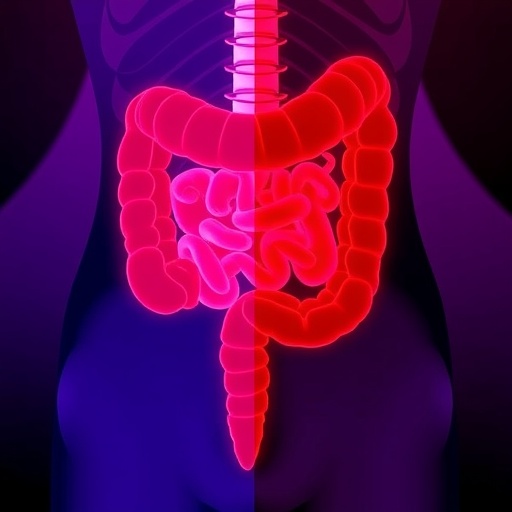
An at-home stool test is only the first half of a colon cancer screening — and skipping the second half can be deadly. A new analysis of more than 45,000 American patients has found that people who underwent the diagnostic colonoscopy recommended after a positive fecal immunochemical test, or FIT, had a roughly 40 percent lower risk of dying from any cause within a year than those who skipped the procedure, with a benefit that persisted for at least a decade. The study, published in the journal Cancer Causes & Control by a team led by first author Stephanie Chaparro of Texas Tech University Health Sciences Center El Paso, also revealed a stark demographic divide in who actually reaches the procedure room: adults aged 65 to 85 and non-Hispanic patients were significantly less likely to complete the follow-up colonoscopy than younger adults and Hispanic patients, even though a positive stool test raises the same urgent concern in every group. The findings, the authors write, expose widespread missed opportunities to detect colorectal cancer while it is still curable — and they put hard numbers on a failure that unfolds quietly in clinics across the country.
The fecal immunochemical test has become the workhorse of colorectal cancer screening precisely because it is so easy to tolerate. Unlike colonoscopy, it requires no sedation, no time off work and no bowel preparation; unlike the older guaiac-based stool cards, it relies on monoclonal antibodies that bind specifically to the globin portion of human hemoglobin, so it picks up bleeding from the lower intestine without reacting to red meat or dietary peroxidases. Clinical laboratories run these immunoassays quantitatively and flag a result as positive when the hemoglobin in a stool sample crosses a predefined threshold. A positive result, however, is not a diagnosis. It tells clinicians only that trace amounts of blood are seeping into the stool from somewhere in the large bowel — which could be a precancerous polyp, an established tumor, or something benign such as hemorrhoids. Distinguishing among those possibilities requires colonoscopy, the camera-equipped procedure that lets a gastroenterologist inspect the entire colon and remove suspicious growths on the spot. Professional guidelines, including those of the U.S. Preventive Services Task Force and the American College of Gastroenterology, therefore treat a positive FIT as a mandatory trigger for prompt colonoscopy; the new study measured adherence as completion within one year. Screening, in other words, is a two-step chain, and it protects no one if the second link is missing.
To measure how often that trigger is pulled — and with what consequences — the investigators turned to TriNetX, a federated research network that aggregates de-identified electronic health records from participating healthcare organizations in strict compliance with privacy law. Because the platform exposes only de-identified, aggregated data and no direct patient information, the study was exempt from institutional review board oversight. The team identified adults aged 45 and older who underwent colorectal cancer screening using ICD-10 diagnostic codes and pinpointed positive FIT results through the standardized LOINC code 29771-3. Of 45,598 adults with a positive FIT, 17,727 underwent a diagnostic colonoscopy within one year, while 27,871 — roughly six in ten — did not. The researchers then stratified the population into three age bands (45 to 50, 51 to 64 and 65 to 85), two ethnicity groups (Hispanic and non-Hispanic) and five race categories: White, Black, Asian, Native Hawaiian or Other Pacific Islander, and American Indian or Alaska Native. To counteract the built-in bias of comparing patients who chose different paths, they applied 1:1 propensity score matching, a statistical technique that pairs individuals with nearly identical demographic profiles and comorbidity burdens, leaving 17,101 patients in each arm for the head-to-head comparisons that followed.
After matching, the survival difference was unmistakable. Patients who completed colonoscopy had a hazard ratio of 0.604 for all-cause mortality at one year (95 percent confidence interval, 0.516 to 0.707), meaning their risk of dying from any cause was about 40 percent lower than that of matched peers who never underwent the procedure. At ten years the hazard ratio was 0.799 (95 percent CI, 0.744 to 0.859), still a roughly 20 percent reduction. Hazard ratios, unlike simple odds, describe the rate of events accumulating over time in two groups, and in both cases the confidence intervals exclude 1.0, indicating the associations are unlikely to be statistical flukes. The logic behind the survival gap is rooted in what colonoscopy actually does: it does not merely detect cancer but prevents it, because endoscopists can snare out adenomatous polyps before they ever turn malignant. Every positive FIT that goes unanswered, by contrast, leaves potential disease in place — unseen, unstaged and untreated — and the new mortality figures suggest that the price of that inaction compounds over the years rather than disappearing with time.
The detection data illustrate just how much disease can hide in the unscanned group. At one year, patients who completed colonoscopy were 17.6 times more likely to have polyps documented than matched non-completers (odds ratio 17.610, 95 percent CI 16.534 to 18.756) and 2.4 times more likely to have colorectal cancer recorded (odds ratio 2.401, 95 percent CI 1.771 to 3.257). At ten years, the odds ratios stood at 14.331 for polyp detection and 1.501 for cancer detection. Part of this imbalance reflects simple opportunity — a lesion cannot be counted if no scope ever enters the colon. But that is precisely the point, the authors argue: the gulf is a quantitative portrait of undetected neoplasia accumulating in the bodies of patients whose screening chain broke. Prior research cited in the study, including a 2017 JAMA analysis of the relationship between time to colonoscopy and cancer outcomes, showed that delays and non-completion after a positive fecal test translate into higher colorectal cancer incidence and more advanced disease at diagnosis. The new findings extend that picture from diagnosis all the way to death.
The demographic results carry perhaps the most provocative implications. Adherence declined stepwise with age: adults aged 45 to 50 had 21 percent higher odds of completing colonoscopy than those aged 51 to 64 (odds ratio 1.214, 95 percent CI 1.111 to 1.326), who in turn outperformed the 65-to-85 group by 25 percent (odds ratio 1.248, 95 percent CI 1.195 to 1.304). That gradient runs counter to raw cancer risk, which climbs steeply with age, and the authors point to factors such as accumulating comorbidities, concern about procedural complications in older patients and clinicians’ hesitancy to recommend invasive testing at advanced ages. Ethnicity produced the single largest gap in the study: Hispanic patients had 69 percent higher odds of completing follow-up than non-Hispanic patients (odds ratio 1.686, 95 percent CI 1.537 to 1.848), and the analysis also recorded higher completion rates among Asian patients. Polyp detection, meanwhile, was modestly higher in Hispanic than in non-Hispanic patients (odds ratio 1.165) and in White than in Black patients (odds ratio 1.111). Strikingly, once patients did undergo colonoscopy, colorectal cancer detection did not differ significantly across any age, race or ethnicity subgroup.
That last result matters because it isolates the problem. What varies between groups is not the biology of what endoscopists find, but whether patients ever reach the endoscopy suite at all. The Hispanic advantage, the authors suggest, may reflect the influence of community-based screening programs and patient navigation services — an infrastructure that has been tested and refined in heavily Hispanic regions such as El Paso, Texas, where several of the study’s authors practice. Conversely, decades of evidence cited in the paper link lower screening completion among Black Americans to later-stage diagnoses and higher colorectal cancer mortality, and prior work has pointed to tumor biology and genetic factors that may compound those access-driven disparities. The new data add a specific chokepoint to that chain: the interval between a positive stool test and the colonoscopy that must follow it. Whatever the underlying causes — insurance status, transportation, language, health literacy, physician recommendation patterns or patient fear — the study demonstrates that they converge on a single, measurable decision point with life-or-death consequences, and that the consequences are not distributed evenly across the population.
As with any observational study, caveats apply. The retrospective design means the researchers could observe associations but not prove causation, and propensity matching, however rigorous, cannot neutralize every confounder. It remains plausible that patients motivated enough to complete a colonoscopy are also healthier, better resourced and more engaged with medical care in general — a so-called healthy-user effect that could inflate the apparent mortality benefit. The TriNetX platform provided no access to the actual hemoglobin concentrations behind each positive FIT, so the team could not distinguish faintly positive results from strongly positive ones, a distinction known to change cancer risk. Nor could the researchers capture the reasons procedures were skipped, whether patient refusal, cost, scheduling barriers, inadequate bowel preparation or physician judgment. And because the mortality endpoint was all-cause rather than colorectal-cancer-specific, the results speak to overall survival rather than cancer deaths alone. Still, the consistency of the signal across one-year and ten-year horizons, and its alignment with prior prospective evidence, lend the findings considerable weight.
For the authors, the takeaway is less about alarming statistics than about fixable failures. Colonoscopy adherence after a positive FIT, they conclude, varies by demographic group, and the pattern of lower completion among older adults and non-Hispanic patients highlights what they call missed opportunities for early detection and prevention of colorectal cancer. They call for targeted interventions aimed at the populations least likely to complete follow-up: patient navigation programs that shepherd people from a positive test to a scheduled procedure, automated reminder systems, default appointment scheduling, and individualized conversations with older patients that weigh actual health status rather than age alone. The stakes are enormous. Colorectal cancer remains one of the most common and lethal malignancies in the United States, yet it is also among the most preventable, because it announces itself through precancerous polyps that a scope can remove in minutes. A stool test that comes back positive is the sound of an alarm. This study makes clear that far too many people never hear it answered — and that closing that gap could add years, perhaps decades, to thousands of lives.
Cite Scienmag News
Nathaniel Bowman. (August 30, 2026). Unequal colonoscopy follow-up and precancer detection after positive stool blood test. Scienmag. https://scienmag.com/unequal-colonoscopy-follow-up-and-precancer-detection-after-positive-stool-blood-test/
Nathaniel Bowman. "Unequal colonoscopy follow-up and precancer detection after positive stool blood test." Scienmag, 30 August 2026, https://scienmag.com/unequal-colonoscopy-follow-up-and-precancer-detection-after-positive-stool-blood-test/. Accessed 30 August 2026.
Nathaniel Bowman. "Unequal colonoscopy follow-up and precancer detection after positive stool blood test." Scienmag. August 30, 2026. https://scienmag.com/unequal-colonoscopy-follow-up-and-precancer-detection-after-positive-stool-blood-test/


