


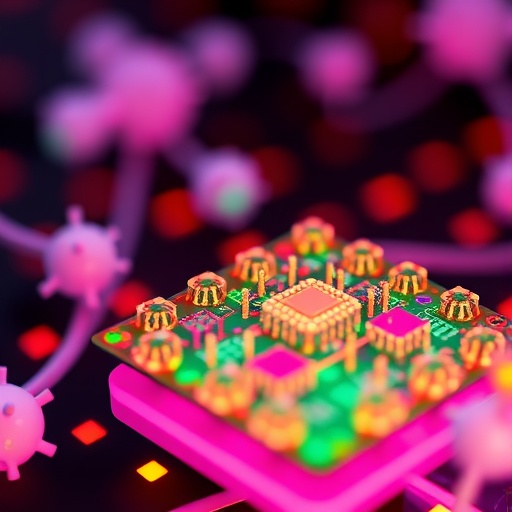
For decades, immunologists have faced an uncomfortable trade-off. Cells grown in flat Petri dishes lose the flowing blood, chemical gradients, and mechanical forces that shape immunity inside the body, while laboratory animals, however well-studied, often mislead researchers about how human patients will actually respond to a drug. A sweeping new review published on 28 August 2026 in the journal Biomedical Microdevices argues that a third option is now coming of age: microphysiological immune-on-chip systems, miniature devices that re-create the structural, biochemical, and mechanical architecture of human immune organs on platforms measured in millimeters. Written by Omkar Vishnu Daware and Chetana Krushna Belkare of the Department of Pharmaceutics at SMBT College of Pharmacy in Nashik, India, the review assembles the engineering principles, fabrication strategies, and biological design rules behind a rapidly expanding class of biomedical microdevices, and maps how they could reshape immunotherapy screening, vaccine evaluation, and the modeling of autoimmune disease. The authors’ central message is unambiguous: engineering human immunity outside the body is no longer speculative.
At their core, immune-on-chip platforms are microfluidic systems: networks of channels tens to hundreds of micrometers wide—about the width of a human hair—etched or molded into transparent polymers and connected to pumps that circulate culture medium at flow rates engineered to mimic blood and lymph. Because the channels are smaller than most laboratory glassware, fluids inside them behave differently from fluids in a beaker, flowing in orderly layers and allowing researchers to sculpt precise gradients of oxygen, nutrients, cytokines, and drugs across living tissue. Within these networks, the review explains, scientists seed human immune cells—T lymphocytes, B cells, macrophages, dendritic cells, and natural killer cells—into three-dimensional scaffolds made of hydrogels such as collagen or synthetic polymers that replicate the soft, fibrous extracellular matrix of real organs. The combination produces something closer to a living tissue than a culture: cells experience physiologically relevant shear stress, deformation, and interstitial flow, while the transparency of the devices allows individual cell movements to be tracked under the microscope in real time, something no conventional culture or animal model can offer.
The engineering behind these devices draws on an unusually broad toolkit. Most chips begin with soft lithography, in which microscopic channel patterns are transferred onto silicone elastomers such as polydimethylsiloxane, a flexible, optically clear material that has become the workhorse of microfluidics. Increasingly, the review notes, researchers are also turning to rigid thermoplastics and additive manufacturing to improve reproducibility and move toward industrial-scale production. On top of the basic plumbing sit layers of biological and electronic sophistication: pneumatic valves that open and close like tiny gates to route cells and reagents, gradient generators that create controlled chemical landscapes, embedded electrodes and biosensors that continuously report on oxygen levels, pH, and secreted signaling molecules, and microelectromechanical systems, or MEMS, that translate mechanical events—such as a cell squeezing through a narrow constriction—into measurable electrical signals. Biomaterials engineered to tune stiffness, porosity, and surface chemistry give designers a dial for controlling how immune cells sense their surroundings, a critical factor because many immune behaviors, from migration to activation, are dictated as much by mechanical cues as by soluble signals.
The payoff, according to the review, is a level of physiological realism and analytical precision that conventional methods cannot match. Two-dimensional cultures expose cells to uniform conditions and miss the dynamic interplay between immune cells and their tissue environment, while animal models—though historically indispensable—frequently diverge from human immunology in ways that have contributed to high failure rates in drug development. Immune-on-chip systems, by contrast, support dynamic investigation of immune cell behavior, intercellular communication, and host–pathogen interactions with what the authors describe as unprecedented spatial and temporal precision. Because many platforms can be seeded with human primary cells, stem-cell-derived immune cells, or even a patient’s own tissue samples, they offer a route to experiments that would be impossible or unethical in people, while simultaneously reducing the demand for laboratory animals. The devices also enable real-time monitoring: rather than inferring an immune response from endpoint measurements, researchers can watch it unfold—cell by cell—across hours, days, or weeks of continuous perfusion.
Perhaps the most striking achievement catalogued in the review is the growing family of organ-level immune models. Lymph node-on-chip platforms re-create the organized architecture in which dendritic cells present fragments of pathogens to T cells and B cells undergo germinal center reactions, the Darwinian process of mutation and selection that sharpens antibodies into potent weapons. Bone marrow-on-chip systems support hematopoiesis, the continuous production of blood and immune cells, providing a renewable source of fresh immune populations and a window into diseases such as leukemia. Thymus-on-chip models attempt to reproduce the educational process through which developing T cells learn to distinguish the body’s own proteins from foreign threats, a step crucial to understanding both immune deficiency and autoimmunity. Spleen-on-chip devices capture the organ’s role in filtering blood and mounting responses against blood-borne antigens. And tumor immune microenvironment-on-chip models place cancer cells, stromal cells, and infiltrating immune cells inside controlled vascular flow, reproducing the contested battlefield where immunotherapies must ultimately succeed. Together, these models trace the full life cycle of an immune response—from the birth of immune cells in the marrow, through their education in the thymus, to their activation in lymph nodes and their deployment against infected or malignant tissue.
These models are already reshaping how immune-targeting drugs are tested. In immunotherapy screening, tumor-on-chip platforms allow candidate checkpoint inhibitors—the antibody drugs that release the brakes cancer places on T cells—to be evaluated against living, perfused tumor tissue rather than simplified co-cultures, giving developers earlier and more reliable signals of efficacy. Chimeric antigen receptor T-cell therapies, in which a patient’s T cells are genetically engineered to hunt cancer, can be challenged in chips that reproduce tumor vascularization, stromal barriers, and immunosuppressive chemistry, exposing weaknesses before multi-million-dollar clinical trials do. The same logic extends to safety: chips can expose immune cells to drug candidates and watch for the cytokine storms, off-target activation, and tissue damage that have derailed otherwise promising therapies. Because platforms can be loaded with an individual patient’s cells, the review highlights their potential for personalized medicine, in which a treatment regimen is tested on a miniature stand-in of the patient’s immune system before being prescribed, shifting drug selection from population averages to individual biology.
Vaccine development stands out as another area where the technology could prove decisive. Effective vaccines depend on orchestrating a precise choreography inside lymph nodes, where germinal centers refine antibody quality over days to weeks; chips that reproduce this environment give vaccinologists a test bed for adjuvants, delivery formulations, and dosing strategies that currently can only be interrogated in animals or clinical trials. The platforms also serve as controlled arenas for studying host–pathogen interactions, allowing viruses and bacteria to be confronted with human immune defenses under precisely defined conditions. In autoimmune research, immune-on-chip systems offer a way to model diseases such as rheumatoid arthritis within miniature replicas of inflamed tissue, dissecting how misdirected immune attacks develop and how they might be quietly reversed. For a class of disorders that has resisted decades of reductionist study, the ability to watch self-reactive immunity emerge in a controlled, human, three-dimensional environment represents a meaningful conceptual shift.
The field is also being accelerated by a wave of enabling technologies that the review identifies as key to clinical relevance. Embedded biosensors—electrochemical, optical, and impedance-based—are turning immune chips from passive observation chambers into instruments that continuously stream data on secreted cytokines, metabolic activity, and cell behavior without disturbing the culture. High-content imaging systems automate the collection of microscope data across entire devices, while artificial intelligence–assisted analytics promise to extract patterns from the resulting torrents of information: algorithms can quantify how cells migrate, cluster, communicate, and respond to treatment far faster and more consistently than human observers. Perhaps most ambitiously, individual organ chips are being linked into multi-organ microphysiological systems, in which an immune module is connected to models of the liver, gut, or other tissues through circulating surrogate blood. Such integrated platforms could reveal how a drug affects immunity systemically, how gut microbes tune immune tone, or how a vaccine candidate triggers responses across interconnected organs, rather than in isolation.
Yet the review is candid about why immune-on-chip systems have not yet transformed routine medicine. The immune system itself is staggeringly complex, involving hundreds of interacting cell types and states distributed across the entire body, and no single chip can yet contain that complexity. Standardization remains elusive: laboratories around the world build devices with different geometries, materials, cell sources, and readouts, making it difficult to compare results or reproduce findings across institutions. Long-term stability poses another obstacle, because many immune cells are short-lived and depend on continuous, precisely balanced support to survive in culture for the weeks that true immune processes require. Manufacturing scalability, regulatory acceptance, and clinical validation complete the list of hurdles; a device that works brilliantly in one laboratory must still be produced reliably at scale, win acceptance from regulators accustomed to animal data, and prove in controlled studies that its predictions actually translate to patients. Until those steps are completed, the authors caution, widespread adoption will remain limited.
Even with those caveats, the trajectory described in the review points toward what the authors call next-generation precision immunology. By bridging advances in biomedical microdevices with mainstream immunological research, immune-on-chip platforms are positioned to serve as intermediaries between laboratory discovery and clinical application—robust enough to generate human-relevant data early in development, flexible enough to model individual patients, and measurable enough to satisfy regulators. The authors outline a future in which precision diagnostics, therapeutic development, and personalized healthcare converge on these small devices: a patient’s tumor grown in a chip to select the right immunotherapy, a vaccine candidate vetted in a lymph node model before human trials, an autoimmune flare reproduced and treated in miniature before it escalates in the body. Realizing that vision will require sustained investment in standardization, validation, and manufacturing, but the review’s assessment is ultimately optimistic. The engineering of human immunity on a chip, once a distant ambition, is steadily becoming a practical instrument of twenty-first-century medicine.
Cite Scienmag News
Kristina Jarvis. (August 30, 2026). Immune-on-chip systems recreate human immunity for immunotherapy, vaccines, and autoimmune modeling. Scienmag. https://scienmag.com/immune-on-chip-systems-recreate-human-immunity-for-immunotherapy-vaccines-and-autoimmune-modeling/
Kristina Jarvis. "Immune-on-chip systems recreate human immunity for immunotherapy, vaccines, and autoimmune modeling." Scienmag, 30 August 2026, https://scienmag.com/immune-on-chip-systems-recreate-human-immunity-for-immunotherapy-vaccines-and-autoimmune-modeling/. Accessed 30 August 2026.
Kristina Jarvis. "Immune-on-chip systems recreate human immunity for immunotherapy, vaccines, and autoimmune modeling." Scienmag. August 30, 2026. https://scienmag.com/immune-on-chip-systems-recreate-human-immunity-for-immunotherapy-vaccines-and-autoimmune-modeling/


