


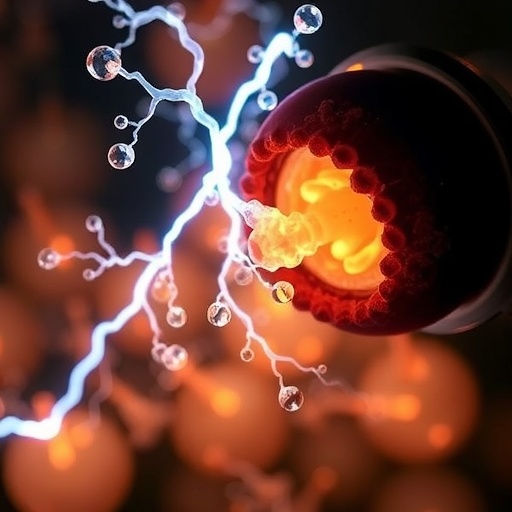
Electricity Rewrites the Biology of Carbon-Eating Bacteria, Pushing Them Into a Hidden Crisis Mode
When microbes are wired to an electrode and asked to build chemicals out of carbon dioxide, they apparently do far more than quietly follow orders. A study published on 1 June 2026 in the journal Microbial Biotechnology shows that the model acetogenic bacterium Clostridium ljungdahlii enters a fundamentally different physiological state during microbial electrosynthesis (MES) than during conventional gas fermentation, even though both processes supply it with the same carbon dioxide and the same hydrogen-based reducing power. Under the electrochemical conditions, the cells shrink, more than half of them lose structural integrity, their ATP-producing machinery falters, and they resort to digesting their own storage granules to keep energy flowing. Most strikingly, the electrified cells begin manufacturing two amino compounds, ethanolamine and glycine, that they never produce when fueled with bottled hydrogen gas. The finding suggests that a technology long treated as an engineering problem is, at its heart, a profoundly biological one.
Microbial electrosynthesis has been heralded as a way to convert carbon dioxide and renewable electricity directly into useful organic compounds. In an MES reactor, microorganisms receive reducing power from an external electric circuit, and for C. ljungdahlii the dominant electron donor is hydrogen generated in situ by water electrolysis at the cathode. That hydrogen feeds the Wood–Ljungdahl pathway, the acetogen’s oxygen-sensitive carbon fixation machinery, which funnels carbon dioxide into acetyl-CoA and ultimately acetate. The built-in hydrogen supply is considered a key advantage because it sidesteps the gas–liquid mass-transfer limitations that constrain gas fermentation, where hydrogen must dissolve from a continuously sparged gas stream. MES is also promoted as a means of banking intermittent renewable electricity in stable, storable liquid chemicals rather than in batteries. Yet after a decade of development, the technology still struggles with low biomass formation, meager product yields, a narrow and economically unattractive product portfolio, and formidable challenges in scaling reactors beyond the laboratory bench.
Curiously, most MES research has fixated on hardware—electrode materials, reactor design and operating protocols—while the microbes themselves, the so-called bioelectrocatalysts, have largely been treated as a black box. Mixed microbial communities are cheap and robust, but they obscure physiology and limit the product spectrum. For cathodic model organisms such as C. ljungdahlii, deep physiological studies have been lacking, partly because the species is difficult to manipulate genetically and grows near the thermodynamic edge of life even under favorable conditions. Scientists had generally assumed that cells in MES simply behave as they do during gas fermentation. Earlier work by part of the same team had already overturned the notion that C. ljungdahlii draws electrons directly from an electrode, demonstrating instead that electrolytically produced hydrogen serves as the main electron donor. Whether the electrochemical environment itself reshapes the microbe, however, remained an open question—until now.
To settle the question, a team of researchers based in Germany—supported by the German Research Foundation’s priority program e-Biotech and by European Research Council grants—grew C. ljungdahlii under both processes in parallel. For MES they used laboratory H-type reactors, in which two chambers separated by a cation-exchange membrane keep the cathodic hydrogen evolution apart from the anodic oxygen evolution reaction. Graphite blocks served as both electrodes, the cathode was poised at −0.9 volts versus Ag/AgCl, and the reactors were continuously flushed with a nitrogen–carbon dioxide mixture at 37 degrees Celsius. For comparison, the same bacterium was grown in a 10-litre stirred-tank bioreactor for gas fermentation, supplied with an 80:20 hydrogen–carbon dioxide mixture under a constant overpressure and controlled at pH 5.7. Both processes were inoculated at the same cell-to-medium ratio, and cells harvested during active growth were then scrutinized with transcriptomics, proteomics and transmission electron microscopy.
The performance gap was stark. By the end of the run, gas fermentation had reached a mean optical density of 1.124, while the MES cultures averaged only 0.145—an eightfold shortfall in biomass. Acetate production was even more lopsided: 11.69 grams per liter in the fermenter against 0.56 grams per liter under electrosynthesis, a 21-fold gap. Ethanol was detected only in gas fermentation, most likely because the continuous gas flow stripped it out of the MES reactors. Yet MES offered one unexpected consolation: the electrified cultures generated two compounds never seen in the fermenter—ethanolamine at up to 22.4 milligrams per liter and glycine at up to 14.7 milligrams per liter. The authors caution that the comparison reflects their specific reactor configuration and operating conditions, but the message was unambiguous: the electrochemical setup exacts a heavy toll on the biocatalyst while opening a surprising door to new products.
Transmission electron microscopy made that toll visible. Cells from the fermenter appeared intact and of the normal size for the species, roughly one to three micrometers. Cells from the MES reactors were markedly smaller, averaging 0.97 micrometers in apparent length versus 1.75 micrometers under gas fermentation, and many looked empty or showed ruptured and compromised membranes. A quantitative count of 156 cells per condition found that 54.5 percent of the MES cells were structurally disrupted, compared with just 17.9 percent in the fermenter—an overwhelming statistical difference. In other words, the electrified environment was not merely slowing the microbes down; it was physically tearing them apart.
The molecular data explained why. Across the transcriptome, 178 genes were significantly and strongly differentially expressed, and the proteome added 162 significantly altered proteins, with 58 changes shared between the two layers. The downregulated set was dominated by energy-hungry biosynthetic pathways—purine and ribonucleotide synthesis, organophosphate and organonitrogen metabolism—and by genes for cell division, classic hallmarks of an energy-starved cell. Among the casualties were subunits of the ATP synthase itself, most notably the gene atpE. In C. ljungdahlii, ATP regeneration depends on the Rnf complex, a membrane-bound ferredoxin:NAD+ oxidoreductase that pumps protons outward to establish the proton motive force that ATP synthase then converts into cellular energy. The omics profiles instead revealed a highly reduced intracellular state: the carbon starvation protein CspA ranked among the most strongly induced genes, the thioredoxin and glutathione redox systems were activated, NADH-consuming reactions increased, and tungsten-dependent aldehyde:ferredoxin oxidoreductases were recruited to keep the reduced ferredoxin pool topped up for the Rnf complex. The team’s interpretation is that the electrochemical environment depolarizes the cell membrane—electric fields and ion migration, including electroosmosis, can disturb the distribution of protons at the cell envelope—crippling the proton motive force and, with it, ATP synthesis. In bacteria, where the displacement of only a few hundred ions can shift the membrane potential by several millivolts, such an effect is entirely plausible.
Starved of ATP, the cells switched on emergency generators. Four genes of the arginine deiminase (ADI) pathway—an alternative ATP-yielding route known from stress responses in other bacteria—were upregulated at both the RNA and protein levels. The likely fuel came from within: cyanophycin, an arginine–aspartate storage polymer best known from cyanobacteria. The cyanophycinase gene cphB was highly expressed, and the electron micrographs revealed dense granules morphologically identical to cyanophycin inclusions. Those granules were, on average, four times smaller in the MES cells—0.018 micrometers versus 0.073 micrometers—consistent with active degradation, and fluorescent labeling with anti-arginine antibodies confirmed the polymer’s presence. The study also captured cryptic signs of sporulation: more than fifteen sporulation-related genes were upregulated even though the master regulator Spo0A was downregulated, and some cells displayed white gaps near the cell wall that hint at early spore development. When the researchers heat-treated their cultures at 80 degrees Celsius for 24 hours and re-cultivated them, growth resumed—strong evidence that at least some of the MES-stressed cells had formed heat-resistant spores.
The most intriguing rewiring unfolded in central carbon metabolism. Within the Wood–Ljungdahl pathway, the carbonyl branch was upregulated while the methyl branch stayed largely unchanged—with one telling exception: the gene fdhA, encoding formate dehydrogenase, was downregulated. Because formate can also be produced abiotically by electrochemical reduction of carbon dioxide at the cathode, the cells may simply take up ready-made formate and skip their own reduction step. Meanwhile, the glycine synthase–reductase pathway (GSRP), which shares its first four reactions with the methyl branch and converts carbon dioxide-derived methylene-tetrahydrofolate into glycine, was strongly induced at both the transcriptomic and proteomic levels—matching the exclusive appearance of glycine and ethanolamine under electrosynthesis. Notably, the parallel reductive glycine pathway, which links glycine to serine production, remained silent, and the team could not detect a serine decarboxylase gene, leaving the precise enzymatic route to ethanolamine unresolved. To prove that this shift stems from the electrochemical environment rather than from starvation, the researchers ran a decisive control: H-type reactors were supplemented with fructose so that carbon and energy were no longer limiting, and only three of six reactors were connected to a galvanostatic current of −10 milliamperes, holding the cathode near −900 millivolts. The cells looked healthy under both conditions, yet ethanolamine appeared exclusively in the electrified reactors. The study also delivers what appears to be the first direct sighting of bacterial microcompartments—protein-shelled nanocompartments that sequester toxic intermediates—in C. ljungdahlii: microcompartment genes were strongly induced, and the micrographs show cellular structures of the size and architecture typical of these organelles clustered against the cell envelope, possibly shielding the cell from acetaldehyde released during ethanolamine utilization or from methylglyoxal derived from glycine metabolism.
For the field, the implications cut two ways. On one hand, the study identifies concrete targets for improving MES: relieving membrane stress, tuning the distance between cells and the negatively poised cathode—whose electrostatic influence decays over a characteristic length known as the Debye length—and screening or evolving strains that tolerate the highly reducing electrochemical environment. Simply isolating the electrode will not suffice, the authors caution, because earlier work found viable cells even directly on the cathode surface while biofilms farther away suffered more stress. Whether the response documented here is unique to C. ljungdahlii or a general phenomenon among acetogens remains an open question that the researchers now want to pursue through systematic strain screening and adaptive laboratory evolution. On the other hand, the work elevates MES into something more than a carbon-utilization technology: it becomes a unique experimental platform for probing how electric fields, ion migration and electrochemically generated metabolites sculpt microbial physiology. With the underlying imaging, proteome and transcriptome datasets deposited in public archives, the study lays the groundwork for a new generation of electro-adapted biocatalysts—and for a far deeper understanding of what it truly means for a microbe to live on electricity.
Cite Scienmag News
Daisy Hatcher. (August 30, 2026). Electricity-Driven Microbes Rewire Energy Metabolism in Clostridium ljungdahlii. Scienmag. https://scienmag.com/electricity-driven-microbes-rewire-energy-metabolism-in-clostridium-ljungdahlii/
Daisy Hatcher. "Electricity-Driven Microbes Rewire Energy Metabolism in Clostridium ljungdahlii." Scienmag, 30 August 2026, https://scienmag.com/electricity-driven-microbes-rewire-energy-metabolism-in-clostridium-ljungdahlii/. Accessed 30 August 2026.
Daisy Hatcher. "Electricity-Driven Microbes Rewire Energy Metabolism in Clostridium ljungdahlii." Scienmag. August 30, 2026. https://scienmag.com/electricity-driven-microbes-rewire-energy-metabolism-in-clostridium-ljungdahlii/


