


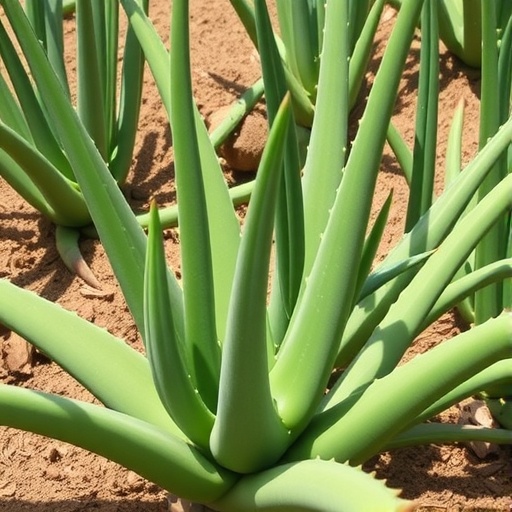
The Secret Lives of Local Aloes: Ethiopian Study Reveals That Where a Medicinal Plant Grows Shapes Its Healing Power
Aloe vera has earned its reputation as one of the world’s most versatile medicinal plants, appearing in everything from skin creams and supplements to antimicrobial treatments. But a new study from Ethiopia suggests that not all aloe is created equal — and that the district where a plant originates can profoundly influence its biochemical profile, mineral content, and yield. In research published in Discover Plants, a team of Ethiopian scientists set out to answer a deceptively simple question: do different populations, or provenances, of Aloe vera (Aloe vera (L.) Burm. f.) in the North Shewa Zone of the Amhara region differ meaningfully in quality and productivity? The answer, according to the data, is a resounding yes — and the findings could reshape how this globally traded plant is cultivated in one of its African strongholds.
The research, led by Andualem Ayalew and colleagues from institutions in Ethiopia, focused on six distinct Aloe vera provenances collected from three districts — Ankober, Merhabete, and Kewot — and established together in a common field trial at Alem Ketema. By growing plants from different origins side by side under identical conditions, the researchers could separate the effects of inherent genetic and local adaptation differences from the effects of the growing environment itself. This common-garden approach is a classic technique in plant science, and it proved especially valuable here, because local farmers and communities in North Shewa have long distinguished aloe plants into what they call “male” and “female” types based on leaf and floral characteristics. The study treated these folk classifications as scientifically meaningful categories, naming the six treatments Ankober Male Aloe (AMA), Ankober Female Aloe (AFA), Merhabete Male Aloe (MMA), Merhabete Female Aloe (MFA), Kewot Male Aloe (KMA), and Kewot Female Aloe (KFA).
The experimental design was rigorous. The trial was arranged in a randomized complete block design (RCBD) with three replications, a standard statistical layout that controls for field variability by ensuring each treatment appears once in every block. Each experimental plot consisted of 12 plants established at a spacing of 0.7 meters by 0.7 meters, a density that reflects common field practice for aloe cultivation. The plants were then evaluated using standard protocols for the morphological traits of fresh Aloe vera leaves and survival rate, while biochemical traits, phytochemical constituents, and elemental composition were estimated using standard laboratory methods. This combination of agronomic measurement and laboratory chemistry allowed the team to assess not just how much aloe each provenance produced, but what that aloe actually contained.
The results revealed striking variation among the provenances. Leaf volume and leaf weight per hectare — the key productivity metrics for a crop whose economic value lies almost entirely in its succulent leaves — showed highly significant differences at the P < 0.01 level. In practical terms, this means that a farmer’s choice of planting material could make a substantial difference to harvest quantities. But productivity was only half of the story. The phytochemical quality of the gel and the elemental composition of the leaves also varied significantly across provenances, indicating that the source district — and the male or female type within it — influenced not only how much aloe was produced but how pharmacologically valuable it was.
This distinction matters enormously for the industries that depend on Aloe vera. The plant’s therapeutic and commercial value rests on a complex mixture of bioactive compounds, including polysaccharides such as acemannan in the gel, along with phenolic compounds, anthraquinones, flavonoids, and tannins in the leaf exudate. These constituents underpin the plant’s use in pharmaceutical formulations, cosmetic products, and antimicrobial applications. If the concentration of these compounds varies systematically by provenance, then sourcing decisions — which populations to collect from, which to propagate, and which to conserve — become critical to product quality. A processing company buying aloe purely on bulk weight might be purchasing leaves with a very different chemical profile from one district compared with another.
The elemental composition findings add another layer of significance. Mineral content in medicinal and food plants is influenced by both plant genetics and soil conditions, and differences in elements such as calcium, magnesium, potassium, and trace micronutrients can affect both nutritional value and product safety. By documenting these differences across provenances grown in a common environment, the study provides evidence that at least part of the elemental variation is intrinsic to the plant populations themselves rather than merely a reflection of where they happen to be growing. For regulators and quality-control specialists in the aloe industry, this suggests that provenance certification — analogous to appellation systems in wine — could be a meaningful tool for standardizing raw material quality.
Equally notable is the study’s validation of local ecological knowledge. Farmers in North Shewa distinguish aloe types as male and female according to leaf and floral characteristics, a classification the researchers incorporated directly into their experimental design rather than dismissing as folklore. The fact that these named types showed measurable differences in biochemical traits and productivity suggests that community-based plant knowledge can serve as a genuine starting point for scientific characterization and breeding programs. This has broader implications for ethnobotany and crop improvement across Africa, where locally recognized landraces and morphotypes often harbor valuable genetic diversity that formal breeding programs have yet to tap.
The identification of superior provenances from Kewot and Ankober stands out as the study’s headline finding. These populations demonstrated enhanced biochemical traits, elemental composition, and productivity compared with the others, making them prime candidates for improved cultivation programs. For the Amhara region, where Aloe vera holds both ecological and economic importance, the practical implications are immediate: extension services can recommend specific provenances to farmers, nurseries can prioritize propagation material from high-performing populations, and local value chains can build on demonstrably superior raw material. At a time when climate variability is placing pressure on medicinal plant resources across sub-Saharan Africa, selecting provenances that combine high yield with high phytochemical quality is a strategy for both economic resilience and conservation.
The study also fills a genuine knowledge gap. Despite Aloe vera’s extensive global utilization, the authors note that information on the biochemical properties, elemental composition, and productivity of Aloe vera provenances in the North Shewa Zone has been lacking. Much of the world’s aloe research focuses on large commercial plantations in places such as Mexico, India, and China, leaving African populations — including those in Ethiopia, a center of aloe diversity — comparatively understudied. Documenting the performance of local provenances under local conditions provides a baseline that international datasets simply cannot supply, and it positions Ethiopian producers to compete on quality rather than only on volume.
As global demand for natural and plant-derived ingredients continues to climb, studies like this one highlight a growing consensus in plant science: genetic resources matter. The same species grown from different origins can deliver different chemistry, different yields, and different value. For Ethiopia’s aloe farmers, processors, and policymakers, the message from Alem Ketema is clear — the choice of provenance is not a detail but a decision, one with measurable consequences for everything from leaf weight per hectare to the potency of the gel inside the leaf. And for the wider scientific community, the work is a reminder that some of the most valuable data in agricultural research can come from listening closely to what local communities already know.
Cite Scienmag News
Gideon R. (August 29, 2026). Provenance shapes Aloe vera biochemistry, quality, and productivity in North Shewa, Ethiopia. Scienmag. https://scienmag.com/provenance-shapes-aloe-vera-biochemistry-quality-and-productivity-in-north-shewa-ethiopia/
Gideon R. "Provenance shapes Aloe vera biochemistry, quality, and productivity in North Shewa, Ethiopia." Scienmag, 29 August 2026, https://scienmag.com/provenance-shapes-aloe-vera-biochemistry-quality-and-productivity-in-north-shewa-ethiopia/. Accessed 29 August 2026.
Gideon R. "Provenance shapes Aloe vera biochemistry, quality, and productivity in North Shewa, Ethiopia." Scienmag. August 29, 2026. https://scienmag.com/provenance-shapes-aloe-vera-biochemistry-quality-and-productivity-in-north-shewa-ethiopia/


