

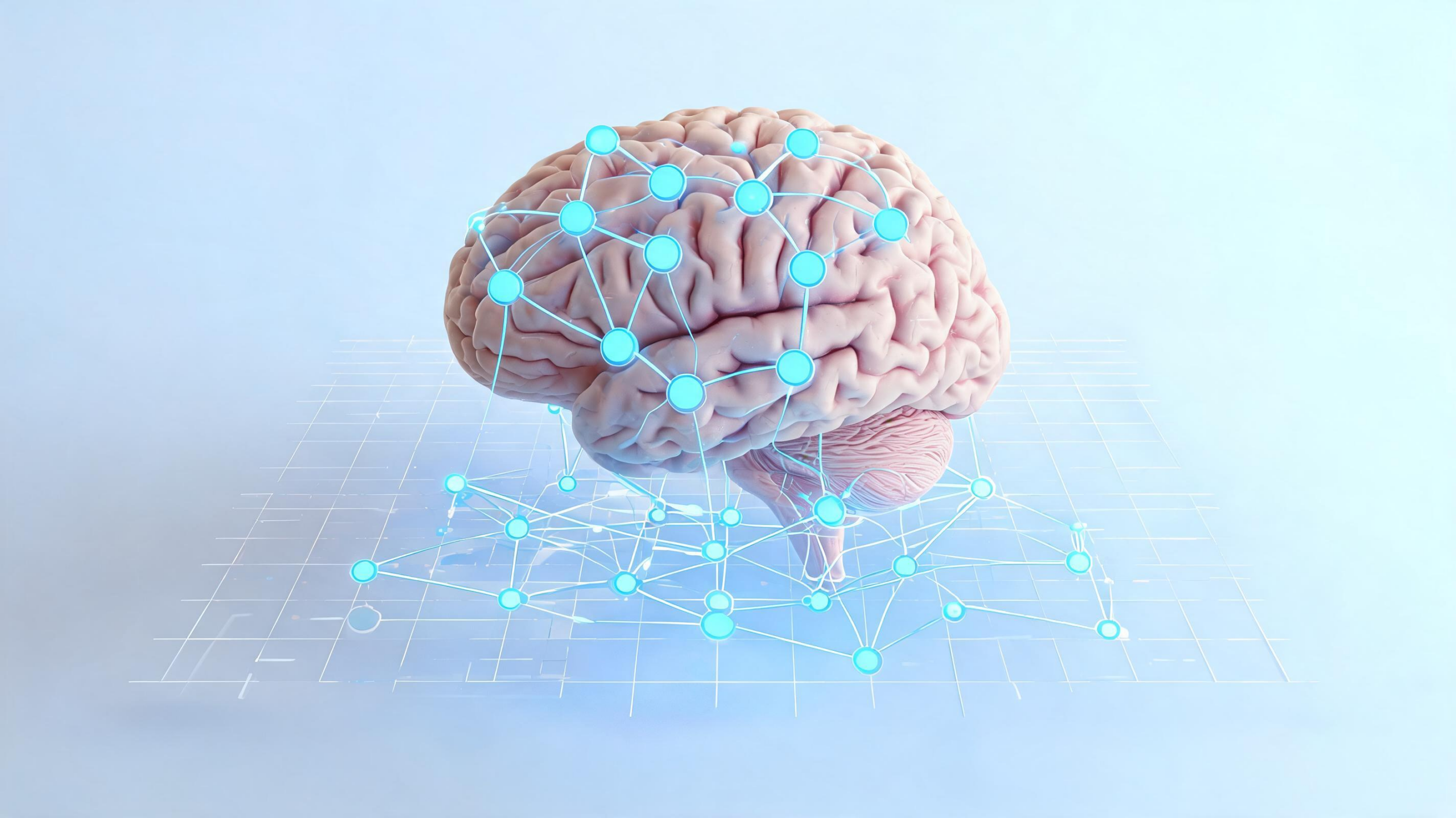
Educational software has become increasingly good at recording what students answer, when they answer it and whether they are correct. Yet a correct or incorrect response is only an indirect clue to what a learner actually knows. A student who struggles with fractions may be encountering a problem with multiplication, number sense or an earlier concept that has not been mastered. A new study in Frontiers of Digital Education argues that knowledge-tracing systems could make more accurate predictions by looking beyond the sequence of a learner’s actions and examining the structure connecting different knowledge components. The researchers investigated how hierarchical relationships among concepts affect models that estimate students’ changing knowledge states. Their central finding is that incorporating second-order spatial structures—relationships extending beyond a concept’s immediate connections—produced consistent performance gains. The result points toward a more connected view of learning analytics, in which concepts are not treated as isolated labels but as positions in a network of dependencies. Such a model could help digital learning systems identify not only whether a student is likely to answer the next question correctly, but also which underlying concepts may be contributing to the difficulty.
Knowledge tracing is a family of computational methods designed to estimate a learner’s evolving mastery over time. In a typical system, each exercise is linked to one or more knowledge components, such as solving a linear equation, applying a grammatical rule or identifying a chemical property. The model receives a stream of responses and updates an internal estimate of the learner’s knowledge after each interaction. Traditional Bayesian knowledge tracing represents learning as transitions between states, often balancing the probability that a student has learned a skill against the possibility of guessing, making a careless mistake or forgetting. More recent approaches use neural networks and other machine-learning architectures to capture complex patterns in long sequences of student activity. These systems have generally emphasized temporal information: what happened previously, how much time has passed and how a learner’s performance changes across attempts. The study’s authors note that this focus leaves another source of information comparatively underused—the spatial organization of the knowledge itself. Here, spatial does not mean physical distance. It describes the relational arrangement of concepts in a knowledge graph, where edges indicate dependencies, influence or causal connections among components.
The distinction matters because educational knowledge is often hierarchical. Understanding how to solve a two-step equation may depend on addition, subtraction, multiplication, division and the ability to preserve equality across operations. In a science course, interpreting a graph may require knowledge of axes, variables and proportional relationships before a student can reason about a more advanced model. If an assessment system examines only the label attached to the current exercise, it may overlook the chain of concepts that supports performance. A network-based system can represent these dependencies explicitly. In such a representation, a knowledge component is a node, while a directed connection can indicate that changes in one component are related to another. Immediate neighbors form a first-order structure. A second-order structure includes connections reached through those neighbors, allowing the model to consider a wider local context. The researchers studied whether these multilevel relationships could improve knowledge tracing models across both deep-learning and traditional machine-learning settings. Their analysis treats the structure as informative evidence rather than as a decorative visualization added after prediction.
To construct the relevant relationships, the researchers used causal structure learning, a group of statistical methods that attempts to infer directional connections from observed variables and their patterns of association. In educational data, the variables can represent knowledge components and the response information associated with them. Causal discovery does not automatically prove that one concept directly causes another in the psychological sense, but it can provide a principled way to estimate a network of dependencies from data. The resulting structure was then incorporated into knowledge-tracing models. This step is technically important because it changes the information available during prediction. Instead of relying solely on a student’s past response sequence, a model can also aggregate signals from related concepts and from concepts linked through an additional level of the network. A learner’s performance on one skill can therefore be interpreted alongside evidence about prerequisite or neighboring skills. The approach gives the model a way to distinguish a narrowly isolated weakness from a broader pattern that may arise when several connected components remain uncertain.
The reported experiments found that second-order spatial information consistently improved model performance. The source article does not present the result as a replacement for temporal modeling; rather, it shows that spatial structure can complement the time-based information already central to knowledge tracing. That combination is significant because learning is both sequential and relational. A student’s latest answer depends on prior practice, but it can also reflect the status of concepts connected to the current task. A model that captures only one of these dimensions may miss part of the explanation. The researchers tested the structural information in deep-learning models as well as traditional machine-learning models, indicating that the benefit was not confined to a single algorithmic family. The finding suggests that educational prediction systems may gain from improved representations of knowledge even when their core predictive machinery differs. It also reframes model development: progress may depend not only on building larger or more complicated networks, but on supplying models with a more meaningful description of the domain they are trying to understand.
Performance, however, is only one part of the study’s contribution. The researchers also examined interpretable features to clarify how spatial information shaped diagnostic predictions. Interpretability methods are intended to show which inputs most strongly influence a model’s output, helping researchers and educators investigate why a system reaches a particular conclusion. In this context, a spatial feature might represent information propagated from a related knowledge component or from a concept several links away in the inferred structure. If such a feature contributes strongly to a prediction of difficulty, it may indicate that the current error is connected to a weakness elsewhere in the knowledge network. This is different from simply reporting that a student answered an item incorrectly. It offers a possible explanation for the prediction and can make automated recommendations easier to scrutinize. The article identifies interpretable analysis as a route toward understanding the factors underlying students’ learning challenges, while the associated keywords identify explainable artificial intelligence and SHAP, a method commonly used to examine feature contributions. The practical value lies in connecting prediction with a diagnostic account.
That account could support more targeted instruction, although the study does not claim to have demonstrated outcomes in classrooms. A tutoring system informed by hierarchical dependencies might recommend reviewing a prerequisite rather than assigning more exercises that repeat the same surface-level task. It could also avoid treating every wrong answer as an independent event. Suppose a student repeatedly fails problems involving a particular advanced operation while also showing uncertainty on its prerequisites. A spatially aware model could flag the connected pattern and help an instructor decide whether to revisit foundational material, change the explanation or provide practice that bridges the concepts. The system might likewise identify cases in which a student has mastered supporting skills but is struggling with a specific application. Those distinctions matter for adaptive learning because effective feedback depends on the source of an error, not merely its existence. The researchers describe the spatial perspective as having potential to inform more effective instructional strategies, but the appropriate use of such predictions would still require validation with teachers, learners and real educational interventions.
The work also leaves important questions for future research. Inferred relationships can reflect the quality and scope of the data used to learn them, and knowledge dependencies may differ across curricula, age groups, subjects and populations. A hierarchy that describes one mathematics course may not transfer directly to another, while relationships in language learning or programming may be less strictly hierarchical. Student behavior can also be influenced by factors that a knowledge graph does not capture, including motivation, fatigue, unfamiliar wording and access to prior instruction. Better structural information should therefore be treated as one component of a broader assessment system, not as a complete representation of learning. The study provides evidence that second-order relationships can improve knowledge-tracing performance and make predictions more interpretable. Its larger message is that educational AI should model the architecture of knowledge as carefully as it models the passage of time. By combining learner histories with causal and hierarchical maps of concepts, future systems may move closer to diagnosing how understanding develops—and where the next useful lesson should begin.
The result is especially relevant to the distinction between prediction and diagnosis in educational data mining. A model can become better at forecasting a response without revealing whether its estimate reflects durable learning, temporary performance, or an unresolved dependency elsewhere in the curriculum. By examining contributions from spatial features, the study provides a way to investigate whether a prediction is being driven by the assessed component itself or by information carried through connected components. This makes the inferred structure potentially useful not only as an input to a predictor, but also as an object for examining the model’s reasoning.
At the same time, the study’s causal terminology requires careful interpretation. Causal structure learning produces an inferred pattern of directional dependencies from data; it does not by itself establish that mastering one knowledge component will produce mastery of another. For instructional use, those inferred links would therefore be most defensible as hypotheses about relationships to test through assessment and intervention. The strongest near-term application is likely to be prioritizing which connected skills deserve further examination, rather than automatically prescribing a specific remedy. This distinction can help prevent a system from converting a statistical association into an unwarranted claim about the source of a learner’s difficulty. It also creates a foundation for future studies comparing structurally informed predictions with teachers’ diagnoses and students’ subsequent learning outcomes.
Subject of Research: Hierarchical knowledge structures in knowledge tracing
Article Title: Unveiling the Impact of Hierarchical Knowledge Dependencies on Knowledge Tracing: A Spatial Structure Perspective
Article References: Wei, Y., Jia, R., Ding, Y., & Jiang, B. (2026). Unveiling the Impact of Hierarchical Knowledge Dependencies on Knowledge Tracing: A Spatial Structure Perspective. Frontiers of Digital Education, 3(3), Article 23. https://doi.org/10.1007/s44366-026-0097-8
Image Credits: AI Generated
DOI: 10.1007/s44366-026-0097-8
Keywords: knowledge tracing, educational AI, learning analytics, knowledge graphs, causal structure learning, explainable AI, adaptive learning, student modeling, Unveiling, Impact, Hierarchical, Knowledge
Cite Scienmag News
Scienmag. (August 28, 2026). Mapping Knowledge Dependencies Could Sharpen AI Tracking of Student Learning. https://scienmag.com/mapping-knowledge-dependencies-could-sharpen-ai-tracking-of-student-learning/
Scienmag. "Mapping Knowledge Dependencies Could Sharpen AI Tracking of Student Learning." Scienmag, 28 August 2026, https://scienmag.com/mapping-knowledge-dependencies-could-sharpen-ai-tracking-of-student-learning/. Accessed 28 August 2026.
Scienmag. "Mapping Knowledge Dependencies Could Sharpen AI Tracking of Student Learning." Scienmag. August 28, 2026. https://scienmag.com/mapping-knowledge-dependencies-could-sharpen-ai-tracking-of-student-learning/


