


A “Nearly Perfect” Breast Screening System Still Leaves Some Women Waiting Longer for Answers
A nationwide study of Denmark’s breast cancer screening program has uncovered a striking contradiction in modern cancer care: follow-up after an abnormal mammogram is highly effective overall, yet the women most likely to face delays or incomplete diagnostic work-up are often those already vulnerable because of lower wealth, shorter education, unemployment, immigrant background, living alone or poor health. The analysis of 35,087 women found that 99.3 percent received at least one follow-up procedure within six months, while 96.2 percent underwent diagnostic care considered consistent with national guidelines. But behind those impressive averages were substantial socioeconomic and regional differences. The findings suggest that even a publicly funded, highly structured health system can develop gaps between the moment an abnormality is detected and the moment a woman receives a clear diagnosis.
The study examined women aged 50 to 69 who received abnormal screening results between 2016 and 2021. Denmark’s national mammography program invites women in this age group for screening every two years, with all screening and follow-up procedures provided free of charge. During the six-year study period, 1,633,799 screening mammograms were performed and 37,114 were classified as abnormal. After excluding women with previous breast cancer, repeated abnormalities, missing information, early death or emigration, the researchers followed the diagnostic pathways of 35,087 women. An abnormal mammogram does not mean that cancer is present; most such findings are false positives. But distinguishing a harmless change from invasive cancer or carcinoma in situ requires timely investigation, because a delay can postpone diagnosis and potentially allow disease to progress.
Danish guidelines recommend a coordinated “diagnostic mammography” pathway for women with screen-detected abnormalities. This generally includes additional mammographic views or breast tomosynthesis, ultrasound and a clinical examination, with a biopsy when suspicious tissue requires pathological confirmation. The first diagnostic procedure is legally supposed to be offered within 14 days after radiologists agree that a screening result is suspicious, and the study defined follow-up as timely when it began within 30 days of the screening mammogram. The researchers also assessed whether women received a pathway aligned with national recommendations, rather than simply recording whether they had attended any appointment. Their definition included imaging, ultrasound and biopsy combinations, as well as other procedures such as magnetic resonance imaging, surgery and excision when relevant. Diagnostic resolution was reached when cancer was identified or when no cancer diagnosis appeared within six months.
Although overall adherence was high, approximately 14.2 percent of women experienced a delay of more than 30 days before their first follow-up, according to the researchers’ broader analysis. The median interval was considerably shorter: 11 days for women ultimately diagnosed with screen-detected cancer and 13 days for women whose abnormal results proved false positives. Nearly all women received some follow-up within three months, but the time required to complete the entire diagnostic process varied by region. This distinction matters. A system can achieve excellent six-month completion rates while still imposing unequal waits at the beginning of the diagnostic journey, when uncertainty and anxiety are greatest. It can also provide an appointment without delivering every component needed to resolve the abnormal finding according to national standards.
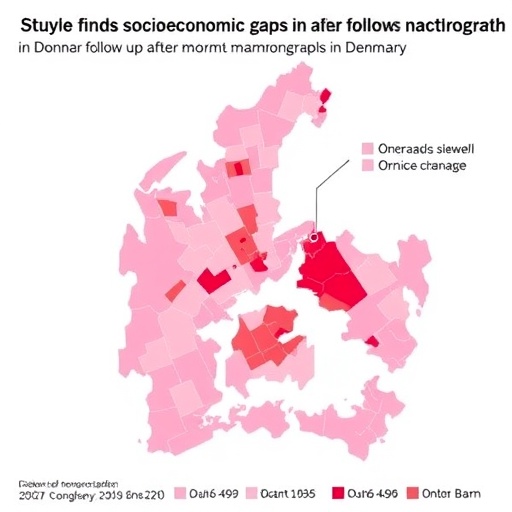
The largest differences were regional. Compared with women in the Central Denmark Region, women in the Capital Region had a reported 16-fold higher risk of a first follow-up occurring more than 30 days after screening. The corresponding risk was almost 22-fold higher in Northern Denmark and nearly 12-fold higher in Region Zealand. These relative risks compare the probability of delayed follow-up between regions; they do not mean that most women in those areas waited months. In fact, almost all women received follow-up within three months, and the absolute number of delayed cases was much smaller than the number who were seen promptly. Nevertheless, such large relative differences point to structural problems that may include uneven staffing, shortages of radiologists and radiographers, differences in appointment capacity, referral practices or administrative procedures. The pattern persisted after adjustment for socioeconomic characteristics, indicating that geography itself captured important features of how care was organized.
Socioeconomic position also shaped the likelihood of delay. Non-Western immigrant women had a 44.5 percent higher risk of non-timely follow-up than women in the reference group, while women of Western origin had a 17.3 percent higher risk. Unemployed women had an 8.4 percent higher risk than employed women, and women living alone had a 7.3 percent higher risk than those living with a partner. The researchers also observed an unexpected association involving education: women with a master’s degree had a higher risk of delayed follow-up than women with 11 to 14 years of schooling in the relevant comparison. The authors emphasize that socioeconomic indicators were analyzed separately and that reference categories were selected for representativeness and statistical stability, not as a simple ladder from “high” to “low” status. The figures therefore should not be interpreted as a single, uniform socioeconomic gradient.
The clearest inequalities emerged when the researchers looked at women who received no follow-up at all within six months. Compared with reference groups, the risk was higher among women in the lowest wealth category, women with fewer than 10 years of education, unemployed women and women living alone. Immigrant women were particularly affected: the reported relative risk was 1.908 for women of Western origin and 2.911 for women of non-Western origin. In statistical terms, a relative risk above 1 indicates a greater probability of the outcome—in this case, no recorded follow-up—than in the comparison group. The confidence intervals around these estimates quantify uncertainty, and the intervals reported in the study excluded 1, supporting an association in the analyzed data. Yet the researchers caution that these are observational results. They reveal patterns, not proof that poverty, immigration or unemployment directly caused missed care.
The study also found differences in the intensity of diagnostic procedures, particularly among women whose screening results were ultimately false positives. Women with lower wealth, unemployment, living alone, non-Western origin or comorbidities were more likely to undergo biopsy in this subgroup. At first glance, this may seem to conflict with the finding that disadvantaged women were also more likely to receive less follow-up overall. The researchers describe the pattern as a possible paradox: some vulnerable women may be lost or delayed in the pathway, while others who remain engaged may undergo more invasive testing. Comorbidities could make care more complicated, leading to missed elements in a standard pathway while also prompting clinicians to investigate suspicious findings more aggressively. Regional differences in biopsy use may likewise reflect local practice, radiologist experience, workforce availability or referral patterns. The registry data cannot determine which explanation is responsible.
To conduct the analysis, the team linked several Danish national registers using residents’ unique personal identification numbers. Screening information came from the Danish Quality Database for Mammography Screening, while diagnostic procedures were identified through the National Patient Register. Pathology records supplied biopsy and tissue results, cancer diagnoses came from the Danish Cancer Register and pathology data, and demographic information was obtained from the Civil Registration System. Income, assets, education, employment, country of origin, cohabitation and comorbidity were drawn from Statistics Denmark. The researchers used log-binomial regression models to estimate relative risks and selected adjustment variables using directed acyclic graphs, a method for representing assumed causal relationships and avoiding unnecessary statistical adjustment. Sensitivity analyses accounting for previous abnormal findings and separating the years before and during the COVID-19 pandemic did not materially change the results.
The findings carry an uncomfortable message for screening programs worldwide. Removing fees and creating standardized cancer pathways can bring follow-up rates close to universal, but formal access does not guarantee equal navigation through the system. Language barriers, health literacy, difficulty taking time away from work, transportation needs, lack of someone to accompany a patient and the complexity of multiple illnesses may all influence whether a recommended appointment happens on time. Regional capacity can magnify those personal obstacles: when a system is already close to its waiting-time limit, a missed call, a rescheduled appointment or uncertainty about a medical letter can push a patient beyond the target. The researchers argue that programs should monitor not only participation in screening but also the timeliness and completeness of the diagnostic pathway afterward. More proactive communication, interpretation support, patient navigation and targeted tracking of missed follow-up could help close the gap. The Danish experience shows that the final frontier of equitable cancer screening may not be finding abnormalities—it may be ensuring that every woman receives the same speed and quality of answers.
Cite Scienmag News
Rowan B. (August 28, 2026). Study finds socioeconomic gaps in follow-up after abnormal mammograms in Denmark. Scienmag. https://scienmag.com/study-finds-socioeconomic-gaps-in-follow-up-after-abnormal-mammograms-in-denmark/
Rowan B. "Study finds socioeconomic gaps in follow-up after abnormal mammograms in Denmark." Scienmag, 28 August 2026, https://scienmag.com/study-finds-socioeconomic-gaps-in-follow-up-after-abnormal-mammograms-in-denmark/. Accessed 28 August 2026.
Rowan B. "Study finds socioeconomic gaps in follow-up after abnormal mammograms in Denmark." Scienmag. August 28, 2026. https://scienmag.com/study-finds-socioeconomic-gaps-in-follow-up-after-abnormal-mammograms-in-denmark/


