

Species-Identification Apps Can Bring People Closer to Nature—or Pull Them Away
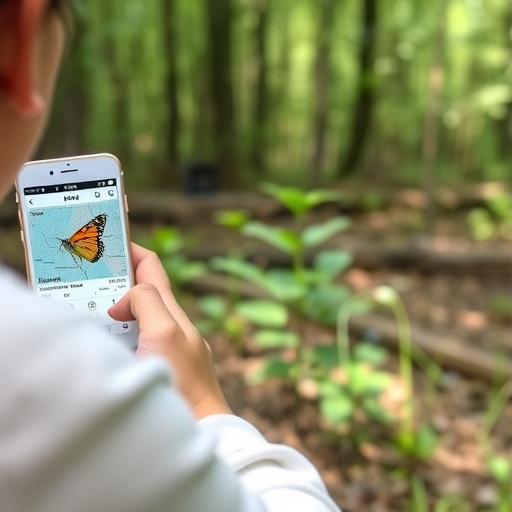
A smartphone camera pointed at a flower, insect or bird can now summon a shortlist of possible species within seconds. A microphone can analyze a birdsong, compare its acoustic pattern with a reference library and suggest which animal may be calling from the trees. These tools promise to make nature observation easier and more inclusive, but a new qualitative study suggests that their effects are far more complicated than a simple question of whether the technology is accurate. For some people, artificial-intelligence identification apps reveal hidden biodiversity, build confidence and connect users with communities of naturalists. For others, the same tools encourage a narrow focus on naming, counting and recording organisms, interrupting the slower, more emotionally immersive experience of being in a particular place.
The study, published in the Journal of Environmental Studies and Sciences, is based on interviews with 18 amateur nature observers in the United States. Participants included birdwatchers, native-plant enthusiasts, conservation volunteers, community scientists and two retired biologists. Most had used identification apps for some time, while only two were casual users without longstanding observation hobbies. The researcher, Sonia H. Stephens of the University of Central Florida, recruited participants through 56 community-level nature organizations and personal social-media networks. The interviews lasted between 43 and 65 minutes and explored how participants used apps, how those tools compared with field guides and other technologies, and what ethical or philosophical concerns arose during their encounters with nature.
The apps most frequently discussed were iNaturalist and Merlin. iNaturalist uses computer vision to analyze photographs of a wide range of organisms, from plants and fungi to insects and other animals. It also allows users to submit observations to an online community, where other people can confirm or correct an identification. Merlin, developed by the Cornell Lab of Ornithology, focuses on birds and can suggest species from photographs or sounds. Its acoustic system processes a recording and presents possible matches, often alongside visual information and spectrograms—graphs that display how the frequency and intensity of sound change over time. These systems do not “see” or “hear” species in the human sense. They compare patterns in an image or recording with features learned from large collections of labelled examples, producing a probability-based suggestion rather than a guaranteed diagnosis.
That distinction mattered to the people interviewed. Every participant reported encountering errors from automated identification tools, and users were especially cautious when an identification would be added to a formal community-science project or a personal life list. Several treated the app’s result as a starting point: a way to narrow the possibilities before consulting a field guide, examining a specimen more carefully or asking an experienced observer. One participant, Kristy, generally tried to identify birds by sight or sound before opening an app. She used Merlin’s step-by-step guidance to organize her reasoning and its sound-recognition function to learn bird calls, but she would not necessarily record a bird based solely on an automated suggestion. The app became an aid to observation rather than a replacement for it.
For some participants, that partnership with technology produced striking gains in skill. Quin, a retired ecology professional, had spent years trying to learn bird identification by ear with limited success. Merlin’s sound-recognition and playback features helped her connect a live call with a species name, while spectrograms gave her a visual representation of the acoustic structure she was hearing. She kept an archive of calls for later practice and continued to use a nature journal and printed field guides. Simone described a similar learning process with plants: iNaturalist helped her understand which parts of a plant should be photographed and uploaded to support a reliable identification. The app therefore taught her not only names but also what evidence to collect. Other participants said their attention expanded to seasonal events, smaller organisms and the diversity of life around them—forms of biodiversity that casual observers often overlook.
The social dimension of these platforms was equally important. iNaturalist users could receive feedback from people with greater expertise, transforming an isolated encounter into a conversation. Participants described online corrections and confirmations as generally welcoming, and several compared the experience with learning identification from older or more experienced members of local naturalist groups. Apps also became tools for communication during group walks: observers could display photographs, compare suggestions and resolve disagreements in real time. For beginners, this networked assistance lowered the barrier to participation. Someone who did not yet know how to distinguish similar plants or bird calls could still ask informed questions and begin building a vocabulary for the living world. Yet the same communities sometimes created pressure to document observations according to established protocols, even when users wanted to experience nature without turning every encounter into a data submission.
The apps also changed how participants used older technologies. Most no longer carried field guides into the field as often as they once had, largely because a phone combined identification, search, photographs, maps and community access in a single device. Some still preferred books for detailed reference or confirmation, and nature journals remained important for many participants. Photography changed less dramatically among people who already used cameras, but some new users began taking photographs because the app made documentation part of the observing process. The technology was not adopted in a uniform way: participants selected individual features, repurposed them for personal archives or ignored functions they did not value. One user employed Merlin recordings as a private study library, despite finding it difficult to export them elsewhere. These adaptations show that the effects of app design depend heavily on what users are trying to accomplish.
The most revealing tension concerned mindfulness and place. Participants such as Anna, Ben and Rachel said that apps could make them more task-oriented, shifting attention toward obtaining a photograph, securing an identification or adding another species to a list. That mindset sometimes displaced interest in animal behavior, ecological relationships or the atmosphere of a landscape. Rachel began birding partly as a mindful practice supporting her mental health, but found that checking her phone and maintaining a trip list could distract from that purpose. Ben worried that an emphasis on measurable records might weaken the emotional or spiritual attachment to a place—an attachment he considered important for conservation. Others, including Simone, experienced the opposite effect: identifying a bird by sound or learning the name of a tiny organism made the surrounding environment feel richer and more connected. Several people reported both reactions, depending on whether they used the app before, during or after an encounter.
Stephens analyzed the interviews using reflexive thematic analysis combined with a lived-experience approach. She first prepared a narrative summary for each participant, then coded the transcripts for recurring patterns, refined those codes and developed broader themes. Participants were given the opportunity to correct their individual summaries and comment on the preliminary synthesis; ten responded, mostly with factual corrections. The analysis identified five interconnected themes: flexible use of observing technologies, deeper interaction with naturalist communities, development of different observation skills, enrichment of nature experiences and interference with a holistic sense of place. The findings do not show that identification apps universally improve or damage people’s relationship with nature. Instead, they reveal a negotiation between the affordances built into the software and the motivations users bring to the field.
That limitation is central to interpreting the results. The sample was small, largely white and older, and consisted mainly of people already involved in nature organizations or conservation activities in the United States. Novices and people from other demographic and cultural backgrounds were underrepresented. Interviews can illuminate how people interpret their experiences, but they cannot establish whether apps directly cause stronger conservation commitments, improved identification ability or reduced mindfulness. It is also impossible to determine whether participants who felt more connected to nature were influenced primarily by the apps or were already strongly motivated to seek such connections. Future research could compare beginners and experienced observers over time, examine different cultural settings and test how app interfaces affect behavior in the field. The findings nevertheless arrive as digital platforms increasingly mediate encounters with wildlife, raising a question that accuracy alone cannot answer: whether technology helps people notice nature as a living network, or merely makes it easier to collect names from it.
Cite this news
SCIENMAG. (August 28, 2026). How Species-Identification Apps Shape People’s Nature-Observation Experiences. https://scienmag.com/how-species-identification-apps-shape-peoples-nature-observation-experiences/
SCIENMAG. "How Species-Identification Apps Shape People’s Nature-Observation Experiences." Scienmag, 28 August 2026, https://scienmag.com/how-species-identification-apps-shape-peoples-nature-observation-experiences/. Accessed 28 August 2026.
SCIENMAG. "How Species-Identification Apps Shape People’s Nature-Observation Experiences." Scienmag. August 28, 2026. https://scienmag.com/how-species-identification-apps-shape-peoples-nature-observation-experiences/


