

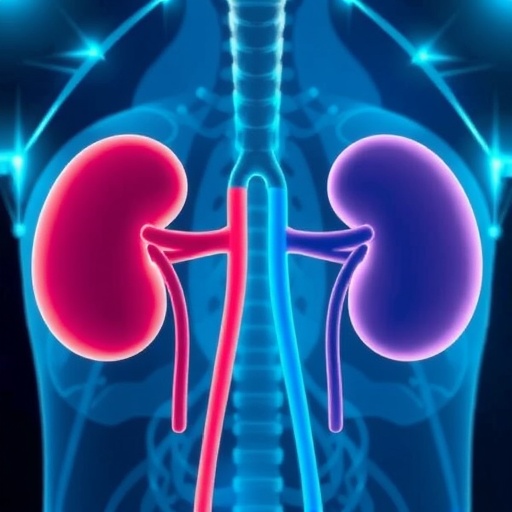
Pig Kidneys Are Moving Toward the Clinic. The Hardest Transplant Decision May Be Ethical
For decades, kidney xenotransplantation has been presented as a possible escape from the global shortage of human organs. Now that genetically modified pig kidneys are beginning to enter formal clinical testing, a new review argues that the medical field must solve a problem that cannot be fixed by gene editing alone: how patients, families, doctors and society should decide whether the risks of an animal-to-human transplant are acceptable. The authors propose a “relational” shared decision-making framework designed specifically for kidney xenotransplantation, in which the prospective recipient’s values remain central but the potential consequences for close contacts and the wider public are also openly considered.
The review, published in Current Transplantation Reports, comes as kidney xenotransplantation enters what its authors describe as a new era. The US Food and Drug Administration has formally approved the EXPAND and EXTEND clinical trials, which will evaluate two distinct genetically engineered pig-kidney strategies in people with end-stage renal disease. EXPAND is testing a “10 GE Xenokidney,” a kidney carrying ten genetic modifications, while EXTEND is evaluating a thymokidney in which the porcine GGTA1 gene has been knocked out. The trials are intended to address safety and efficacy, but the review’s authors contend that conventional transplant consent procedures may be inadequate for a treatment whose biological, social and public-health implications extend beyond the operating room.
Xenotransplantation involves transplanting living cells, tissues or organs between different species. Pigs are considered promising donors because their organs are similar in size and physiology to human organs, and because pigs can be bred under tightly controlled conditions. Yet the biological barriers are formidable. The human immune system recognizes pig molecules as foreign, triggering antibody-mediated rejection, complement activation, cellular immune responses and inflammation. Genetic engineering aims to reduce these reactions by removing or altering pig antigens, adding human regulatory proteins and modifying pathways involved in coagulation and immune regulation. In some experimental approaches, additional changes are intended to address incompatibilities in the thymus, an organ involved in immune education. Even when these modifications improve graft survival, they do not eliminate the possibility of delayed rejection, infection, thrombosis or other complications that remain difficult to predict in humans.
The uncertainty is a defining feature of the decision. A person with end-stage renal disease may face years of dialysis, debilitating symptoms, restricted employment and travel, and a substantial risk of death while waiting for a human kidney. A pig kidney could offer earlier transplantation and potentially expand the donor supply, but the expected duration and quality of graft function remain uncertain compared with established human-to-human transplantation. Patients may also need intensive immunosuppression, which can increase susceptibility to cancer and opportunistic infections. The review emphasizes that informed consent should therefore not present xenotransplantation as simply a choice between dialysis and a functioning kidney. It should explain opportunity costs: what a patient may gain by receiving a xenokidney now, what they might lose if the graft fails, and how the decision could affect eligibility or timing for a later human transplant.
Research cited in the review suggests that willingness to accept a pig kidney is strongly shaped by concerns about inferior graft outcomes, the burden placed on relatives and the possibility of zoonotic disease transmission. These concerns are not abstract. A xenograft recipient could, in principle, harbor a pathogen adapted to pigs that is difficult to detect or treat in humans. Porcine endogenous retroviruses, porcine cytomegalovirus and atypical porcine pestivirus have been identified as issues requiring surveillance and infection-control planning, even though the actual risk differs according to the pathogen and the measures used to screen donor animals. Modern programs can use designated herds, pathogen testing, quarantine and long-term monitoring, but no screening system can guarantee that an unknown or latent infection will never cross species barriers.
That possibility creates an ethical difference between xenotransplantation and most ordinary medical choices. The person receiving the organ accepts the direct risks, but close contacts may face indirect risks if an infectious agent is transmitted. Partners, household members, caregivers and healthcare workers could be asked to participate in surveillance, modify behavior or accept restrictions designed to protect others. The public-health consequences could be broader still if a pathogen escaped detection and spread. The review draws a comparison with analytical treatment interruption studies in HIV research, where participants may face a risk of transmitting infection to sexual partners. In those studies, ethical safeguards have included partner engagement and explicit attention to third-party protection. The authors argue that xenotransplantation should similarly recognize that consent by the recipient alone may not capture everyone who could bear part of the risk.
This does not mean that family members should receive a veto over a patient’s medical care, or that recipients should be treated as vectors rather than people. Instead, the proposed relational model views autonomy as something exercised within networks of relationships, responsibilities and dependence. In traditional shared decision-making, a clinician explains the available options, the patient weighs benefits and harms, and both arrive at a choice that reflects the patient’s preferences. In a relational model, clinicians would also ask how the decision fits with the patient’s family obligations, cultural or religious commitments, caregiving arrangements and tolerance for uncertainty. With the patient’s permission, relevant partners or relatives could be included in discussions about monitoring and practical burdens, while preserving the recipient’s legal and moral authority over their own treatment.
The framework also calls for more transparent communication about uncertainty. The authors caution that optimism about a technology capable of ending the organ shortage could distort consent if experimental results are presented without their limitations. Clinicians would need to distinguish clearly between evidence from animal studies, early compassionate-use transplants and controlled clinical trials. They should explain not only what is known, but also what remains unknown: how long a modified pig kidney may function, whether immunosuppression requirements will differ from those of conventional transplantation, how infections will be monitored over decades and what options will remain if the graft fails. Evidence from other areas of medicine suggests that discussing negative features can reduce immediate acceptance while increasing trust. For a technology as visible and controversial as xenotransplantation, the review argues, trust may be more important than maximizing enrollment or short-term enthusiasm.
A practical decision aid could make these conversations more consistent. Such a tool might present dialysis, human kidney transplantation, living donation and xenotransplantation as distinct pathways rather than treating the pig kidney as an inevitable technological upgrade. It could help patients compare survival prospects, time on dialysis, quality of life, surgical risks, immunosuppression, infection precautions, possible effects on future transplantation and the demands placed on families. The authors also suggest that patient preferences should be studied systematically, including through discrete-choice experiments that measure how people trade off uncertain graft survival against shorter waiting times or fewer years on dialysis. Approaches such as a simultaneous maximum acceptable risk threshold could help investigators estimate how much combined risk patients are willing to accept for a specified potential benefit, although such numerical tools would supplement—not replace—individual conversations.
Equity is another unresolved challenge. The shortage of human kidneys already exposes patients to unequal waiting times, differing access to specialist centers and disparities linked to geography, race, income and health status. A new organ source could reduce scarcity, but it could also deepen inequities if xenotransplantation is offered primarily to people who can travel to experimental centers, pay for associated care or navigate complex consent procedures. Patients may also feel pressured to accept a risky alternative because they have been waiting too long for a human organ or cannot sustain dialysis. The review therefore places xenotransplantation within the larger ethics of allocation, insisting that a new technology should not become a shortcut around fairness. Clear eligibility rules, transparent trial recruitment and public reporting will be essential if patients are to understand why some people are offered a xenokidney while others are not.
The authors stress that the proposed framework is not a claim that kidney xenotransplantation is ready for routine care. It is a call to build ethical infrastructure before the science moves faster than public deliberation. The field has already learned from early heart xenotransplants that technical breakthroughs can rapidly capture public attention while leaving questions about long-term safety, selection and responsibility unsettled. For kidney recipients, the decision may involve not only a chance at freedom from dialysis but also lifelong infection surveillance, uncertain graft durability and obligations shared with people who never volunteered for an experiment. If clinicians communicate those realities plainly, involve families appropriately and respect the patient’s values rather than steering toward a predetermined answer, shared decision-making could help determine whether xenotransplantation earns durable public trust. The future of pig-to-human transplantation may ultimately depend as much on the quality of those conversations as on the number of genes changed in the donor animal.
Cite this news
SCIENMAG. (August 27, 2026). Toward Shared Decision-Making for Kidney Xenotransplantation. https://scienmag.com/toward-shared-decision-making-for-kidney-xenotransplantation/
SCIENMAG. "Toward Shared Decision-Making for Kidney Xenotransplantation." Scienmag, 27 August 2026, https://scienmag.com/toward-shared-decision-making-for-kidney-xenotransplantation/. Accessed 27 August 2026.
SCIENMAG. "Toward Shared Decision-Making for Kidney Xenotransplantation." Scienmag. August 27, 2026. https://scienmag.com/toward-shared-decision-making-for-kidney-xenotransplantation/


