

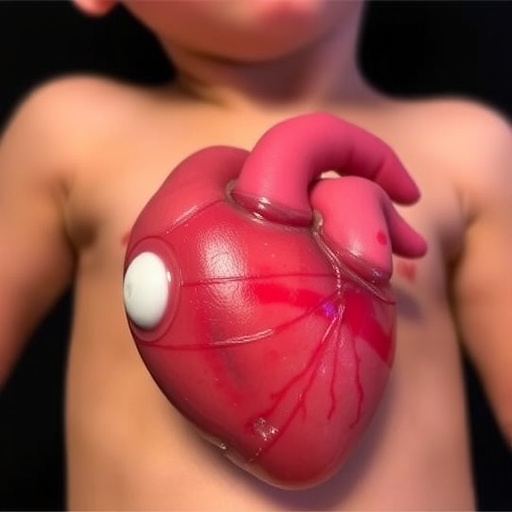
A Heart Pump Fit Inside a Child’s Chest—But Her Right Ventricle Could Not Keep Up
A device designed to rescue failing hearts in adults has exposed a hidden challenge in children: a pump can fit inside a small chest and still place an overwhelming burden on the rest of the circulation. In a case report published in the Journal of Artificial Organs, surgeons describe severe right-heart failure after implanting a HeartMate 3 left ventricular assist device in a 12-year-old girl with advanced dilated cardiomyopathy. The child’s heart had progressively lost its ability to circulate blood, leaving her dependent on catecholamine drugs—powerful medications such as adrenaline-like agents that temporarily strengthen contraction and raise blood pressure. The HeartMate 3, or HM3, was implanted to provide durable mechanical support for the failing left ventricle, alongside placement of a pacemaker for her complete atrioventricular block. Although the device could be accommodated anatomically, the patient developed a dramatic postoperative collapse in right-sided cardiac performance. The report suggests that pediatric implantation cannot be judged solely by whether the pump physically fits. The interaction between pump output, heart rate, chest anatomy and a child’s smaller blood volume may be equally decisive.
The HM3 is a continuous-flow left ventricular assist device, meaning that it uses a rapidly rotating internal rotor to draw blood from the left ventricle and propel it into the aorta. It does not replace the heart’s entire function: it primarily unloads the left ventricle and supplies systemic blood flow, while the right ventricle must still move blood through the lungs so that it can refill the left side. In adults, the device has shown strong clinical performance, including lower rates of pump thrombosis than earlier generations because of its design features and blood-flow patterns. Pediatric use has expanded as clinicians confront a shortage of donor hearts and growing numbers of children with end-stage heart failure. Yet a child’s cardiovascular system is not simply a scaled-down adult system. A smaller thoracic cavity can constrain the position of the pump and its inflow cannula, while lower circulating blood volume and different vascular resistance alter the relationship between pump speed and physiologic demand. The Japanese team’s report focuses on that relationship, particularly in a patient whose body surface area was only 1.07 square meters.
The girl was 138 centimeters tall and weighed 28.9 kilograms when she underwent implantation. Her underlying disease, dilated cardiomyopathy, weakens the heart muscle and enlarges the ventricular chambers, reducing the force available to eject blood. She also had complete atrioventricular block, a failure of electrical conduction between the atria and ventricles that can produce an abnormally slow or unreliable heartbeat. Before surgery, her pulmonary artery pulsatility index, or PAPi, was 2.3, with no obvious clinical evidence of right-heart failure. PAPi is a hemodynamic measure calculated from the difference between pulmonary artery systolic and diastolic pressures divided by right atrial pressure. In practical terms, it estimates how effectively the right ventricle generates pulsatile pressure to drive blood through the lungs relative to the pressure backing up in the venous system. Lower values have been associated with a greater risk of right-ventricular failure after implantation of a left-sided assist device. In this case, the preoperative number did not signal an immediate crisis, but the postoperative measurements changed sharply.
After the HM3 was implanted, the patient’s central venous pressure remained between 15 and 18 millimeters of mercury, substantially higher than expected in a stable circulation. Central venous pressure reflects the pressure in the large veins near the right atrium and rises when the right ventricle cannot accept or eject blood efficiently. At the same time, her PAPi fell from 2.3 to just 0.2, a change indicating profound impairment of right-heart function. This pattern is physiologically important because a left ventricular pump can increase the movement of blood out of the left side without automatically increasing blood flow arriving from the right. If the right ventricle cannot propel blood through the pulmonary circulation, the left ventricle may become underfilled even while the mechanical pump continues to operate. The resulting mismatch can raise venous pressure, reduce effective circulation and trigger a difficult cycle of congestion. The authors concluded that the child had developed severe right-heart failure despite the absence of an obvious preoperative warning.
The consequences extended beyond abnormal pressure readings. The child developed a massive left pleural effusion, an accumulation of fluid in the space between the lung and the chest wall, together with hypoxemia, or abnormally low oxygen levels in the blood. The fluid and impaired lung expansion made respiratory recovery difficult, delaying extubation until the seventh postoperative day. In a patient with a new ventricular assist device, a large pleural effusion can have several possible causes. Surgical injury to lymphatic vessels, obstruction of venous drainage and excess fluid administration can all contribute. The clinical team therefore investigated whether disruption of lymphatic flow or a subclavian vein occlusion was responsible. Lymphangiography, an imaging technique that maps lymphatic vessels, and treatment aimed at the venous obstruction did not improve the effusion. That lack of response shifted attention back to the circulation: elevated right-sided pressures were likely forcing fluid out of the blood vessels and into the pleural space.
The decisive improvement came not from replacing the pump, but from retuning the interaction between the pump and the child’s own heart. During cardiac catheterization, the clinicians adjusted the HM3’s rotational speed and modified the pacemaker settings that controlled the patient’s heart rate and ventricular activation. These changes lowered central venous pressure and were followed by rapid improvement in the pleural effusion. The report does not portray pump speed as a simple “more is better” setting. A continuous-flow device’s output depends on rotational speed, the pressure difference across the pump and the amount of blood available to enter it. Increasing speed can enhance left-sided unloading and systemic flow, but if the right ventricle cannot supply that flow, suction, underfilling or excessive ventricular interaction may worsen the imbalance. In a small child, a speed that seems modest or appropriate by adult standards may represent comparatively intensive circulatory support. Coordinating the mechanical flow with the child’s heart rate was therefore central to recovery.
The mechanical environment inside the chest may also have contributed. The authors emphasize that previous reports of HM3 implantation in small pediatric patients have concentrated largely on anatomical accommodation—whether the pump, cannula and surrounding structures can be positioned without direct compression. Computed tomography and virtual surgical simulation can help estimate chest dimensions and identify a workable implantation route. But the present case indicates that an anatomically successful operation may still create functional problems. A device occupying a substantial fraction of a small thoracic cavity could alter the position or filling of the ventricles, compress adjacent structures or change the geometry of the right heart. The two ventricles are connected not only by blood flow but also by the interventricular septum and the tight space around them. When one ventricle is unloaded or changes shape, the septum can shift and influence the other ventricle’s ability to contract and fill. These effects, combined with relatively high pump support for body size, could raise the right ventricle’s workload after implantation.
The case also highlights why pediatric patients with complete atrioventricular block may require particularly careful calibration. The pacemaker determines how rapidly the ventricles contract and how their electrical activation is coordinated. Heart rate affects venous return, ventricular filling time, oxygen consumption and the amount of blood the right ventricle must send through the lungs. A rate that is too slow may fail to sustain circulation, while a rate that is too fast can shorten filling time and increase the heart’s energy demand. Abnormal activation patterns can make contraction less efficient, further reducing right-ventricular output. In this patient, pacemaker settings and HM3 speed were adjusted together rather than in isolation, reflecting the fact that mechanical and electrical support are coupled systems. The improvement after those changes suggests that the postoperative failure was at least partly reversible through hemodynamic optimization, although a single case cannot establish which adjustment had the greatest effect.
For clinicians, the report offers a warning against relying on a single preoperative measurement or a device-sizing checklist when treating very small children. The patient’s PAPi before surgery was not severely abnormal, yet her postoperative value revealed major right-heart dysfunction. Continuous monitoring of central venous pressure, pulmonary artery pressures, oxygenation, ventricular filling and the behavior of the pleural effusion may be necessary as the circulation adapts. The case also supports using catheter-based assessment to test pump and pacemaker settings under direct hemodynamic measurement when routine adjustments fail. Still, the findings come from one patient, and the report cannot determine how often this complication occurs or whether the same mechanism applies to all small children receiving an HM3. Larger pediatric registries and physiologic studies will be needed to define safe relationships between body size, pump speed, heart rate and right-heart reserve. The broader message is immediate, however: in pediatric mechanical support, “fits in the chest” is only the beginning of the engineering problem.
Cite this page
SCIENMAG. (August 27, 2026). Severe Right Heart Failure After HeartMate 3 Implantation in a Small Child. https://scienmag.com/severe-right-heart-failure-after-heartmate-3-implantation-in-a-small-child/
SCIENMAG. "Severe Right Heart Failure After HeartMate 3 Implantation in a Small Child." Scienmag, 27 August 2026, https://scienmag.com/severe-right-heart-failure-after-heartmate-3-implantation-in-a-small-child/. Accessed 27 August 2026.
SCIENMAG. "Severe Right Heart Failure After HeartMate 3 Implantation in a Small Child." Scienmag. August 27, 2026. https://scienmag.com/severe-right-heart-failure-after-heartmate-3-implantation-in-a-small-child/


