

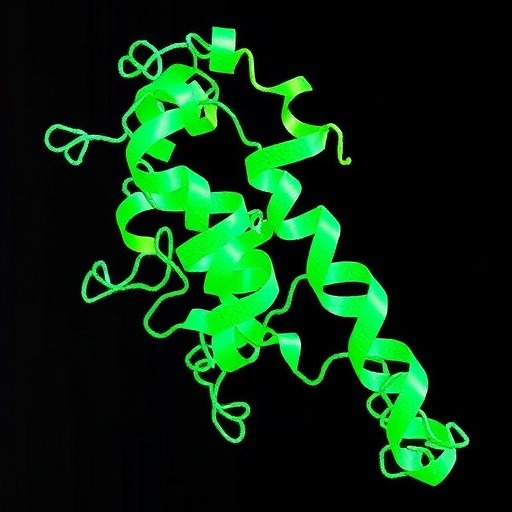
A previously unrecognized ability of a protein fragment linked to a rare inherited neurological disorder could reshape scientists’ understanding of the disease—and potentially point toward treatments that do not require delivering an enormous gene into the nervous system. Researchers in Italy report that the isolated HEPN domain of SACSIN, the protein disrupted in Autosomal Recessive Spastic Ataxia of Charlevoix–Saguenay, or ARSACS, can bind RNA inside cells. The finding offers the first direct evidence that this region of SACSIN may act as an RNA-binding module, adding a new molecular function to a protein whose role has remained largely mysterious. The study, published in Cellular and Molecular Life Sciences, also shows that a disease-associated mutation weakens this interaction and changes where the protein fragment accumulates in the cell.
ARSACS is a rare neurodegenerative disease caused by damaging variants in the SACS gene. People affected by the condition typically develop progressive cerebellar ataxia, which impairs balance and coordinated movement, together with spasticity and peripheral neuropathy. The disorder is inherited in an autosomal recessive manner, meaning that patients generally carry harmful changes in both copies of the gene. More than 200 pathogenic variants have been identified, including missense mutations that change individual amino acids, nonsense mutations that prematurely terminate protein production, and frameshift mutations that disrupt the protein’s reading frame. Despite the diversity of these genetic changes, the clinical picture is strikingly consistent, suggesting that they may converge on essential functions of SACSIN.
The biological challenge begins with the extraordinary size of the SACSIN protein. At roughly 520 kilodaltons, it is far larger than proteins commonly handled by conventional gene-delivery systems. A gene encoding a protein of this scale is difficult to package into standard viral vectors, a major obstacle for gene-replacement strategies aimed at correcting the underlying defect. SACSIN contains several specialized regions, including a HEPN domain—short for higher eukaryotes and prokaryotes nucleotide-binding domain. HEPN domains are found in a variety of proteins and can participate in nucleic-acid-related processes, although their activities differ among protein families. Until now, whether the HEPN region of SACSIN could interact directly with RNA had not been established.
To investigate that question, Lisa Longo, Irene Mariani, Antonella Cusimano and colleagues at institutes in Palermo and Genoa studied the HEPN domain separately from the full-length protein. Their experiments used overexpression, a laboratory approach in which cells are supplied with extra copies of a gene or gene fragment so that the corresponding protein region is produced at elevated levels. This strategy does not reproduce every feature of a normal cell, but it can reveal biochemical activities and cellular behaviors that are difficult to observe when a protein is present in small quantities. In this system, the researchers found that the isolated SACSIN HEPN domain associated with RNA, supporting the hypothesis that SACSIN may function, at least in part, as an RNA-binding protein.
RNA binding is not simply a molecular footnote. Inside cells, RNA molecules are constantly being transcribed, processed, transported, translated into proteins or assembled into regulatory complexes. Proteins that bind RNA can help determine where transcripts travel, how long they survive and whether they are available to the ribosome, the cell’s protein-making machinery. An RNA-binding protein may also participate in stress responses, RNA storage or the organization of temporary molecular assemblies. The new study suggests that the SACSIN HEPN domain’s interaction with RNA influences its cellular compartmentalization—that is, the part of the cell where the domain is found—and its tendency to form condensates, concentrated assemblies created through multivalent protein and nucleic-acid interactions.
Condensates are sometimes compared with droplets because they can form through phase-separation-like behavior without being enclosed by a membrane. They provide local environments in which proteins and RNA can gather, interact and sometimes reorganize rapidly. Such assemblies are normal components of cell biology, but their properties matter: condensates that become unusually stable, excessively numerous or misplaced can interfere with cellular functions. In the researchers’ experiments, RNA binding affected the propensity of the SACSIN HEPN domain to form these protein condensates. That connection raises the possibility that SACSIN helps organize RNA or RNA-associated factors in particular cellular locations, although the precise RNAs involved and the physiological role of the full-length protein remain to be determined.
The team then examined a version of the HEPN domain carrying the F4574C mutation, an amino-acid substitution associated with ARSACS. In this change, phenylalanine at position 4574 is replaced by cysteine. Compared with the non-mutated domain, the altered protein showed impaired RNA-binding activity. It also became mislocalized to the nucleus and displayed a greater predisposition to form protein condensates. The combination is notable because it links a patient-associated genetic change to several measurable molecular consequences: reduced interaction with RNA, abnormal cellular distribution and altered assembly behavior. The results do not prove that each of these changes directly causes neurodegeneration, but they provide a plausible mechanistic bridge between a mutation in SACSIN and the disturbances seen in ARSACS cells.
The nervous system may be especially vulnerable to such defects. Neurons are highly elongated cells that must transport RNA and proteins across long distances, maintain specialized compartments and adjust protein production in response to electrical activity and environmental stress. Cerebellar neurons and peripheral nerve cells depend on tightly controlled intracellular trafficking and local gene regulation. If a SACSIN defect disrupts RNA handling or causes its domains to assemble in inappropriate locations, the resulting imbalance could gradually damage the cellular systems required for neuronal survival and communication. That model remains to be tested, however. The current work focused on an isolated protein region produced by overexpression rather than on the complete, native 520-kilodalton SACSIN molecule in patient-derived neurons.
Those limitations also define the study’s next steps. Researchers will need to establish whether full-length SACSIN binds RNA under normal cellular conditions, identify the specific RNA molecules involved and determine whether the HEPN domain’s activity depends on neighboring regions of the protein. They must also clarify whether the F4574C mutation alters RNA binding directly or changes the domain’s structure in a way that indirectly affects the interaction. Experiments in disease-relevant neurons and animal models could reveal whether abnormal condensates precede cellular damage and whether restoring normal RNA interactions can improve neuronal function. If the HEPN domain proves to be a separable driver of disease-related behavior, it might become a more tractable therapeutic target than the full-length protein.
The discovery could therefore influence treatment strategies in two ways. First, it identifies a molecular activity that may help explain why mutations in a particular SACSIN region produce ARSACS symptoms. Second, it suggests that therapies might be designed to modify the domain’s RNA interactions, localization or condensation behavior rather than replace the entire massive gene. Such approaches could include engineered protein fragments, RNA-based medicines or small molecules that stabilize beneficial interactions, although none is yet ready for clinical use. Supported by Fondazione Telethon, Associazione ARSACS and European funding, the Italian researchers describe their result as a foundation for future work. For families affected by ARSACS, the finding does not offer an immediate cure—but it turns an enigmatic protein region into a concrete biological target, bringing the disease’s hidden molecular machinery into sharper view.


