

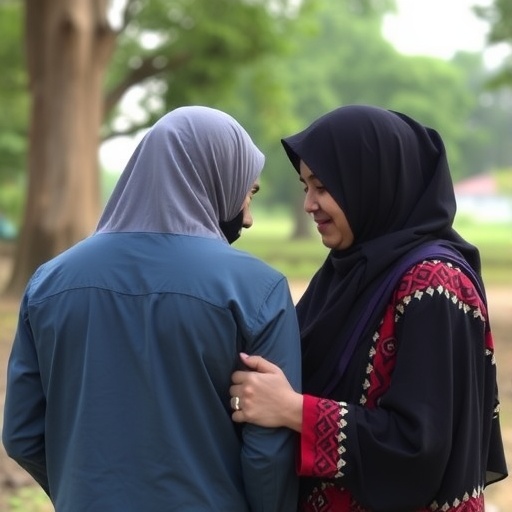
A Secret That Can Shape a Marriage: How HIV Stigma Influences Disclosure in Indonesia’s Muslim Communities
In Indonesia, where HIV transmission increasingly affects heterosexual couples, the decision to disclose an HIV diagnosis is rarely a simple medical conversation. It can become a negotiation over trust, morality, religious identity, family reputation and personal safety. A qualitative study published in BMC Public Health examines how HIV-related stigma operates inside intimate relationships and across the communities surrounding them. The research focuses on Muslim couples in Indonesia, home to the world’s largest Muslim population, and finds that stigma can influence whether people reveal their status, use condoms, seek care and remain socially connected. The findings suggest that disclosure is not merely an individual choice made after receiving a laboratory result. It is shaped by expectations about marriage, fears of blame and rejection, attitudes within healthcare services, and interpretations of religious and moral behavior. The researchers argue that HIV programs must address these social pressures alongside diagnosis, treatment and prevention.
HIV is transmitted when infected bodily fluids, including blood, semen, vaginal fluids or breast milk, allow the virus to enter another person’s body. Without effective treatment, HIV progressively damages the immune system by targeting CD4 T cells, which coordinate critical immune responses. Modern antiretroviral therapy suppresses viral replication, allowing many people with HIV to live long and healthy lives and greatly reducing the risk of transmission. Yet the biological facts of HIV do not automatically determine how people respond to a diagnosis. Stigma can attach social meanings to the infection, associating it with infidelity, sexual misconduct, drug use or moral failure, even when those assumptions are wrong. Within a marriage, disclosure may therefore be perceived as an accusation or confession rather than a health-protection measure. The Indonesian study shows how these interpretations can create a gap between what medical science makes possible and what people feel safe enough to do in their daily lives.
The investigators used a qualitative design to explore experiences and perceptions in detail rather than estimate how common particular attitudes are across Indonesia. Their data came from several groups connected to HIV care and community life. The researchers conducted 14 in-depth interviews with individuals from serodiscordant couples, in which one partner has HIV and the other does not. They also held two focus-group discussions involving 14 participants from seroconcordant couples, in which both partners have HIV, and another focus group with seven representatives of HIV-focused nongovernmental organizations. Muslim religious leaders, known as ustaz, provincial health authorities, the director of the Peer Support Group Care Foundation, and representatives of Nahdlatul Ulama were also involved in the broader set of perspectives examined by the study. The researchers compared information from different participants and methods, a process known as triangulation, to strengthen the credibility and depth of the analysis.
The team analyzed the material using reflexive thematic analysis, a method in which researchers identify recurring patterns in participants’ accounts while recognizing that interpretation is part of the analytical process. Five broad forms of stigma emerged. The first concerned HIV status itself: people feared being labeled, isolated or treated as dangerous once others learned their diagnosis. The second involved stigma from healthcare providers, who may be perceived as judgmental or insufficiently confidential. The third centered on condom use, which can carry its own moral and relational meaning in settings where requesting condoms may be interpreted as evidence of infidelity or sexual activity outside marriage. The fourth involved the distinctive disclosure pressures faced by serodiscordant couples. The fifth concerned community and religious actors, whose messages can either reinforce harmful narratives or help replace them with compassion, accurate information and practical support. Together, these themes describe stigma as a system rather than a single negative attitude.
For couples, the most consequential question may be whether disclosure will make the relationship safer or more fragile. A person who has recently learned they have HIV may need to tell a spouse so that the partner can obtain testing, prevention counseling and, when appropriate, treatment. But disclosure can also provoke fear of abandonment, accusations of betrayal or violence, financial insecurity and the loss of contact with children or extended family. The possibility of disclosure can be especially difficult when the infection is discovered during pregnancy, after a partner becomes ill, or through testing initiated by one member of the couple. In such circumstances, the diagnosis can expose unresolved questions about when and how transmission occurred. The study indicates that some participants weighed these risks carefully before speaking, while others faced pressures that made silence seem like the only available form of protection. Avoiding disclosure may delay testing and prevention, but coercive disclosure can also place people in danger.
Condoms became a particularly important symbol in the accounts examined by the researchers. From a public-health perspective, condoms create a physical barrier that reduces the exchange of bodily fluids and lowers the likelihood of HIV transmission and other sexually transmitted infections. Within a couple, however, condom use may be interpreted through assumptions about fidelity, intimacy and religious propriety. A request to use a condom can raise questions that neither partner feels able to ask directly. Someone living with HIV may fear that suggesting condoms will reveal the diagnosis, while a partner may read the request as evidence of extramarital sex. These social interpretations can undermine prevention even when condoms are available. The findings underline why prevention counseling cannot be limited to distributing supplies or reciting instructions. Couples may need support in discussing risk, negotiating protection and understanding that condom use can express care for both partners rather than suspicion.
The study also draws attention to stigma within healthcare settings, where patients should be able to seek confidential and technically accurate help. HIV services commonly involve testing, confirmation of infection, assessment of treatment eligibility, antiretroviral therapy, monitoring of viral load and counseling about partner protection. Each step depends on trust. If patients expect reprimands, breaches of confidentiality or discriminatory treatment, they may postpone testing or avoid returning for care. This can affect not only their own health but also the opportunities to prevent transmission within a relationship. Healthcare-provider stigma may be communicated through explicit comments, dismissive behavior, unnecessary separation or assumptions about a patient’s character. Even subtle signals can discourage engagement. The researchers’ conclusion that disclosure support should be integrated into routine care reflects this reality: clinicians need structured ways to help patients plan conversations, assess safety, involve partners when appropriate and understand the medical facts that can make disclosure less frightening.
Religious and community institutions emerged in the study as potential forces for change. In Indonesia, Muslim leaders and organizations can influence how families interpret illness, responsibility and social belonging. If HIV is discussed primarily as evidence of sin or sexual misconduct, religious language may intensify shame and make people less willing to seek help. If leaders emphasize compassion, confidentiality, marital responsibility and the protection of health, they can help separate the virus from moral condemnation. The researchers specifically highlight the role of ustaz and community organizations in reshaping public narratives and supporting disclosure. This does not mean asking religious leaders to replace clinicians. Rather, it points to collaboration: health professionals can provide scientifically accurate information about transmission and treatment, while trusted community figures can help make that information socially acceptable. Such partnerships may be particularly valuable in communities where religious authority strongly influences attitudes toward marriage, sexuality and illness.
Because the study is qualitative, its findings should not be interpreted as a numerical measure of stigma among all Indonesian Muslims, nor as a claim that Muslim communities respond uniformly to HIV. Indonesia contains substantial cultural, linguistic, geographic and religious diversity, and the experiences of participants connected to particular services or organizations may differ from those of people who remain outside the healthcare system. Nevertheless, the research provides detailed evidence about mechanisms that can be difficult to capture in surveys: how a condom becomes a suspected confession, how a clinic can feel unsafe, or how a diagnosis can threaten a person’s place within a family. The authors recommend couple-based communication and counseling, safer disclosure planning, stigma-reduction work among healthcare providers, and sustained engagement with religious and community leaders. The central lesson is both social and scientific: effective HIV prevention depends not only on suppressing the virus, but also on creating conditions in which people can speak about it without fear.


