


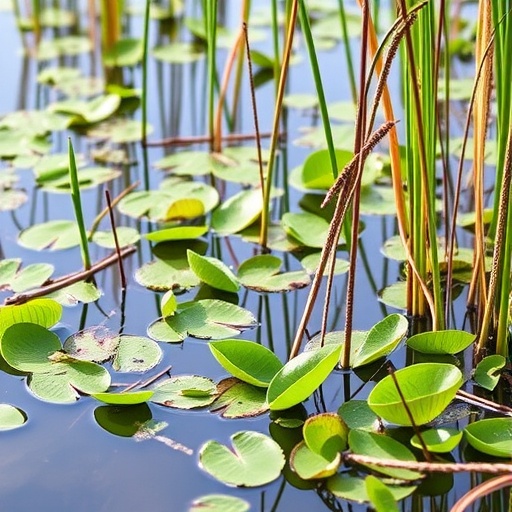
Wetlands Are Not Simple Carbon Sinks—and That Could Change How Climate Restoration Works
Wetlands have long been promoted as one of nature’s most powerful climate solutions. Their waterlogged soils can preserve organic carbon for centuries or even millennia, while their vegetation and sediments support wildlife, filter pollutants, reduce flooding and protect coastlines. But a major critical review argues that the familiar “wetlands as carbon sinks” narrative is no longer sufficient. These ecosystems are not passive carbon vaults. They are dynamic climate-feedback systems in which hydrology, vegetation, biodiversity, microbes, nutrients, salinity and temperature interact to determine whether restoration delivers a durable climate benefit—or produces unexpected methane emissions that temporarily intensify warming. The review proposes a new way to evaluate wetland projects by examining carbon dioxide, methane and nitrous oxide together with ecological integrity, water movement, biodiversity recovery, financial feasibility and governance. The central message is simple but consequential: restoring a wetland should not be judged by how many hectares are treated or how much carbon is stored on paper, but by how the entire ecosystem behaves over time.
The stakes are global. Wetlands have suffered extensive losses during the past three centuries as land was drained for agriculture, converted for cities or altered by dams, roads and water-control structures. One global reconstruction estimated that approximately 3.4 million square kilometres of inland wetlands disappeared between 1700 and 2020, representing a net decline of about 21 percent. Losses have been especially severe in Europe, the United States and China, although regional estimates vary because studies use different wetland definitions and mapping methods. In China, mapped wetland area declined by roughly one-third between 1978 and 2008, even as artificial wetlands expanded. Europe also contains highly uneven restoration needs: a recent assessment found that about one-fifth of mapped seminatural open wetlands had been affected by human activity, with disturbance reaching far higher levels in some eastern European countries. These changes have amplified pressure to restore wetlands quickly. Under the Kunming–Montreal Global Biodiversity Framework, nations have committed to placing at least 30 percent of degraded terrestrial, inland-water, coastal and marine ecosystems under effective restoration by 2030. The word “effective,” the review emphasizes, is doing crucial work.
The problem is that carbon accounting and biodiversity conservation evolved through largely separate scientific and policy systems. Climate accounting focuses on greenhouse-gas inventories, baselines, additionality, permanence and quantities expressed as carbon dioxide equivalents. Biodiversity assessments focus on species, habitats, ecological condition, connectivity, food webs and ecosystem integrity. As a result, a wetland may appear highly valuable in a carbon ledger while remaining hydrologically damaged or biologically simplified. Conversely, a biodiversity restoration project may improve habitat and connectivity without measuring its net greenhouse-gas impact. Carbon stock, carbon sequestration and net climate effect are also different concepts. A wetland can hold an enormous carbon stock but release methane, lose carbon during drought or fire, or support invasive plants rather than a functioning native community. The review’s proposed Biodiversity–Methane–Hydrology–Carbon Feedback Framework is designed to reconnect these areas without reducing biodiversity to a carbon metric or treating climate benefits as automatic co-benefits of restoration.
Methane is the reason the carbon-sink story becomes complicated. In oxygen-poor wetland soils, microorganisms called methanogens break down organic material and produce methane. Other microbes, known as methanotrophs, consume some of that methane before it reaches the atmosphere. The remainder escapes through diffusion, bubbles or plant tissues containing air channels called aerenchyma. Vegetation can therefore both reduce and increase methane emissions: roots may transport oxygen into sediments and support methane oxidation, while root exudates and decaying litter provide fresh food for methanogens. Water level, temperature, salinity, nutrient loading and the availability of alternative electron acceptors such as nitrate, iron and sulfate all influence this balance. A molecular signal such as the presence of a methanogen gene can reveal metabolic potential, but it cannot substitute for direct measurements of gas production and atmospheric flux. The climate outcome depends on the net result of these processes, not on the presence of any single microbial group.
Global evidence suggests that wetland methane emissions have recently intensified. Modelling studies have reported rising emissions between 2000 and 2021, with 2020 and 2021 standing out as exceptionally strong years. An ensemble of 16 wetland biogeochemical models estimated average global wetland methane emissions of about 158 million tonnes per year during 2010–2020, roughly 6–7 million tonnes per year higher than in the previous decade. These estimates remain uncertain because wetlands are difficult to map, many are small or seasonal, and models struggle to capture short-lived flooding, plant-mediated transport, ebullition and winter emissions. Yet the trend matters. Methane is a powerful greenhouse gas, and wetlands are both climate-sensitive and climate-active: warming, altered rainfall, drought, thawing permafrost and vegetation changes can modify the processes that control their emissions. In boreal and Arctic regions, one study projected that methane emissions from wetlands and lakes could be about 31 percent higher by 2100 under a moderate emissions scenario, largely because of warming.
The most important management variable is hydrology, but “rewetting” is not a universal prescription. Draining peatlands exposes organic soils to oxygen, accelerating decomposition and carbon dioxide release. Rewetting can quickly reduce that persistent carbon loss, but saturated conditions may also increase methane production, particularly during the early transition. Research on rewetted peatlands indicates that this methane increase does not necessarily cancel the long-term climate benefit of stopping peat oxidation. However, the time required for greenhouse-gas emissions to settle can be substantial: one long-term study of a temperate fen found that emission factors approached default values only after 13–16 years, while researchers cautioned that a final steady state had not necessarily been reached. In another restored wetland, methane emissions initially rose and then declined over a decade as vegetation filled in. The lesson is not to abandon rewetting, but to monitor it for years rather than declaring success or failure after a single season. Water-table depth, seasonal duration, vegetation development and nutrient levels must be tracked together.
Coastal wetlands reveal a different set of trade-offs. Mangroves and saltmarshes can bury carbon in sediments, protect shorelines and provide nurseries for fish, birds and invertebrates. Salinity often suppresses methane production because sulfate-reducing microbes compete with methanogens, and tidal exchange can lower methane emissions in artificially freshened impoundments. But salinity alone does not determine the outcome. Plant species, nutrient enrichment, freshwater inflow, elevation, impoundment history and sea-level rise can all change emissions. A tidal marsh in California emitted far less methane than nearby managed nontidal marshes, even though the tidal site buried less carbon locally. Meanwhile, planting mangroves in the wrong place can damage mudflat habitat, fail because of unsuitable elevation or hydrology, or create monocultures with limited ecological value. Remote-sensing analysis of a major mangrove reforestation programme in Senegal found that independently verified establishment was substantially lower than the planted area used in carbon accounting. Carbon claims based on planting numbers alone can therefore exaggerate restoration success.
Freshwater marshes, floodplains and constructed wetlands present their own challenges. Nutrient-rich marshes may accumulate organic matter rapidly, but warm, oxygen-poor conditions can support persistent methane emissions. Reconnecting a floodplain can restore flood pulses, sediment exchange, fish movement and habitat diversity, yet seasonal inundation may create short-lived methane hotspots. Constructed wetlands can remove nutrients and pollutants from wastewater, but high organic loads and anaerobic treatment zones can generate methane and nitrous oxide. Water-quality performance is not a reliable proxy for climate performance. Even interventions that improve treatment efficiency upstream must be assessed across their full life cycle, including electricity, chemicals, sludge, construction and maintenance. Biodiversity outcomes also vary. Returning vegetation does not necessarily mean that native food webs, functional diversity or ecological interactions have recovered. A wetland dominated by invasive plants may store carbon while remaining biologically degraded, whereas a highly diverse wetland may not maximize carbon burial or minimize methane.
The review argues that these trade-offs should be integrated into international biodiversity policy, especially the 2030 targets. For restoration, governments should report hydrological integrity, native species composition, functional diversity, invasive-species dominance, connectivity, soil and sediment carbon, carbon dioxide, methane and nitrous oxide fluxes, water quality and resilience to climate extremes—not hectares alone. Conservation targets also need catchment-scale protection because a wetland boundary cannot shield groundwater recharge, upstream flows, sediment supply or pollution conditions. Monitoring could be organized in tiers: satellites and remote sensing for landscape-wide screening; water-level sensors, salinity and nutrient measurements at representative sites; and intensive observations using eddy covariance, automated chambers, isotope tracing, environmental DNA and process models at sentinel wetlands. Physical gas fluxes should be reported before being converted into common climate metrics such as 20-year or 100-year global warming potentials. Financial plans should cover monitoring, maintenance, compensation and long-term stewardship, while local communities and Indigenous peoples should have a meaningful role in decisions about land, water and benefits. The framework remains conceptual and has not yet been prospectively validated, but it offers a sharper standard for deciding whether wetland restoration is genuinely delivering climate and biodiversity recovery. The future of wetland policy may depend on replacing the question “How much carbon does this wetland store?” with a more demanding one: “How does this ecosystem function, and will it continue to help rather than destabilize the climate as conditions change?”
Cite Scienmag News
Margaret Porter. (August 26, 2026). Rethinking Wetlands: Balancing Biodiversity, Methane Reduction, and 2030 Climate Targets. Scienmag. https://scienmag.com/rethinking-wetlands-balancing-biodiversity-methane-reduction-and-2030-climate-targets/
Margaret Porter. "Rethinking Wetlands: Balancing Biodiversity, Methane Reduction, and 2030 Climate Targets." Scienmag, 26 August 2026, https://scienmag.com/rethinking-wetlands-balancing-biodiversity-methane-reduction-and-2030-climate-targets/. Accessed 5 September 2026.
Margaret Porter. "Rethinking Wetlands: Balancing Biodiversity, Methane Reduction, and 2030 Climate Targets." Scienmag. August 26, 2026. https://scienmag.com/rethinking-wetlands-balancing-biodiversity-methane-reduction-and-2030-climate-targets/


