


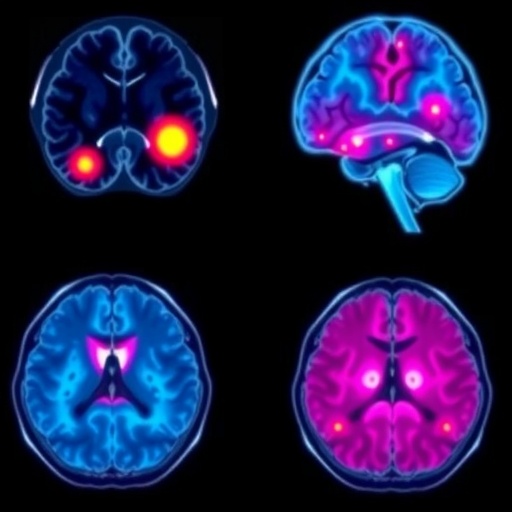
A new artificial intelligence model is opening a potential path toward more personalized treatment for patients whose lung cancer has spread to the brain. Researchers at the University of Pittsburgh Medical Center have developed THINKERS-Lung, a computational framework designed to help physicians evaluate stereotactic radiosurgery doses according to the characteristics of individual brain metastases rather than relying primarily on generalized clinical habits. The study, published in the Journal of Neuro-Oncology, examines whether an AI system can estimate the risk and timing of local tumor failure across different radiation doses, offering a more detailed form of decision support for Gamma Knife treatment.
Brain metastases are among the most serious complications of lung cancer. When a tumor spreads to the brain, stereotactic radiosurgery, or SRS, is frequently used to deliver highly focused radiation to one or more lesions while limiting exposure to surrounding healthy tissue. Gamma Knife is one such system, using numerous precisely aimed beams that converge on a target. The prescription dose is commonly selected using factors such as tumor size, location, number of lesions, prior treatments, and institutional protocols. Yet two metastases that appear similar on a scan can behave very differently. Some remain controlled for years, while others recur locally despite treatment, creating a need for models that can estimate tumor-specific outcomes more precisely.
THINKERS-Lung was created to address that problem by treating radiation dose as an active variable within the prediction process. Instead of producing a single fixed forecast based only on patient and tumor characteristics, the model can repeatedly assess the same metastasis under different candidate margin doses. In practical terms, clinicians could provide the system with information available before or at the time of treatment, then compare the predicted probability of local failure at several dose levels. The goal is not for the algorithm to replace a radiation oncologist or neurosurgeon, but to show how the expected benefit of changing the dose may vary from one lesion to another.
The researchers trained the system using retrospective data from 767 patients who underwent Gamma Knife radiosurgery for a total of 3,728 lung cancer brain metastases. The analysis was limited to variables known by the time of treatment, a design choice intended to make the model more realistic for clinical decision-making. These variables included patient-related information and characteristics of the treated lesions, while the margin dose was entered explicitly into the model. The team used a mixture-of-experts, or MoE, neural network combined with discrete-time survival modeling. This architecture allows multiple specialized neural components, known as experts, to learn different patterns in the data, while a gating mechanism determines how much each expert should influence a prediction for a particular case.
The survival component is important because local control is not simply a yes-or-no event. A metastasis may remain controlled at six months but fail at 14 months, and that timing carries clinical meaning. Discrete-time survival modeling divides follow-up into intervals and estimates the probability that failure will occur during each period, while accounting for lesions that have not failed by the end of observation. This approach enables THINKERS-Lung to estimate both the likelihood of local failure and the expected time until that failure. According to the study, the model achieved a mean area under the curve of 0.876 for predicting 12-month local failure during grouped five-fold cross-validation.
The area under the curve, or AUC, measures how effectively a prediction system distinguishes between lesions that experience an event and those that do not. A value of 0.5 corresponds roughly to random discrimination, while a value of 1.0 represents perfect separation. In a patient-grouped holdout test set, THINKERS-Lung produced an AUC of 0.863, with a 95 percent confidence interval ranging from 0.776 to 0.942. The model’s mean absolute error for time-to-failure prediction was 0.99 months in cross-validation and 1.26 months in the holdout test set. These results suggest that the framework was able to rank relative risk and estimate outcome timing with useful accuracy within the study population.
The investigators also assessed calibration, which asks whether predicted probabilities correspond to what actually happens. A model can have strong discrimination while still producing probabilities that are systematically too high or too low. THINKERS-Lung recorded a Brier score of 0.061, a calibration intercept of 0.18, and a calibration slope of 0.87. The Brier score evaluates the overall accuracy of probabilistic predictions, with lower values generally indicating better performance. A calibration slope close to 1 suggests that the spread of predictions is appropriate, while the intercept reflects whether the model tends to underpredict or overpredict overall risk. Together, these figures indicate favorable internal probabilistic performance, although they do not establish that the system will perform equally well in other hospitals or patient populations.
The study’s most distinctive feature is its proposed use as a comparative dose evaluation tool. A conventional prognostic model might estimate whether a patient is likely to experience recurrence after receiving a particular treatment. THINKERS-Lung instead allows the dose to be changed computationally while the other characteristics remain constant. This creates a series of counterfactual estimates: What might the predicted local-failure risk be at one dose, and how might it change at another? Such estimates could help physicians identify cases in which a higher dose appears likely to offer additional tumor control, as well as cases in which escalating radiation may provide little predicted advantage relative to the potential risks to nearby brain structures.
Despite the promising results, the model remains an investigational decision-support system rather than a validated treatment guideline. The study was retrospective and conducted at a single center, meaning that its data may reflect local patient-selection practices, imaging protocols, follow-up schedules, and Gamma Knife procedures. The authors performed grouped validation by patient to reduce the risk that multiple lesions from the same individual would appear in both training and testing data, but the model still requires external validation using independent, multi-institutional cohorts. Its predictions may also be affected by changes in systemic lung cancer therapy, including targeted treatments and immune checkpoint inhibitors, which can influence intracranial disease behavior. Before clinical adoption, prospective studies will be needed to determine whether AI-guided dose selection actually improves local control, reduces toxicity, or changes patient outcomes.
THINKERS-Lung is part of a broader effort to combine neural networks with clinically interpretable reasoning in radiosurgery. Rather than treating AI as a black box that produces an isolated risk score, the framework is designed to connect tumor-specific prediction with a treatment variable that physicians can examine directly. If future testing confirms its performance, this type of hybrid intelligence could allow radiosurgical planning to move beyond one-size-fits-all dose prescriptions. For patients with lung cancer brain metastases, the longer-term vision is a treatment strategy in which radiation intensity, expected local control, and the timing of possible failure are evaluated together for each lesion. The new findings do not yet prove that the system should guide routine care, but they offer a glimpse of how machine learning could make highly focused cancer treatment more individualized.
Cite Scienmag News
Nathaniel Bowman. (August 26, 2026). THINKERS: AI Combines Neural and Expert Reasoning for Lung Cancer Brain Metastases. Scienmag. https://scienmag.com/thinkers-ai-combines-neural-and-expert-reasoning-for-lung-cancer-brain-metastases/
Nathaniel Bowman. "THINKERS: AI Combines Neural and Expert Reasoning for Lung Cancer Brain Metastases." Scienmag, 26 August 2026, https://scienmag.com/thinkers-ai-combines-neural-and-expert-reasoning-for-lung-cancer-brain-metastases/. Accessed 3 September 2026.
Nathaniel Bowman. "THINKERS: AI Combines Neural and Expert Reasoning for Lung Cancer Brain Metastases." Scienmag. August 26, 2026. https://scienmag.com/thinkers-ai-combines-neural-and-expert-reasoning-for-lung-cancer-brain-metastases/


