


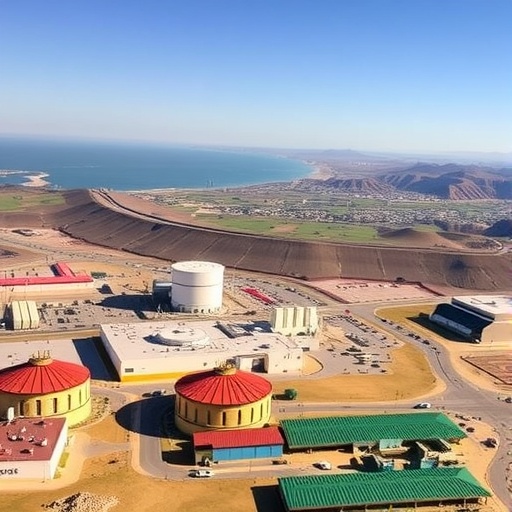
August 26, 2026 — In the affluent hills northwest of Los Angeles, where many households earn six-figure incomes and expensive homes overlook the Santa Susana Field Laboratory, researchers have found an unexpected pattern in how residents respond to environmental danger. A new study from the University of Southern California suggests that fear of contamination—not confidence, financial resources or a belief that risks can be controlled—was the strongest driver of protective behavior among people living near the former rocket and nuclear research facility. The finding offers a rare look at environmental risk perception in a wealthy community, challenging the assumption that residents with greater economic resources will automatically take more action to protect themselves. It also raises difficult questions about how people respond when money can reduce exposure but cannot guarantee safety, certainty or trust in official cleanup efforts.
The Santa Susana Field Laboratory, commonly known as SSFL, occupies approximately 2,850 acres in the Simi Hills between Los Angeles and Ventura counties. From 1949 to 2006, the site was used for rocket engine testing, while nuclear reactor operations took place there from 1953 to 1980. Those activities left radioactive materials, industrial chemicals and other hazardous waste in soil and groundwater. In 1959, a partial meltdown at the Sodium Reactor Experiment released radioactive material and is widely regarded as the most serious nuclear accident in United States history before the Three Mile Island accident. Although investigations and cleanup programs have continued for decades, contamination concerns extend beyond the facility boundary, where residents have long debated possible effects on human health, property values and the surrounding ecosystem. The site has been eligible for federal Superfund assistance since 2007 but remains absent from the National Priorities List, leaving much of the remediation process under state and local management rather than a comprehensive federal cleanup framework.
The health debate surrounding SSFL is particularly complex because scientific evidence has not produced a simple answer. Earlier investigations did not identify significant increases in most cancers commonly associated with community concern, although some analyses reported links between living closer to the facility and bladder, blood and thyroid cancers. A 1992 state health report concluded that cancer rates were inconsistent with exposure across the community as a whole, while also acknowledging substantial limitations in the available data. Those limitations included small sample sizes, incomplete information about historical exposure, difficulty reconstructing the movement of contaminants through air and groundwater, and the long delays that can occur between exposure and the development of disease. Epidemiological studies are designed to detect patterns across populations; they generally cannot determine whether an individual person’s illness was caused by a specific environmental source. That distinction remains central to interpreting the new findings, which describe reported health conditions and behaviors but do not establish that SSFL contamination caused them.
For the forthcoming study in the peer-reviewed journal Risk Analysis, USC researchers surveyed 475 adults living within 15 miles, or roughly 24 kilometers, of SSFL. The sample was unusually affluent compared with populations typically studied around Superfund sites: 56% of participants reported annual household incomes of at least $100,000. By comparison, Superfund facilities are often located near communities experiencing persistent economic disadvantage, and approximately 62% of households in those areas earn less than $50,000 annually. This contrast allowed the researchers to examine environmental risk through a different social lens. The study was not intended to measure contamination levels or calculate individual radiation doses. Instead, it investigated how residents perceived the hazard, whether they reported chronic illnesses, how close they lived to SSFL and which actions they took to reduce what they believed was their exposure. Participants answered questions at a single point in time, making the research cross-sectional rather than a long-term follow-up study.
One of the clearest patterns involved the relationship between reported illness and distance from the site. Among residents living within five miles of SSFL, 18% reported autoimmune disorders, compared with 4% among participants living 11 to 15 miles away. Metabolic and endocrine disorders showed a similar gradient, with reported rates of 15% in the closest group and 2% in the farthest group. More than one-third of participants said they had received at least one chronic diagnosis since moving into the area. That figure was approximately comparable to the national chronic illness rate of 38%, although the researchers noted that chronic disease is generally less common in higher-income populations. A distance-related pattern can be scientifically important because proximity may serve as a rough indicator of potential exposure, but it is not proof of causation. People living closer to SSFL may differ from those farther away in age, occupation, healthcare access, housing history, lifestyle, pre-existing conditions or willingness to participate in a contamination study. Without environmental measurements and longitudinal medical records, the results cannot show whether contaminants produced the observed differences.
The study also tested ideas drawn from Protection Motivation Theory, a framework used in health psychology to explain why people adopt behaviors intended to reduce danger. The theory generally proposes that protective action depends on how severe a person believes a threat to be, how vulnerable they feel, whether they believe a response will work and whether they think they are capable of carrying it out. In the SSFL survey, residents who viewed contamination as severe and believed they were personally vulnerable were more likely to report precautions. These included filtering tap water, removing shoes before entering the home, avoiding produce grown in household gardens and remaining indoors during windy conditions, when dust could potentially be redistributed. The researchers had expected perceived ability to manage risk—known in the theory as coping appraisal—to be a particularly powerful motivator in an affluent population. Instead, emotional threat appraisal appeared to dominate. Residents acted not because they felt fully in control, but because they feared the consequences of doing nothing.
Health anxiety helped explain part of this relationship. Participants who reported greater concern about their health also reported more protective behaviors, and anxiety accounted for some of the association between existing illness and precaution-taking. This does not mean that anxiety is irrational or that all concerns are unfounded. When people have a chronic condition, uncertainty about environmental exposure can make ordinary activities—drinking water, gardening, opening windows or spending time outdoors—feel unusually consequential. At the same time, anxiety can amplify attention to ambiguous symptoms and encourage people to connect illnesses to a nearby hazard even when the evidence remains inconclusive. The researchers therefore treated health anxiety as a psychological factor shaping behavior, not as evidence that contamination had caused disease. Their findings illustrate how risk communication must address both the physical hazard and the uncertainty surrounding it. Providing technical measurements without explaining what those measurements mean may leave residents with data but little reassurance or practical guidance.
Another result ran counter to conventional assumptions about the cost of prevention. Residents who believed that effective protection would be more expensive reported taking more protective measures. In many models of health behavior, high perceived cost is expected to discourage action. In this community, however, cost may have carried a different meaning. Wealthier households may have been better able to purchase water filtration systems, modify landscaping, avoid home-grown food or make other changes without sacrificing basic necessities. Alternatively, a higher price may have acted as a signal of effectiveness, leading participants to interpret expensive products or services as more capable of reducing risk. The survey cannot determine which explanation is correct, and it did not independently verify the quality or effectiveness of the precautions residents described. A costly filter, for example, may remove some contaminants but not others, depending on its design, maintenance and the chemistry of the water. Technical protection only works when it is matched to a measured exposure pathway.
The researchers say the results complicate the popular idea that economic privilege provides straightforward protection from environmental hazards. Affluent residents may have more choices, but they cannot purchase complete certainty about historical contamination, groundwater movement or the long-term consequences of low-level exposure. Property ownership, private testing and household precautions can reduce some forms of contact, yet they cannot replace transparent monitoring, credible epidemiology and effective remediation. The study’s authors, Jenna Blyler of the USC Wrigley Institute for Environment and Sustainability and the Department of Psychology, and Joseph Árvai of USC, the Wrigley Institute, the Department of Psychology and Decision Research, argue that understanding emotional responses is essential for designing realistic public-health communication. The findings should not be interpreted as proof that SSFL contamination caused autoimmune, metabolic or endocrine disease. They instead show that reported illness, perceived vulnerability, anxiety and proximity were associated with how residents responded to an unresolved environmental controversy. Because the study relied on self-reported diagnoses and a single survey, future research will need to combine medical records, repeated health assessments, contaminant monitoring, exposure modeling and carefully matched comparison groups. Until that evidence exists, the most scientifically responsible conclusion is also the most unsettling: even in a wealthy neighborhood, fear can become the main form of protection when environmental risk is persistent, technically complex and impossible for individuals to control alone.
News Publication Date: August 26, 2026
Web References: https://www.epa.gov/superfund ; https://www.energy.gov/sites/default/files/2023-01/DHS_Cancer_Study_1992.pdf
References: Blyler, Jenna, and Joseph Árvai, “Silver spoons in toxic soups: Predictors of protective action in affluent neighborhoods near a contaminated research facility,” Risk Analysis.
Cite Scienmag News
Courtney Benton. (August 26, 2026). Chronic Illness Rises Near Former California Nuclear Site. Scienmag. https://scienmag.com/chronic-illness-rises-near-former-california-nuclear-site/
Courtney Benton. "Chronic Illness Rises Near Former California Nuclear Site." Scienmag, 26 August 2026, https://scienmag.com/chronic-illness-rises-near-former-california-nuclear-site/. Accessed 3 September 2026.
Courtney Benton. "Chronic Illness Rises Near Former California Nuclear Site." Scienmag. August 26, 2026. https://scienmag.com/chronic-illness-rises-near-former-california-nuclear-site/


