


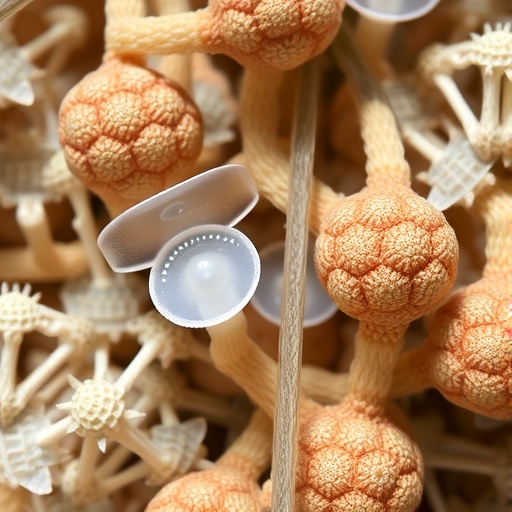
A hidden link between microbial chemistry and animal nutrition has emerged from a study published in Nature Ecology & Evolution, revealing that animals can break down polyhydroxyalkanoates, or PHAs, accumulated inside microbial cells. The finding places a previously overlooked class of biological polymers into the spotlight of ecology and biogeochemistry. PHAs are best known as energy- and carbon-storage materials produced by bacteria and archaea when nutrients are unbalanced—for example, when carbon is abundant but nitrogen or phosphorus is scarce. Microbes package excess carbon into dense intracellular granules, creating a reserve that can later be consumed to support growth. Until now, the fate of those reserves after microbes were eaten had received far less attention than the production and environmental breakdown of PHAs themselves. The new research, led by Christian Zeidler, Henrike R. Gruber-Vodicka and Daniel Michellod, indicates that animals are not merely passive consumers of PHA-producing microorganisms. They may actively digest and chemically exploit the polymers, converting a microbial storage strategy into an animal-accessible source of carbon and energy.
Polyhydroxyalkanoates are a diverse family of polyesters synthesized by microorganisms through pathways that channel acetyl-CoA and other central metabolic intermediates into long carbon chains. The best-known member is polyhydroxybutyrate, or PHB, although microbes can produce copolymers containing longer-chain hydroxyalkanoate units. These materials accumulate as granules in the cytoplasm and function much like lipid droplets or glycogen reserves in other organisms. Their hydrophobic structure allows cells to store large quantities of carbon without dramatically increasing osmotic pressure. When conditions change, specialized enzymes known as PHA depolymerases cleave the polymer into shorter molecules, ultimately generating compounds such as 3-hydroxybutyrate that can re-enter cellular metabolism. This chemistry has made PHAs attractive to biotechnology as biodegradable alternatives to petroleum-derived plastics. In natural ecosystems, however, PHAs are not simply environmentally friendly materials waiting to decompose. They are dynamic biological reserves, produced, stored, transferred and potentially dismantled across species boundaries. The study’s central importance lies in showing that the final steps of this process can occur inside animal consumers.
The researchers investigated animal–microbe interactions in which PHA-rich microorganisms become food. Such interactions are common across ecosystems, from soils and sediments to host-associated communities and marine habitats. Microbial cells can contain substantial quantities of storage polymers, particularly when they grow under nutrient limitation. When an animal ingests those cells, the polymer granules enter a digestive environment with very different chemical conditions from the microbial cytoplasm. Acidity, digestive enzymes, mechanical disruption and the action of resident symbionts can all influence whether the PHA remains intact or becomes available to the host. The study provides evidence that the polymers are degraded during animal digestion rather than simply passing through the gut unchanged. That distinction matters because it demonstrates a direct biochemical route by which microbial carbon reserves can enter animal metabolism. Instead of viewing microbial storage compounds as an endpoint of cellular carbon management, ecologists may now need to treat them as transferable resources within food webs.
At the molecular level, PHA degradation requires more than general digestion. The polymer is a polyester, meaning that its repeating units are connected by ester bonds. Enzymes capable of attacking those bonds must interact with an insoluble, hydrophobic substrate that is packed into granules and often associated with proteins and lipids. Microbial PHA depolymerases are typically adapted to this challenge, binding to polymer surfaces and releasing soluble oligomers or monomers. An animal could obtain the necessary activity from its own digestive tissues, from microbes living in its gut, or from a combination of both. Once released, hydroxyalkanoate products can be converted into acetyl-CoA or related intermediates, which feed into the tricarboxylic acid cycle and generate reducing power for ATP production. The research therefore points to a functional process rather than simple physical fragmentation: animal-associated enzymes or symbiotic microorganisms can unlock a chemically specialized microbial reserve and make its carbon physiologically useful.
This discovery also challenges assumptions about what animals can obtain from microbial prey. The nutritional value of bacteria and archaea is often described in terms of proteins, lipids, nucleic acids and readily metabolized carbohydrates. Storage polyesters have rarely been included in that inventory, despite the fact that they can represent a significant fraction of microbial dry mass under the right environmental conditions. If animals can consistently digest PHAs, the polymer could alter the energy balance of microbial grazing. A predator consuming PHA-rich cells might receive a different mixture of carbon and nutrients from one consuming cells grown under nutrient-replete conditions. The effect could be especially pronounced in environments where microbes regularly experience feast-and-famine cycles, such as coastal sediments, oxygen gradients, wastewater systems and nutrient-poor marine habitats. In those settings, PHA production may be a survival strategy for microbes, while PHA consumption becomes an underappreciated nutritional pathway for animals.
The ecological consequences extend beyond individual feeding events. Microbial storage polymers can influence how quickly carbon moves through an ecosystem and how long it remains locked inside living biomass. If PHA-rich cells die and their polymers are degraded by free-living microbes, carbon may remain within the microbial loop. If animals consume those cells and digest the polymers, some of the carbon can be redirected into animal biomass, respiration, excretion and movement. This creates a pathway connecting microbial carbon storage to higher trophic levels. The timing of that transfer could also matter. A microbial community that accumulates PHA during periods of carbon excess may become especially nutritious to grazers later, even if the surrounding environment is poor in dissolved organic compounds. Animal consumption could then feed back on microbial community composition, favoring organisms that either store carbon efficiently or protect their granules from digestion. In this way, a biochemical feature evolved for microbial survival may help shape predator–prey dynamics.
The findings may also have implications for symbioses in which animals depend heavily on microbes for nutrition. Many invertebrates host dense microbial communities or cultivate microorganisms as food. In such systems, the animal’s digestive tract is not merely a chamber for breaking down prey; it is a chemically structured environment where microbial products can be selectively processed. PHA degradation could provide an additional benefit of maintaining particular symbionts or consuming particular bacterial partners. It may also influence competition among microbial lineages. Some microbes can store carbon as PHAs, while others use glycogen, wax esters or alternative compounds. The relative digestibility of these reserves could affect which microbes are retained, expelled or preferentially consumed. The study consequently opens questions about whether animals have evolved dedicated mechanisms for handling PHAs, whether gut microbes perform most of the work, and how widespread the trait is across animal groups. Answering those questions will require combining enzymology, microscopy, metabolomics, isotope tracing and controlled feeding experiments.
The research arrives as PHAs are receiving intense attention from the plastics industry. Because they are made by microorganisms and can biodegrade under suitable conditions, PHAs are being developed for packaging, agricultural films, medical materials and other applications. Their environmental performance depends not only on how they are manufactured, but also on what happens after disposal. Demonstrating that animals can degrade microbial PHAs does not mean that every PHA product will rapidly disappear in every ecosystem. Polymer composition, crystallinity, additives, particle size, temperature, oxygen availability and the presence of suitable enzymes can all alter biodegradation rates. Nor does biological degradability automatically eliminate ecological risk. Animals may ingest particles without efficiently metabolizing them, and degradation products may move through food webs in ways that require careful study. Nevertheless, the discovery adds animals to the list of biological actors that could influence the environmental fate of PHA-based materials. It suggests that biodegradation assessments should consider digestion and animal–microbe interactions, not only bacteria and fungi in soil or seawater.
The broader message is that nature’s carbon cycle contains more biochemical handoffs than conventional food-web diagrams reveal. A carbon atom fixed by a microorganism can be stored in a polymer granule, transferred to an animal through feeding, released by digestive chemistry and returned to metabolism as fuel. Each step depends on molecular details that are easy to miss when ecosystems are described only by broad categories such as producer, consumer and decomposer. By identifying animal degradation of microbial storage PHAs, Zeidler, Gruber-Vodicka, Michellod and colleagues have highlighted a concealed route through which microbial physiology can influence animal nutrition and ecosystem carbon flow. Future studies will need to determine how common this ability is, which enzymes are responsible, and whether PHA-rich microbial prey measurably affects animal growth, reproduction or behavior. The answer could reshape understanding of microbial grazing while giving scientists a new lens for evaluating biodegradable plastics. A molecule once viewed mainly as a microbial reserve and industrial material may prove to be a significant currency moving between microbes, animals and the environment.
Cite Scienmag News
Morgan Morrow. (August 26, 2026). Animals Degrade Microbial Polyhydroxyalkanoate Storage Materials. Scienmag. https://scienmag.com/animals-degrade-microbial-polyhydroxyalkanoate-storage-materials/
Morgan Morrow. "Animals Degrade Microbial Polyhydroxyalkanoate Storage Materials." Scienmag, 26 August 2026, https://scienmag.com/animals-degrade-microbial-polyhydroxyalkanoate-storage-materials/. Accessed 3 September 2026.
Morgan Morrow. "Animals Degrade Microbial Polyhydroxyalkanoate Storage Materials." Scienmag. August 26, 2026. https://scienmag.com/animals-degrade-microbial-polyhydroxyalkanoate-storage-materials/


