


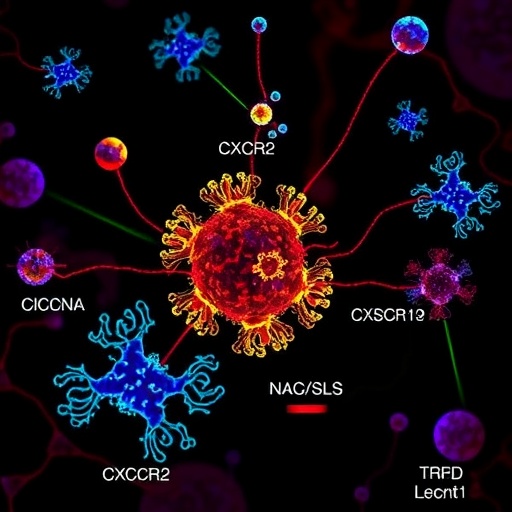
Pancreatic cancer has long been regarded as one of the most difficult cancers to treat, not only because malignant cells are often detected late, but also because the tumor builds a biological environment that actively shields it from immune attack. New research now points to a dual-action strategy that may weaken two critical components of that defense at the same time. In a study focused on pancreatic tumors lacking the chromatin-regulating gene ARID1A, anti-CXCR2 antibodies were shown to inhibit tumor cells while also disrupting the activity of tumor-associated neutrophils, immune cells that can be recruited into tumors and redirected to support cancer progression. The combined effect suppressed tumor growth and improved the performance of immunotherapy in experimental models, offering a potential new direction for treating a molecularly defined subset of pancreatic cancer.
ARID1A encodes a component of the SWI/SNF, or BAF, chromatin-remodeling complex, a molecular machine that regulates access to DNA and helps determine which genes are active. Loss-of-function alterations in ARID1A can alter cellular identity, DNA repair, inflammatory signaling and interactions with the surrounding tissue. Although ARID1A deficiency is found in several cancer types, including pancreatic ductal adenocarcinoma, its biological consequences are not uniform. In pancreatic tumors, the loss of this gene appears to produce vulnerabilities that can be exploited therapeutically, while simultaneously contributing to a microenvironment that is unusually resistant to immune-based treatment. The new findings connect those two features through the CXCR2 signaling pathway, a chemokine receptor that acts as a navigational system for neutrophils and can also influence the behavior of malignant cells.
CXCR2 is activated by a group of inflammatory chemokines, including CXCL1, CXCL2, CXCL5 and CXCL8 in human systems. These signals create chemical trails that guide neutrophils from the bloodstream into tissues. In a tumor, however, the process can become distorted. Tumor-associated neutrophils may release proteases, reactive oxygen species, growth-promoting factors and immunosuppressive mediators. They can remodel the extracellular matrix, stimulate blood-vessel formation and interfere with the ability of cytotoxic T cells to enter or function within the tumor. By blocking CXCR2, researchers aim to interrupt the recruitment and activation of these neutrophils rather than eliminating the entire immune cell population. That distinction is important because neutrophils perform essential functions in normal host defense, and a clinically useful treatment would need to balance antitumor activity with preservation of immune protection.
The study’s central advance lies in its conclusion that CXCR2 inhibition acts on more than one cellular compartment. Anti-CXCR2 antibodies were associated with direct suppression of ARID1A-deficient tumor cells and with a reduction in the tumor-supportive influence of associated neutrophils. The tumor-cell effect suggests that cancer cells carrying ARID1A loss may depend on CXCR2-related signaling for survival, proliferation or adaptation to stress. The immune effect reflects a different mechanism: blocking the receptor can prevent neutrophils from accumulating in the tumor or can alter their functional state after arrival. Together, these actions may produce a stronger response than targeting either the malignant cells or the tumor microenvironment alone. The result is a therapeutic concept based on biological cooperation, in which the same antibody interferes with a cancer-intrinsic pathway and an immune-extrinsic support system.
This dual mechanism is particularly relevant to pancreatic ductal adenocarcinoma, whose dense stroma and suppressive immune landscape have repeatedly limited the impact of immunotherapy. Many pancreatic tumors contain abundant fibroblasts, extracellular matrix proteins, suppressive myeloid cells and relatively few T cells capable of recognizing and killing cancer cells. Even when T cells are present, they may be physically excluded from tumor nests or functionally silenced by cytokines, metabolic stress and inhibitory receptor signaling. Neutrophils can contribute to this barrier by shaping the tissue architecture and producing factors that restrain adaptive immunity. Removing or redirecting that pressure could make the tumor more accessible to therapeutic T-cell responses. The research therefore treats CXCR2 not simply as a marker of inflammation, but as a control point linking tumor behavior, immune-cell trafficking and the effectiveness of immune checkpoint blockade.
In experimental models, anti-CXCR2 treatment reduced the growth of ARID1A-deficient pancreatic tumors. The effect became more pronounced when the antibody was combined with immunotherapy, indicating that CXCR2 blockade may help convert an immune-resistant tumor into one that is more responsive to T-cell-directed treatment. Although the precise combination used depends on the experimental system, the underlying logic is consistent with current immuno-oncology strategies: suppress the signals that recruit or empower immunosuppressive myeloid cells while releasing inhibitory brakes on antitumor lymphocytes. A checkpoint inhibitor alone may fail if neutrophils continue to exclude T cells or suppress their activity. Conversely, disrupting neutrophil trafficking may be insufficient if tumor-reactive T cells remain inhibited. The combined approach addresses both limitations, creating conditions in which immune activation can be translated into tumor-cell killing.
The research also highlights the importance of genotype-guided treatment. ARID1A deficiency is not merely a descriptive feature of the cancer; it may determine how the tumor responds to CXCR2-directed therapy. Tumors with intact ARID1A could rely on different signaling networks and may not display the same dependence on CXCR2. This raises the possibility that ARID1A status could serve as a biomarker for selecting patients most likely to benefit. In a future clinical setting, testing might involve sequencing tumor tissue or circulating tumor DNA to identify damaging ARID1A alterations, followed by assessment of CXCR2 activity and neutrophil infiltration. Such a strategy would require careful validation because gene loss can be heterogeneous within a tumor, and the presence of an ARID1A mutation does not automatically prove that every malignant cell has the same biological dependency.
The findings nevertheless remain preclinical, and several challenges must be addressed before they can influence routine care. Antibodies that block CXCR2 could affect neutrophil movement outside tumors, potentially increasing susceptibility to infection or altering wound healing and inflammatory responses. Tumors may also bypass the blockade by using alternative chemokine receptors or by recruiting other suppressive myeloid populations, including monocytes and macrophages. The balance between suppressing harmful tumor-associated neutrophils and preserving protective neutrophil functions will be a central issue in dose selection and patient monitoring. Researchers will also need to determine whether the treatment is most effective before surgery, after surgery, in metastatic disease or in combination with chemotherapy, radiation or targeted drugs. Pancreatic tumors are biologically diverse, and responses observed in mouse models may not fully capture the complexity of human disease.
The study’s implications extend beyond pancreatic cancer because ARID1A alterations and CXCR2-driven inflammation occur in multiple malignancies. If the relationship between chromatin-remodeling defects and neutrophil-dependent immune suppression is confirmed in other tumor types, CXCR2 antibodies could become part of a broader precision-immunotherapy framework. The work also reinforces a growing view of cancer genetics: mutations do not only change the behavior of tumor cells in isolation; they can reshape the immune ecosystem surrounding them. A defect in chromatin regulation may alter the signals that cancer cells emit, the immune cells they attract and the conditions that determine whether therapy succeeds. By targeting that network rather than focusing exclusively on the malignant cell, investigators may be able to expose vulnerabilities that conventional treatments leave untouched.
For patients with pancreatic cancer, the prospect of a therapy tailored to ARID1A deficiency remains preliminary but significant. The new findings suggest that blocking CXCR2 could strike at the disease from two directions, weakening the tumor itself and removing a myeloid shield that limits immune attack. The enhanced response to immunotherapy provides a rationale for future studies testing CXCR2 inhibition alongside checkpoint blockade in carefully selected patients. Those trials will need to establish safety, define reliable biomarkers, measure changes in neutrophil populations and determine whether tumor shrinkage translates into longer survival. If the results hold in humans, the approach could offer a way to transform the inflammatory environment of ARID1A-deficient pancreatic tumors from an obstacle into a therapeutic target, bringing precision medicine and immunotherapy closer together for one of the world’s most formidable cancers.
Cite Scienmag News
Nathaniel Bowman. (August 26, 2026). CXCR2 antibodies target tumors and neutrophils, enhancing immunotherapy in ARID1A-deficient pancreatic cancer. Scienmag. https://scienmag.com/cxcr2-antibodies-target-tumors-and-neutrophils-enhancing-immunotherapy-in-arid1a-deficient-pancreatic-cancer/
Nathaniel Bowman. "CXCR2 antibodies target tumors and neutrophils, enhancing immunotherapy in ARID1A-deficient pancreatic cancer." Scienmag, 26 August 2026, https://scienmag.com/cxcr2-antibodies-target-tumors-and-neutrophils-enhancing-immunotherapy-in-arid1a-deficient-pancreatic-cancer/. Accessed 3 September 2026.
Nathaniel Bowman. "CXCR2 antibodies target tumors and neutrophils, enhancing immunotherapy in ARID1A-deficient pancreatic cancer." Scienmag. August 26, 2026. https://scienmag.com/cxcr2-antibodies-target-tumors-and-neutrophils-enhancing-immunotherapy-in-arid1a-deficient-pancreatic-cancer/


