


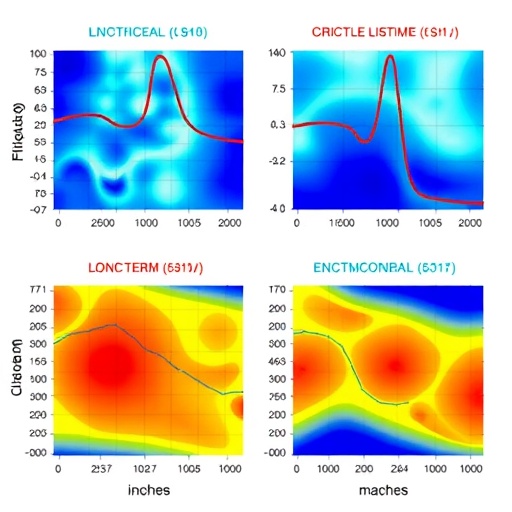
A diabetes diagnosis is often treated as a starting point: a moment when blood sugar becomes high enough to cross a clinical threshold, prompting medication, lifestyle changes and regular monitoring. But for many adults, the risks that follow are not fixed at diagnosis. They evolve as glucose levels, blood pressure, kidney function, weight, treatments and other health conditions change. A new study published in Nature Communications presents dynamic risk prediction models designed to track that moving target, estimating the likelihood that adults newly diagnosed with diabetes will experience acute or chronic complications over time.
The research, led by R.G. McCoy, S. Patel, L. Faust and colleagues, addresses a central challenge in modern diabetes care: two people who receive the same diagnosis can face very different futures. One may remain relatively stable with consistent treatment, while another may rapidly develop kidney disease, cardiovascular problems, vision loss or other complications. Conventional risk calculators often provide a single estimate based largely on information collected at one point. Dynamic models, by contrast, can update predictions as new clinical data become available, potentially offering a more responsive picture of individual risk.
That distinction matters because diabetes is not a static illness. Blood glucose measurements fluctuate, treatment regimens are intensified or discontinued, and complications can appear gradually or emerge suddenly. Acute events may include severe metabolic disturbances or urgent cardiovascular episodes, while chronic complications develop over months or years and can damage the kidneys, eyes, nerves, heart and blood vessels. By incorporating information collected during follow-up, a dynamic model can reflect how a patient’s risk changes after diagnosis rather than assuming that the initial clinical profile remains unchanged.
Technically, these models are designed to combine baseline characteristics with time-updated measurements. A patient’s age, diabetes-related laboratory results, blood pressure, kidney function, medication history and coexisting conditions can all contribute to a changing risk estimate. Instead of calculating probability only once, the model repeatedly processes new observations and revises its forecast. This approach is closely related to longitudinal prediction, in which the timing and sequence of clinical events are as important as the values themselves. In practical terms, a model might distinguish between a patient whose risk indicators improve after treatment and one whose measurements deteriorate despite therapy.
The study focuses specifically on adults newly diagnosed with diabetes, a group for whom early decisions may have long-term consequences. At the time of diagnosis, clinicians must determine how intensively to monitor a patient, which therapies to prioritize and whether additional screening is needed. Yet early clinical data can be incomplete or ambiguous. A person may have undetected kidney damage, cardiovascular risk or metabolic instability that becomes visible only after several visits. A prediction system capable of learning from this accumulating information could help clinicians identify which patients need more frequent assessment and which may be safely managed through standard follow-up.
Validation is a critical part of this work. A model can appear impressive when tested on the same kind of data used to develop it, but that performance may not hold when applied to different patients or later clinical records. Development and validation therefore serve separate purposes: the first stage identifies patterns associated with future complications, while the second examines whether those patterns produce reliable predictions beyond the original modeling process. For risk prediction, researchers typically assess discrimination—how well the model separates people at higher and lower risk—and calibration, or how closely predicted probabilities match observed outcomes. Both are essential if a model is to influence real clinical decisions.
The researchers’ emphasis on both acute and chronic complications is especially important because the two categories demand different forms of prevention. Acute complications may require rapid recognition and immediate intervention, meaning that a model must identify short-term changes in risk. Chronic complications, in contrast, are often shaped by cumulative exposure to high glucose, hypertension, inflammation and other biological stresses. Their prevention depends on sustained control and screening over years. A single prediction framework that can address both timescales could offer a more integrated view of diabetes care, linking near-term safety with long-term preservation of organ function.
The potential impact extends beyond individual appointments. Health systems increasingly collect large volumes of electronic health record data, but those data are not automatically transformed into useful clinical guidance. Dynamic prediction models could provide a way to convert repeated laboratory tests, diagnoses and medication changes into structured risk estimates embedded in routine care. Such tools might support reminders for eye or kidney screening, identify people who could benefit from treatment escalation and help allocate specialist resources. They could also support shared decision-making by giving patients a clearer explanation of why monitoring intensity or treatment recommendations change over time.
At the same time, prediction is not the same as certainty, and a risk estimate cannot replace clinical judgment. Models may reflect biases in the populations from which their data were drawn, perform differently across healthcare systems or become less accurate as treatment patterns change. A high predicted risk does not guarantee that a complication will occur, just as a low predicted risk does not eliminate the possibility. Any clinical implementation would require careful evaluation of fairness, transparency, workflow integration and the consequences of false alarms or missed cases. The most useful system would not simply produce a number; it would connect that number to an understandable, evidence-based action.
The broader message from McCoy, Patel, Faust and their colleagues is that diabetes risk assessment may be moving away from the one-time calculator and toward a continuously updated clinical forecast. For adults newly diagnosed with diabetes, this could mean that prevention is guided not only by who they are at diagnosis, but also by how their health changes afterward. If validated across diverse populations and integrated responsibly into care, dynamic prediction could help transform diabetes management from a reactive response to complications into a more anticipatory strategy—one that detects danger earlier, personalizes follow-up and keeps pace with the disease itself.
Cite Scienmag News
Ophelia Keating. (August 25, 2026). New models predict short- and long-term diabetes complications after diagnosis. Scienmag. https://scienmag.com/new-models-predict-short-and-long-term-diabetes-complications-after-diagnosis/
Ophelia Keating. "New models predict short- and long-term diabetes complications after diagnosis." Scienmag, 25 August 2026, https://scienmag.com/new-models-predict-short-and-long-term-diabetes-complications-after-diagnosis/. Accessed 4 September 2026.
Ophelia Keating. "New models predict short- and long-term diabetes complications after diagnosis." Scienmag. August 25, 2026. https://scienmag.com/new-models-predict-short-and-long-term-diabetes-complications-after-diagnosis/


