


A new analysis of approximately 2.3 million people has examined whether following a Mediterranean-style diet is associated with a lower risk of pancreatic cancer, one of the most difficult cancers to detect and treat. Drawing on the Pooling Project of Prospective Studies of Diet and Cancer, the investigation brings together data from multiple large-scale studies to explore a question that has remained unresolved despite decades of nutritional research: can an overall dietary pattern influence the development of a malignancy that is often diagnosed only after it has begun to spread?
Pancreatic cancer accounts for a relatively small share of all cancer diagnoses compared with breast, lung, colorectal, or prostate cancer, yet it is among the deadliest. The pancreas lies deep within the abdomen, and early tumors frequently produce few distinctive symptoms. By the time jaundice, persistent abdominal or back pain, unexplained weight loss, or digestive problems appear, the disease may already be advanced. Survival has improved only gradually, making prevention especially important. Researchers have therefore turned their attention from individual “superfoods” to broader dietary patterns that may affect inflammation, metabolism, body weight, and insulin regulation over many years.
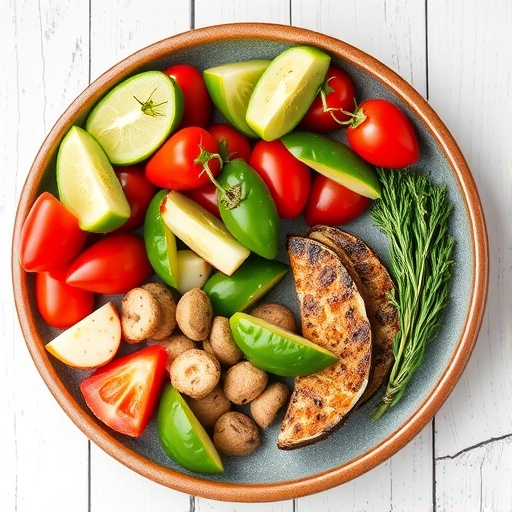
The Mediterranean diet is generally characterized by frequent consumption of vegetables, fruits, legumes, whole grains, nuts, seeds, and olive oil, with moderate intake of fish and other seafood and comparatively limited consumption of red and processed meat, refined carbohydrates, and highly processed foods. Although traditional versions of the diet vary across countries, its central feature is not a single ingredient but the combination of foods and eating habits. Epidemiologists often evaluate adherence using a scoring system that assigns points according to how closely a participant’s reported intake resembles this pattern. A higher score indicates greater adherence, but it does not mean that every participant follows an identical menu.
The new study uses the strength of prospective research, in which dietary information is collected before cancer develops. This design reduces a problem known as recall bias, because participants are not asked to reconstruct their usual diet after receiving a diagnosis. The Pooling Project also allows investigators to analyze a much larger population than most individual cohorts could provide. By combining datasets, researchers can identify more pancreatic cancer cases, improve statistical precision, and examine whether an apparent association remains consistent across different populations, age groups, and study settings.
To estimate risk, investigators typically compare pancreatic cancer incidence among people with different levels of Mediterranean diet adherence while accounting for factors that can influence both diet and cancer. These may include age, smoking, alcohol consumption, physical activity, body mass index, diabetes, and total energy intake. Statistical models such as Cox proportional-hazards regression are commonly used in this setting. The resulting hazard ratio represents the relative rate at which cancer occurs in one group compared with another during follow-up. A hazard ratio below one may suggest lower risk, but it does not prove that the diet itself caused the difference.
The analysis reports an association between Mediterranean diet adherence and pancreatic cancer risk, adding large-scale evidence to a field where earlier studies have produced mixed results. The significance of the finding lies less in the idea that one dietary pattern can provide absolute protection and more in the scale and structure of the investigation. Pancreatic cancer is relatively uncommon in the general population, so even very large studies may detect only a modest change in relative risk. For an individual, the absolute reduction associated with dietary habits may therefore be small, while the potential public-health effect could become meaningful when applied across millions of people.
Several biological pathways could help explain why a Mediterranean-style dietary pattern might be linked to pancreatic cancer risk. High-fiber foods can influence the gut microbiome and the production of short-chain fatty acids, molecules involved in immune and metabolic signaling. Fruits, vegetables, nuts, and olive oil provide polyphenols, carotenoids, vitamin E, and other compounds with antioxidant or anti-inflammatory properties. Fish supplies unsaturated fatty acids, while replacing processed meat and refined carbohydrates may reduce exposure to compounds and metabolic disturbances associated with chronic disease. These mechanisms remain hypotheses rather than proof of a direct anticancer effect, particularly because diet influences many systems simultaneously.
Metabolic health may be especially relevant. Obesity, type 2 diabetes, insulin resistance, and chronic inflammation have all been investigated as potential contributors to pancreatic cancer development. A diet rich in fiber and unsaturated fats may support better glucose regulation and healthier body composition, although the relationship is complex. Diabetes can also occur as an early manifestation of pancreatic cancer, rather than simply acting as a cause, creating a major challenge for observational studies. Researchers must therefore consider whether newly diagnosed or undiagnosed disease altered participants’ eating habits before the tumor was detected, a phenomenon known as reverse causation.
The study’s size cannot eliminate every limitation. Dietary questionnaires provide estimates rather than continuous measurements of what people eat, and participants may change their diets during follow-up. The Mediterranean diet score may also capture broader lifestyle patterns: people with higher scores may exercise more, smoke less, receive preventive health care more often, or have different socioeconomic circumstances. Statistical adjustment can reduce confounding, but it cannot guarantee that all relevant differences have been measured. In addition, pancreatic cancer includes biologically diverse tumors, and future work may determine whether dietary associations differ by tumor subtype, genetic background, sex, diabetes status, or smoking history.
The findings nonetheless strengthen the case for viewing diet as part of a long-term strategy for cancer prevention rather than as a short-term treatment. They do not suggest that eating Mediterranean-style foods can prevent every case of pancreatic cancer, nor that people should rely on diet instead of medical evaluation for persistent symptoms. Their broader message is more practical: patterns emphasizing plant foods, whole grains, legumes, nuts, fish, and unsaturated fats are compatible with lower risk of several chronic diseases and may also be relevant to pancreatic cancer. The next challenge is to determine which components matter most, how early in life dietary habits exert their influence, and whether carefully designed interventions can confirm the associations observed in long-running population studies.
Cite Scienmag News
Daisy Hatcher. (August 25, 2026). Mediterranean Diet and Pancreatic Cancer Risk Studied in 2.3 Million Participants. Scienmag. https://scienmag.com/mediterranean-diet-and-pancreatic-cancer-risk-studied-in-2-3-million-participants/
Daisy Hatcher. "Mediterranean Diet and Pancreatic Cancer Risk Studied in 2.3 Million Participants." Scienmag, 25 August 2026, https://scienmag.com/mediterranean-diet-and-pancreatic-cancer-risk-studied-in-2-3-million-participants/. Accessed 4 September 2026.
Daisy Hatcher. "Mediterranean Diet and Pancreatic Cancer Risk Studied in 2.3 Million Participants." Scienmag. August 25, 2026. https://scienmag.com/mediterranean-diet-and-pancreatic-cancer-risk-studied-in-2-3-million-participants/


