


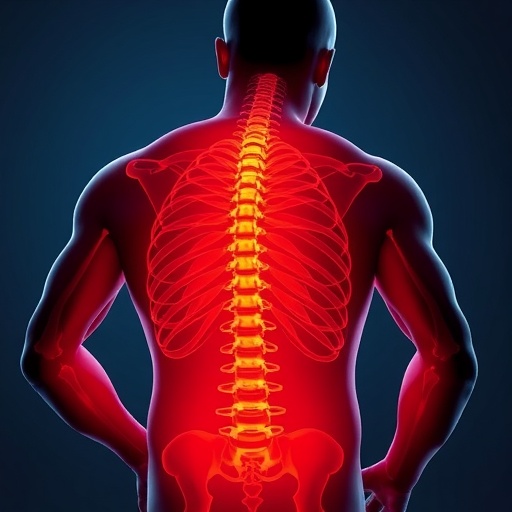
Chronic low back pain has become one of the world’s most persistent and unevenly treated health problems, and a new analysis of the World Health Organization’s guideline is urging countries to treat it not simply as a spinal disorder, but as a test of whether health systems can deliver affordable, evidence-based care to everyone. The guideline focuses on chronic primary low back pain in adults—a condition lasting at least three months for which no specific disease, such as cancer, infection, inflammatory arthritis or a major structural injury, adequately explains the symptoms. Its central message is disruptive in a medical culture often dominated by scans, injections and surgery: most patients need coordinated, non-surgical care that addresses movement, pain biology, psychological distress, work, social circumstances and access to support.
Low back pain is already among the leading causes of disability worldwide. Although many episodes improve within weeks, a substantial proportion of people develop persistent pain that interferes with employment, sleep, mobility and family life. The burden is not distributed evenly. People living in low- and middle-income countries, rural communities and underserved urban areas may face long waits, high treatment costs, limited rehabilitation services and a shortage of trained clinicians. Women, older adults, people with disabilities and workers in physically demanding occupations can experience additional barriers. The WHO’s approach therefore places equity at the center of treatment, arguing that a recommendation is not truly effective if it can be followed only by patients who can afford private physiotherapy, repeated consultations or advanced imaging.
The clinical challenge begins with diagnosis. Chronic primary low back pain is defined partly by exclusion: clinicians must remain alert for “red flags” that suggest a serious underlying condition, including progressive neurological deficits, severe trauma, fever, unexplained weight loss, a history of cancer or symptoms indicating infection or inflammatory disease. Yet once these causes have been considered and the presentation is consistent with primary low back pain, routine imaging often provides little benefit. Magnetic resonance imaging can reveal disc degeneration, bulges or joint changes in people who have no pain at all, making incidental findings easy to mistake for the cause. This can trigger fear, unnecessary referrals and invasive procedures without improving long-term outcomes. The guideline consequently supports clinical assessment and selective investigation rather than automatic scanning.
Instead of searching for a single damaged structure, the WHO framework reflects the modern biopsychosocial understanding of persistent pain. Biological factors such as muscle deconditioning, altered sensitivity in the nervous system and reduced spinal or hip movement may interact with fear of movement, depression, anxiety, poor sleep, job insecurity and social isolation. In some patients, the nervous system becomes more responsive to signals from the back, amplifying discomfort even after tissues have healed. That does not make the pain imaginary; it means pain is produced by a complex protective system influenced by the brain, immune system, muscles, beliefs and environment. Effective care must therefore be personalized, progressive and focused on restoring function as well as reducing symptoms.
Exercise is one of the most important pillars of the recommended approach. Different forms—including strengthening, aerobic activity, stretching, motor-control training, yoga-inspired movement and other structured programs—can produce modest average improvements in pain and physical function. The technical principle is not that one “perfect” exercise corrects a spinal defect, but that regular, appropriately dosed movement can improve capacity, confidence and tolerance of everyday activity. Programs should be adapted to a person’s abilities, preferences, culture and resources. For some, this may mean supervised physiotherapy; for others, home-based routines, walking groups, community classes or digital coaching. Progress usually depends less on intensity at the beginning than on consistency, gradual progression and avoiding the cycle of overexertion followed by prolonged rest.
Education and psychological interventions are also treated as active components of care rather than optional extras. Patients can benefit from clear explanations that persistent pain does not necessarily indicate ongoing tissue damage and that safe movement is generally preferable to prolonged bed rest. Cognitive behavioral therapy and related approaches may help people recognize unhelpful pain-related beliefs, manage distress, improve coping and rebuild activity. These methods do not claim that thoughts cause pain or that patients should simply “think positively.” Instead, they target the interaction between pain, attention, fear, sleep, mood and behavior. When combined with exercise and practical support, psychological care can help reduce disability even when pain is not completely eliminated.
The guideline also recognizes that some physical and pharmacological treatments may have a role, but it places them within a carefully balanced risk–benefit framework. Manual therapies, massage and selected physical treatments may offer short-term relief for some people, particularly when integrated with exercise and education rather than used as stand-alone solutions. Non-steroidal anti-inflammatory drugs can be considered in appropriate adults after clinicians assess gastrointestinal, kidney and cardiovascular risks, drug interactions and the shortest effective duration. By contrast, routine use of opioids is not supported because dependence, overdose and other serious harms can outweigh uncertain long-term benefits. Treatments such as traction and other passive technologies should not become default care when evidence of meaningful, sustained benefit is weak.
The implications extend far beyond the consultation room. In many health systems, services are organized around isolated specialties: a patient may move from primary care to imaging, orthopedics, pain medicine and pharmacy without a shared plan. The WHO recommendations encourage integrated pathways in which primary-care clinicians can identify serious disease, provide first-line advice, initiate exercise and self-management support, and refer selectively to rehabilitation or psychological services. This requires training, standardized communication and reliable follow-up. It also demands policies that make essential care affordable, including publicly supported rehabilitation, community-based programs and telehealth options where internet access is realistic. In resource-limited settings, task-sharing and group-based care may help expand coverage without requiring every patient to see a specialist.
Equity is not achieved simply by publishing a universal recommendation. A program that assumes private transport, flexible employment, broadband access or fluent health literacy may widen disparities even when its clinical content is sound. Implementation must be shaped by local communities and monitored with data disaggregated by sex, age, income, geography, disability and other relevant factors. Health authorities need to measure more than pain scores: they should track function, participation in work and daily life, waiting times, treatment affordability, medication safety and whether disadvantaged groups are actually receiving care. The WHO guideline’s broader significance is its insistence that chronic low back pain is both a clinical problem and a systems problem. Its most consequential innovation may be the shift away from dramatic, procedure-centered solutions toward coordinated, humane and scalable care—an approach that could reduce unnecessary interventions while giving millions of people a more realistic path back to movement and independence.
Cite Scienmag News
Courtney Benton. (August 24, 2026). WHO guideline promotes equitable nonsurgical care for chronic low back pain. Scienmag. https://scienmag.com/who-guideline-promotes-equitable-nonsurgical-care-for-chronic-low-back-pain/
Courtney Benton. "WHO guideline promotes equitable nonsurgical care for chronic low back pain." Scienmag, 24 August 2026, https://scienmag.com/who-guideline-promotes-equitable-nonsurgical-care-for-chronic-low-back-pain/. Accessed 4 September 2026.
Courtney Benton. "WHO guideline promotes equitable nonsurgical care for chronic low back pain." Scienmag. August 24, 2026. https://scienmag.com/who-guideline-promotes-equitable-nonsurgical-care-for-chronic-low-back-pain/


