


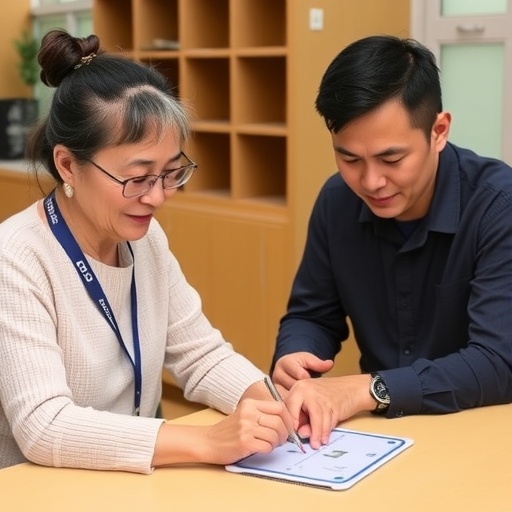
Loneliness has long been treated as an unfortunate consequence of ageing, but researchers at The Hong Kong Polytechnic University (PolyU) are advancing a more precise view: social disconnection can be identified, measured and addressed before it develops into a deeper health crisis. The university’s nursing researchers have developed Hong Kong’s first community-based screening tool specifically designed to detect social frailty in older adults, while related research has examined how carefully designed nature-based environments can reduce agitation among people living with dementia. Together, the findings point toward a preventive model of care in which social well-being is assessed alongside physical health, rather than being considered an informal or secondary concern.
Social frailty describes a state of increased vulnerability caused by insufficient social support, limited resources, weak interpersonal connections, restricted participation in community life or difficulty meeting basic needs. Although the condition is associated with poorer health outcomes and may precede or accelerate physical frailty, it has traditionally been difficult to define consistently. Experiences such as loneliness, isolation and a loss of social purpose are often subjective, and frontline professionals have lacked a standardised method for translating them into an actionable clinical profile. This gap is particularly important in densely populated cities, where older adults may live physically close to others while remaining socially disconnected.
The new Social Frailty 10-Item screening tool, known as SF-10, was developed by a team led by Professor Jed Montayre, Associate Head for Strategy and Associate Professor in PolyU’s School of Nursing. Its purpose is not to diagnose a psychiatric disorder, but to identify older adults whose social circumstances may place them at elevated risk and who could benefit from timely support. The instrument was designed for use in primary care, community services and home-based care, where staff often have only a short time to assess a person’s wider circumstances. Its brief format is intended to make social-risk screening practical in busy clinical environments rather than limiting it to specialist research settings.
SF-10 evaluates five broad domains: general resources, social participation, social connections, interpersonal relationships and self-management. Each domain is scored on a five-point scale, with higher scores indicating greater social-frailty risk. This structure allows the tool to move beyond a single question about whether someone feels lonely. A person might have adequate family contact but lack financial resources, or participate in activities while struggling to manage daily needs. By separating these dimensions, the screening process can reveal distinct pathways into vulnerability and help care providers match individuals with more appropriate interventions.
The researchers used a co-design process to reduce both technical limitations and the stigma that can surround assessments of loneliness or dependency. Two rounds of workshops brought together 40 stakeholders, including older adults, family caregivers, social workers, occupational therapists, nurses and physicians. Their input helped shape the wording, relevance and acceptability of the questions. The resulting tool was then evaluated with 234 community-dwelling older adults. Initial findings indicated promising reliability and validity, meaning that SF-10 produced relatively consistent results and appeared to measure the social-frailty domains it was intended to assess. Further validation studies are continuing before the tool can be considered fully established across all older populations and care settings.
The practical value of SF-10 lies in how its scores can guide follow-up action. A low result in general resources could prompt referral to financial assistance, healthcare services or other forms of practical support. A high-risk profile in social participation might indicate that an individual could benefit from community programmes, group activities or social prescribing. Social prescribing refers to the referral of people to non-medical resources—such as cultural groups, exercise sessions, volunteering opportunities or neighbourhood activities—to improve health and well-being. The World Health Organization has promoted this broader approach because many influences on health cannot be addressed through medication or clinical treatment alone.
Professor Montayre said that recognising social frailty as a risk factor creates a more complete understanding of ageing by placing social well-being on a level with physical health. The team envisions SF-10 being administered periodically, allowing care networks to track changes in a person’s risk profile over time. Such longitudinal monitoring could help distinguish temporary isolation from a worsening pattern of social vulnerability and could show whether an intervention is working. In Hong Kong, where policymakers are shifting emphasis from hospital-based treatment toward prevention and community care, a standardised screening system could provide an important link between policy and routine practice. It could also help services identify needs before they lead to avoidable deterioration, emergency care or long-term dependence.
In a related project, the PolyU team investigated how nature-based interventions affect agitation in older people with dementia living in care facilities. The systematic review and meta-analysis examined both direct exposure to nature, including garden visits, and indirect forms of stimulation, such as circadian lighting, natural sounds and scents. The analysis found that the effectiveness of these interventions depended less on the simple presence of plants or outdoor scenery than on the way the environment was structured and experienced. Physical design and social interaction emerged as two critical drivers of benefit, suggesting that nature-based care works partly by creating opportunities for meaningful engagement rather than merely offering visual decoration.
The review produced a result that may challenge assumptions about dementia-friendly design: indoor nature-based interventions were more effective than outdoor approaches in the evidence examined, while programmes incorporating social interaction outperformed those without it. Unregulated outdoor stimulation could sometimes produce negative effects, presumably because excessive noise, movement, unfamiliar surroundings or uncontrolled sensory input may overwhelm people with cognitive impairment. The findings support environments that are stimulating but predictable, accessible and carefully matched to individual tolerance. For Hong Kong and other high-density cities, they offer a foundation for dementia-friendly design guidelines that combine environmental features with structured social contact. PolyU researchers are now expanding SF-10 validation and working with community partners to translate both lines of research into routine care, with the broader goal of making healthy ageing more preventive, personalised and socially connected.
Web References: https://www.tandfonline.com/doi/full/10.1080/10376178.2026.2681857; https://www.mdpi.com/2227-9032/13/14/1727
References: Contemporary Nurse, DOI: 10.1080/10376178.2026.2681857; Healthcare, 13(14), 1727
Cite Scienmag News
Beatrice Stafford. (August 24, 2026). PolyU develops Hong Kong’s first tool to screen social frailty in seniors. Scienmag. https://scienmag.com/polyu-develops-hong-kongs-first-tool-to-screen-social-frailty-in-seniors/
Beatrice Stafford. "PolyU develops Hong Kong’s first tool to screen social frailty in seniors." Scienmag, 24 August 2026, https://scienmag.com/polyu-develops-hong-kongs-first-tool-to-screen-social-frailty-in-seniors/. Accessed 3 September 2026.
Beatrice Stafford. "PolyU develops Hong Kong’s first tool to screen social frailty in seniors." Scienmag. August 24, 2026. https://scienmag.com/polyu-develops-hong-kongs-first-tool-to-screen-social-frailty-in-seniors/


