


The Moon’s most enduring mystery may have been shaped by a planetary-scale flow inside a vanished ocean of molten rock. A research team led by Professor Hejiu Hui of Nanjing University has proposed that the stark contrast between the lunar nearside and farside emerged when tidal locking transformed the Moon’s early magma ocean into a hemispherically organized thermal system. Their model, supported by the first samples ever returned from the lunar farside, suggests that heat-driven lateral convection redistributed the Moon’s earliest crust and concentrated chemically distinctive residual melts toward the hemisphere facing Earth.
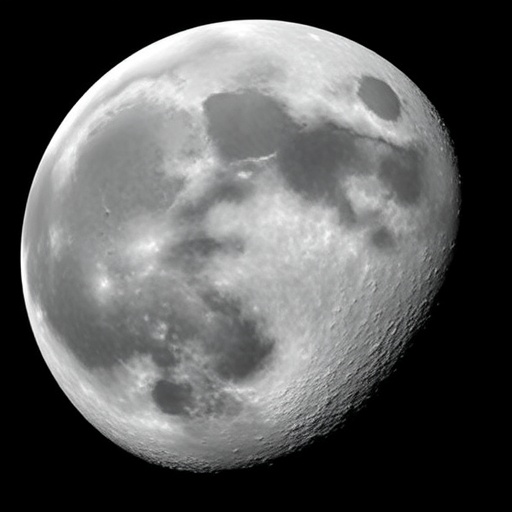
The lunar dichotomy is one of the most conspicuous asymmetries in the Solar System. The hemisphere visible from Earth is marked by enormous dark plains of basalt, created by volcanic eruptions that filled ancient impact basins. It also contains unusually high concentrations of potassium, rare earth elements and phosphorus, a chemical association commonly known as KREEP. The farside, by contrast, is dominated by brighter, heavily cratered highlands with a thicker crust and comparatively few basaltic plains. Although both hemispheres formed from the same young Moon, their surface geology appears to record dramatically different evolutionary histories.
Scientists have proposed several explanations for this division, including asymmetric convection in the lunar magma ocean, a giant impact, uneven tidal heating and differences in crustal growth. Yet most earlier models relied heavily on remote sensing and geological observations of the lunar surface. The crucial question was whether the nearside-farside contrast extended downward into the lunar mantle, where the Moon’s earliest solid rocks crystallized, or whether it was primarily a feature of the crust and uppermost exterior. The Chang’e-6 mission has now provided the first direct material from the farside, allowing researchers to compare rocks from opposite hemispheres rather than infer their differences solely from orbital measurements.
In 2024, Chang’e-6 returned samples from the South Pole–Aitken Basin, one of the oldest and largest impact structures in the Solar System. The returned material included basalt fragments and later analyses examined farside anorthosites and Mg-suite rocks as well. These samples were compared with specimens collected on the nearside by the Apollo missions and by China’s Chang’e-5 mission. The comparison indicates that lunar mantle cumulates—the rocks formed as minerals crystallized and settled from the global magma ocean—do not show a major compositional difference between the two hemispheres.
The basalt evidence is particularly important because basaltic magmas can preserve chemical clues about their mantle sources. Chang’e-6 basalts carry depleted mantle signatures broadly comparable to those found in Apollo low-titanium basalts. This similarity argues against a strongly divided mantle in which the farside and nearside began with fundamentally different mineral compositions. The team also examined Mg-suite rocks, a group of lunar igneous rocks generated through interactions between the crust and partially melted mantle cumulates. Their magnesium number, or Mg#, provides an indirect indicator of the composition of the mantle material involved in their formation. Comparable Mg# values in Chang’e-6 and Apollo Mg-suite samples further support the conclusion that the early mantle cumulates were broadly similar across the Moon.
The crust tells a different story. Farside anorthosites collected or identified through Chang’e-6 studies display higher peak Mg# values than comparable Apollo anorthosites, indicating that the farside crust is more magnesian. Anorthosite is dominated by plagioclase feldspar and is believed to have formed when relatively light plagioclase crystals floated to the top of the lunar magma ocean, creating the primordial crust. A more magnesium-rich signature in farside anorthosites therefore points to a difference in how the early crust was assembled or redistributed, rather than to a fundamentally different mantle beneath it.
Chemical measurements of farside Mg-suite rocks provide another critical clue. Compared with their nearside counterparts, the Chang’e-6 Mg-suite samples contain very low concentrations of rare earth elements and lower thorium-to-samarium ratios. These characteristics suggest that farside Mg-suite magmatism either developed largely independently of the KREEP component or interacted with much less KREEP-rich material. KREEP is thought to have formed from the final liquids left behind as the magma ocean crystallized. Because incompatible elements such as thorium and many rare earth elements preferentially remain in melt rather than entering early-forming crystals, the final residual liquid became chemically enriched. Its uneven distribution could explain why the nearside later experienced extensive volcanism while the farside remained comparatively quiet.
The new model places the decisive transition after the Moon became tidally locked to Earth. Tidal locking means that the Moon rotates once during each orbit, keeping the same hemisphere pointed toward Earth. Early in lunar history, when the Moon was much closer to Earth, tidal heating would have been stronger on the Earth-facing side than on the farside. According to the researchers, the resulting temperature contrast across the magma ocean drove lateral thermal convection, with hotter material moving away from the nearside and toward the farside. This process would have transported early-formed, magnesium-enriched anorthositic crust across the global molten layer, helping build a thicker and more magnesian crust on the farside.
At the same time, the movement of molten material would have pushed residual melts toward the nearside. Those late-stage liquids carried high concentrations of incompatible elements and eventually produced KREEP-rich materials and ilmenite-bearing cumulates. As cooling continued, the farside was left with thinner layers of these late magma-ocean products, while the nearside retained a greater concentration of them. This arrangement could have influenced the later distribution of heat-producing elements, the locations of volcanic eruptions and the development of the nearside’s vast maria. The model therefore links the Moon’s crustal thickness, mineral chemistry, KREEP distribution and volcanic history to a single episode of fluid motion within the young magma ocean.
The findings do not suggest that the Moon’s two hemispheres began with entirely different interiors. Instead, they point to a mantle that was initially more uniform, followed by a crustal reorganization after tidal locking. That distinction is significant because it shifts the origin of the lunar dichotomy from a purely inherited difference to a dynamic process that acted during the Moon’s earliest cooling. By combining geochemical evidence from Chang’e-6, Apollo and Chang’e-5 samples with a physical model of thermal convection, the study offers a new explanation for why the side of the Moon facing Earth became dark, volcanic and KREEP-rich while the hidden hemisphere developed a thicker, older highland crust. The proposed mechanism may also help scientists understand how tidal interactions shape the internal evolution of other rocky worlds with global magma oceans.
Web References: https://doi.org/10.1093/nsr/nwag424
References: National Science Review, DOI: 10.1093/nsr/nwag424
Cite Scienmag News
Violet Maxwell. (August 24, 2026). Chang’e-6 Farside Samples Reveal Why the Moon’s Hemispheres Differ. Scienmag. https://scienmag.com/change-6-farside-samples-reveal-why-the-moons-hemispheres-differ/
Violet Maxwell. "Chang’e-6 Farside Samples Reveal Why the Moon’s Hemispheres Differ." Scienmag, 24 August 2026, https://scienmag.com/change-6-farside-samples-reveal-why-the-moons-hemispheres-differ/. Accessed 3 September 2026.
Violet Maxwell. "Chang’e-6 Farside Samples Reveal Why the Moon’s Hemispheres Differ." Scienmag. August 24, 2026. https://scienmag.com/change-6-farside-samples-reveal-why-the-moons-hemispheres-differ/


