


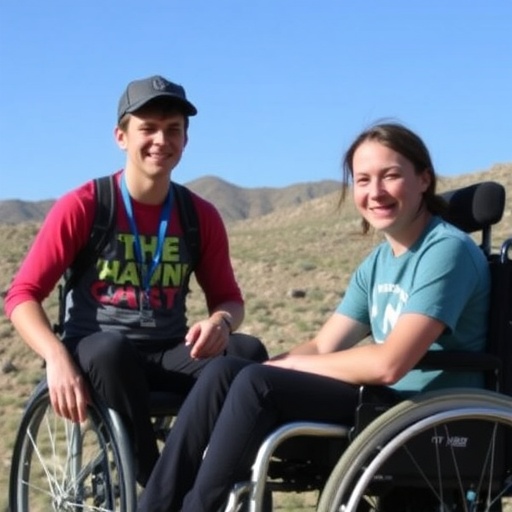
For teenagers and young adults living with spinal cord injuries, the transition from school to adult life can involve far more than choosing a college, finding a job or learning to manage daily responsibilities. Transportation barriers, limited access to peers with similar experiences and uncertainty about independent living can make that transition especially difficult. A Rutgers Health study of a residential rehabilitation program called True Grit suggests that an intensive, community-based experience may help young people with spinal cord injuries build practical skills, strengthen participation in daily life and imagine futures that once seemed out of reach.
The study, published in Topics in Spinal Cord Injury Rehabilitation, evaluated the first cohort of True Grit, a week-long sleep-away program created by Rutgers School of Health Professions and RWJBarnabas Health’s Children’s Specialized Hospital. The program serves participants between 14 and 21 years old, an age range in which many young people are moving from highly structured pediatric care toward adult health services and greater personal responsibility. Unlike conventional rehabilitation, which often focuses primarily on physical function, True Grit combines clinical therapy with vocational preparation, social development, recreation and education about the complex realities of adult life after spinal cord injury.
Spinal cord injury can disrupt motor and sensory pathways between the brain and the body, affecting movement, sensation and autonomic functions such as bladder, bowel and temperature regulation. The consequences vary widely depending on the level and completeness of the injury, but even individuals with substantial physical recovery may encounter environmental and social obstacles that limit participation. A person may be able to attend school or work yet remain excluded by inaccessible transportation, buildings, recreation programs or limited opportunities to meet peers. These participation barriers are particularly important during adolescence, when identity, independence and social belonging are developing rapidly.
“There is a high incidence of traumatic spinal cord injuries, specifically in young males, in adolescence,” said Keara McNair, a lecturer in Rutgers’ Department of Rehabilitation and Movement Sciences and a co-director of True Grit. She noted that people with spinal cord injuries are increasingly discharged into the community sooner, while existing services are more likely to address adult employment or conventional rehabilitation than the broader transition to adulthood. True Grit was designed to occupy that gap by treating independence as a multidimensional outcome. Participants work not only on physical techniques, but also on decision-making, self-advocacy, emotional adjustment, relationships and the ability to navigate everyday environments.
Each summer since 2024, the program has used dormitories at Rutgers University–New Brunswick’s Livingston Campus in Piscataway, New Jersey, as a temporary living laboratory. Occupational therapists, physical therapists and recreational therapists with clinical experience in spinal cord injury rehabilitation work alongside peer mentors. The setting is significant because participants practice skills in an environment that resembles college or other postsecondary living arrangements more closely than a hospital or outpatient clinic. They must manage schedules, move through shared spaces, communicate their needs and participate in activities with other young people, while clinicians can observe where support is needed and adapt instruction in real time.
The clinical component includes individualized occupational and physical therapy sessions. Occupational therapy may address upper-body function, self-care, wheelchair skills, energy conservation, transfers and strategies for managing daily tasks with less assistance. Physical therapy can focus on mobility, strength, endurance, balance and safe movement across different surfaces. The program also includes adapted recreation, such as wheelchair basketball, community outings and workshops on vocational planning, sexuality, adapted driving and psychosocial adjustment. Together, these activities reflect a contemporary rehabilitation model in which health is measured not only by impairment or physical capacity, but also by the ability to participate in meaningful roles and environments.
To assess the pilot, researchers evaluated six participants from the 2024 cohort using surveys and specialized rehabilitation outcome measures at the beginning of the program and again three months later. The evaluation examined participants’ personal goals, resilience and involvement at home, in school and in the community. Its mixed-methods design combined numerical scores with participants’ reported experiences, allowing the researchers to examine both measurable changes and the ways young people described their developing outlook. Because the cohort was small and the study did not include a comparison group, the findings cannot establish that True Grit alone caused the observed changes. They do, however, provide early evidence about the program’s feasibility and the kinds of outcomes that may be important in future research.
All participants demonstrated progress toward their individual goals. Overall participation scores increased, with the largest gains among young people who began the program with lower levels of participation. In rehabilitation research, participation refers to involvement in real-life situations, including education, social activities, family life, recreation and community engagement. This distinction matters because improvements in strength or technique do not automatically translate into greater independence outside the clinic. A participant may learn a more efficient transfer, for example, but still avoid community activities if transportation is unreliable or accessible venues are difficult to find. The study’s results highlight how targeted practice and peer-supported experiences may help connect clinical skills with everyday participation.
The three-month follow-up also revealed that progress after a residential program depends on what happens when participants return home. Transportation limitations and reduced access to peers influenced both participation and resilience. Resilience in this context is not simply an individual ability to “overcome” injury; it is shaped by access to resources, supportive relationships, inclusive environments and opportunities to exercise control over decisions. Participants described broader views of their futures, including higher education, employment, independent living and becoming peer mentors. Those aspirations suggest that exposure to peers and professionals in an empowering setting may help counter expectations that life after spinal cord injury must remain narrowly defined by medical care.
The researchers say True Grit has continued to expand, with 12 participants enrolled for 2026 and young people traveling from across the United States because comparable programs are rare. The study’s authors—McNair and Aaron Dallman of Rutgers School of Health Professions, along with Kassandra Boyd and Corinne Calvanico of Children’s Specialized Hospital—report no conflicts of interest. Larger studies will be needed to determine whether the program produces lasting improvements in participation, independence, educational and employment outcomes, and quality of life, as well as which components are most effective. For now, the pilot offers a powerful message: preparing young people with spinal cord injuries for adulthood requires more than restoring physical function. It requires giving them opportunities to practice independence, build community and see themselves as active participants in the future they are creating.
News Publication Date: 10-Aug-2026
Web References: Rutgers Health; Rutgers School of Health Professions; RWJBarnabas Health’s Children’s Specialized Hospital; True Grit program information; https://www.rutgers.edu/news/camp-teens-spinal-cord-injuries-helps-build-independence
References: McNair K, Dallman A, Boyd K, Calvanico C. “Mixed-Methods Evaluation of the Pilot True Grit SCI Residential Program for Young Adults with Spinal Cord Injury.” Topics in Spinal Cord Injury Rehabilitation. DOI: 10.46292/sci25-00107
Cite Scienmag News
Cassandra Pierce. (August 21, 2026). Grit program helps young adults with spinal cord injuries build confidence. Scienmag. https://scienmag.com/grit-program-helps-young-adults-with-spinal-cord-injuries-build-confidence/
Cassandra Pierce. "Grit program helps young adults with spinal cord injuries build confidence." Scienmag, 21 August 2026, https://scienmag.com/grit-program-helps-young-adults-with-spinal-cord-injuries-build-confidence/. Accessed 3 September 2026.
Cassandra Pierce. "Grit program helps young adults with spinal cord injuries build confidence." Scienmag. August 21, 2026. https://scienmag.com/grit-program-helps-young-adults-with-spinal-cord-injuries-build-confidence/


