


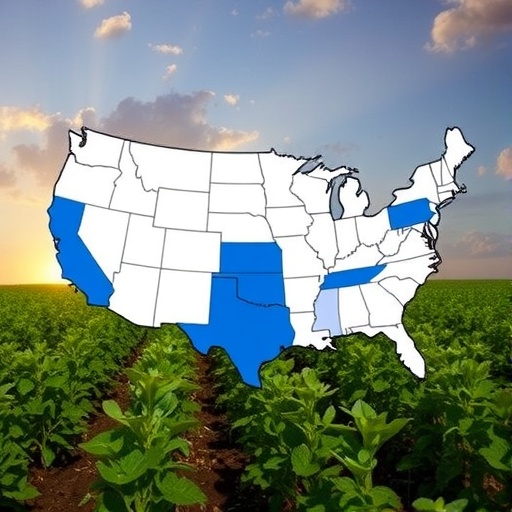
Two-thirds of Americans support banning glyphosate, the world’s most widely used agricultural herbicide, on crops grown in the United States, according to a nationally representative survey from the Annenberg Public Policy Center (APPC) at the University of Pennsylvania. The finding is striking not only because glyphosate remains deeply embedded in modern farming, but also because most respondents said they had heard little or nothing about the chemical in the months before the survey. The results suggest that public concern about pesticide exposure has spread across political divisions, even as many Americans remain uncertain about glyphosate’s health effects, its role in food production, and the strength of the scientific evidence surrounding its use.
The Annenberg Science and Public Health survey was conducted from April 14 to 28, 2026, among 1,639 adults drawn from a nationally representative, probability-based U.S. panel administered by SSRS. The survey carries a margin of sampling error of approximately 3.5 percentage points after adjustment for design effects. Overall, 66% of respondents favored banning glyphosate on U.S. crops. Support was reported by 70% of self-identified Republicans and 69% of self-identified Democrats, while independents were less supportive. The numbers also crossed the political identity associated with the Make America Healthy Again, or MAHA, movement: 72% of MAHA supporters favored a ban, compared with 70% of people who did not support the movement.
“Americans express strong support for banning glyphosate even though most acknowledge hearing relatively little about the herbicide in recent months,” said Ken Winneg, APPC’s managing director of survey research. The survey found that 83% of adults had heard either “nothing at all” or only “a little” about glyphosate during the preceding months. Just 16% said they had heard a moderate amount or more. Awareness was somewhat higher among MAHA supporters, but even within that group, 76% reported hearing little or nothing. The combination of high support for prohibition and low recent awareness indicates that opinions may be shaped by broader concerns about pesticides, food safety, chronic disease, and trust in regulatory institutions rather than by detailed knowledge of current glyphosate policy debates.
Glyphosate is a systemic herbicide that disrupts the shikimate pathway, a biochemical route used by plants, fungi, and many microorganisms to produce aromatic amino acids. The pathway is absent in humans and other animals, which has historically been a central reason for considering glyphosate comparatively selective. Plants absorb the compound through their leaves or other green tissues, after which it is transported through the plant and interferes with the enzyme 5-enolpyruvylshikimate-3-phosphate synthase, commonly called EPSPS. In agriculture, glyphosate is used to control weeds before planting, between crop rows, and in some systems involving genetically engineered crops that tolerate the herbicide. Its broad-spectrum activity, relatively low cost, and compatibility with conservation-tillage systems helped make it one of the dominant weed-control tools in global agriculture.
The survey revealed substantial uncertainty about what glyphosate does to the food supply. Only 33% of Americans selected the statement that glyphosate increases the U.S. food supply by helping farmers control weeds as the most accurate description. Nearly half, 48%, said they were unsure. Another 12% said glyphosate has no effect on food production, while 6% believed its use decreases the food supply. In practical terms, weed competition can reduce crop yields by limiting access to water, light, and soil nutrients, so herbicides can contribute to productivity. At the same time, heavy reliance on a single herbicide can accelerate the evolution of resistant weeds, forcing farmers to combine chemical, mechanical, and rotational strategies. The agricultural benefits and ecological costs therefore cannot be reduced to a single yes-or-no claim.
Public uncertainty was equally pronounced when respondents were asked about cancer. Half of U.S. adults, 50%, said they believed exposure to glyphosate causes cancer, while 46% were unsure and only 4% said glyphosate has no effect on cancer risk. Fifty-seven percent of MAHA supporters and 52% of people who did not support MAHA said they believed exposure causes cancer. Among Republicans, 51% expressed that belief, compared with 53% of Democrats and 42% of independents. The results show that concern about carcinogenicity is widespread, but they do not establish whether exposure causes cancer. A public-opinion survey measures beliefs and perceptions; it cannot substitute for toxicological experiments, exposure assessment, epidemiology, or a formal risk evaluation.
The scientific record remains contested in important ways. In 2015, the International Agency for Research on Cancer classified glyphosate as “probably carcinogenic to humans,” a category based on limited evidence in humans and sufficient evidence from experimental animals. The classification describes the potential hazard of an agent under some conditions, not the probability that a particular person will develop cancer from typical exposure. Risk depends on both hazard and exposure: the dose received, the route of exposure, the duration and frequency of contact, and the properties of the product formulation. By contrast, a 2017 evaluation by the U.S. Environmental Protection Agency concluded that glyphosate was “not likely to be carcinogenic to humans” when used according to label directions. Differences in the studies considered, analytical methods, and interpretation of evidence have contributed to the continuing dispute.
Glyphosate has become especially prominent in the political conflict surrounding the MAHA movement. Activists and online influencers have called for a ban or permanent phase-out of glyphosate-based herbicides, linking the chemical to cancer, metabolic disorders, liver and kidney disease, and potential disruption of the microbiome. Robert F. Kennedy Jr., now the U.S. secretary of Health and Human Services, has repeatedly described glyphosate as dangerous and has previously claimed that it is associated with cancer and other diseases. However, he has also acknowledged the practical consequences of an immediate prohibition. In February 2026, President Donald J. Trump signed an executive order invoking the Defense Production Act to protect domestic production of glyphosate-based herbicides, describing them as important to agricultural strength. The order triggered opposition from MAHA supporters, exposing a conflict between demands for chemical reduction and concerns about farm productivity and national supply chains.
The legal controversy surrounding Roundup has added another layer to the public debate. Monsanto, which manufactures and distributes Roundup products, has faced lawsuits from people who say prolonged exposure to glyphosate contributed to non-Hodgkin’s lymphoma and that product labels should have included cancer warnings. In June 2026, the Supreme Court overturned a 7-2 Missouri jury award in a case involving such a claim, a decision that addressed liability and labeling questions rather than providing a universal scientific declaration that glyphosate is harmless or carcinogenic. Legal standards, regulatory classifications, and scientific conclusions answer different questions. A court may decide whether a company met a legal duty, while a regulator evaluates population-level risk and scientists assess biological mechanisms and statistical associations.
Patrick E. Jamieson, director of APPC’s Annenberg Health and Risk Communication Institute, said that concern about possible cancer risks and support for banning glyphosate cross the political divide. The survey’s findings underline a broader challenge in communicating about environmental health: people may express strong views about a chemical while simultaneously reporting limited knowledge and substantial uncertainty. For glyphosate, the most meaningful scientific questions involve real-world exposure levels, differences among formulations, occupational versus dietary contact, long-term epidemiological patterns, and the effectiveness of alternative weed-management systems. The APPC results do not resolve those questions, but they show that glyphosate has become a powerful symbol in the national argument over food, farming, public health, and the role of government in regulating chemicals.
Web References: https://www.annenbergpublicpolicycenter.org/ ; https://www.annenbergpublicpolicycenter.org/wp-content/uploads/aw29-do05-topline-glyphosate-pr-v3.pdf ; https://www.iarc.who.int/featured–news/media-centre-iarc-news-glyphosate/ ; https://www.epa.gov/ingredients-used-pesticide-products/glyphosate ; https://www.factcheck.org/2026/04/politicians-say-glyphosate-weedkiller-causes-cancer-but-evidence-not-clear-cut/
References: Annenberg Science and Public Health Survey, Wave 29; International Agency for Research on Cancer glyphosate evaluation; U.S. Environmental Protection Agency glyphosate review; Annenberg Public Policy Center and FactCheck.org analyses.
Cite Scienmag News
Courtney Benton. (August 21, 2026). Bipartisan Majority of Americans Support Banning Glyphosate. Scienmag. https://scienmag.com/bipartisan-majority-of-americans-support-banning-glyphosate/
Courtney Benton. "Bipartisan Majority of Americans Support Banning Glyphosate." Scienmag, 21 August 2026, https://scienmag.com/bipartisan-majority-of-americans-support-banning-glyphosate/. Accessed 4 September 2026.
Courtney Benton. "Bipartisan Majority of Americans Support Banning Glyphosate." Scienmag. August 21, 2026. https://scienmag.com/bipartisan-majority-of-americans-support-banning-glyphosate/


