


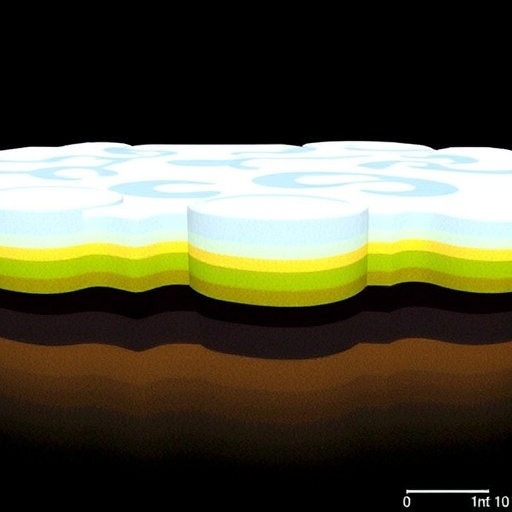
For decades, the expected story of climate change in frozen northern soils has sounded deceptively simple: temperatures rise, permafrost thaws, and the ground dries as water drains away. New research published in Nature Communications suggests that this picture is incomplete. A study led by Peng, Wang, Wanek and colleagues finds that warming-related changes in soil moisture are associated with sharply different nitrogen responses in the topsoil of permafrost-affected ecosystems. In some settings, nitrogen may become more available as organic matter decomposes; in others, warming and altered water conditions may suppress or redirect nitrogen transformations. The result is a climate feedback that is far less uniform—and potentially more consequential—than a single “warming equals nutrient release” scenario.
The finding matters because nitrogen is one of the key elements controlling how much vegetation can grow and how much carbon northern ecosystems can absorb or release. Permafrost landscapes contain vast stores of organic material accumulated over thousands of years. Much of that material has remained protected from decomposition because low temperatures restrict microbial activity and frozen ground limits the depth and duration of biologically active soil. When climate warming changes the thermal and hydrological conditions above and within permafrost, microbes gain access to previously constrained resources. But their activity depends not only on temperature. Water availability, oxygen supply, soil structure and the chemical composition of organic matter determine whether nitrogen is released, retained, immobilized or lost.
The new study focuses on the relationship between soil moisture shifts under warming and nitrogen behavior in topsoil. Topsoil is the biologically active surface layer where plant roots, microbes and decomposing organic residues interact most intensely. It is also the zone most immediately exposed to changes in rainfall, evaporation, snow cover, thaw depth and plant water use. When warming dries this layer, oxygen can penetrate more deeply, potentially stimulating aerobic decomposition and altering the forms of nitrogen produced. When warming leaves soils wetter—or creates waterlogged depressions and thaw-related saturation—oxygen becomes scarce, favoring anaerobic microbial processes. These contrasting environments can send nitrogen down very different chemical pathways.
Nitrogen in soil is not a single substance waiting to be released. It circulates through a network of transformations known collectively as the nitrogen cycle. Microbes break down organic compounds through mineralization, converting organic nitrogen into inorganic forms such as ammonium. Other microorganisms may then perform nitrification, transforming ammonium into nitrate under oxygen-rich conditions. In saturated soils, denitrification can convert nitrate into gaseous forms that escape to the atmosphere. Plants compete with microbes for available nitrogen, while some nitrogen can bind to soil minerals or dissolve and move with water. By connecting warming, moisture and topsoil nitrogen, the research highlights how a change in one physical variable can reorganize an entire biochemical system.
The phrase “divergent responses” is central to the study’s significance. It indicates that comparable warming does not produce a consistent nitrogen outcome across permafrost-affected ecosystems. Moisture loss may accelerate certain decomposition processes while also reducing microbial activity if soils become too dry. Conversely, wetter conditions may enhance the breakdown of some organic substrates but suppress oxygen-dependent reactions. Differences in soil texture, vegetation, hydrology, permafrost depth and organic matter quality can all influence the direction of change. A dry, well-drained upland surface and a saturated lowland basin may therefore respond to the same regional temperature increase in opposite ways, even when they are only a short distance apart.
That variability has major implications for ecosystem productivity. If warming increases the supply of plant-available nitrogen, shrubs and other vegetation could grow more vigorously, potentially drawing additional carbon dioxide from the atmosphere. Yet greater plant growth does not automatically guarantee stronger carbon storage. More productive vegetation can produce more litter, and warmer soils can accelerate the decomposition of both new and old organic matter. In some landscapes, newly released nitrogen may instead support microbial activity that increases carbon losses. The balance between plant uptake, microbial demand and gaseous or dissolved nitrogen loss will help determine whether a particular ecosystem becomes a stronger carbon sink, a weaker sink or a source of greenhouse gases.
Hydrology may be the crucial switch controlling these outcomes. Warming can increase evaporation and lengthen the period during which soils are biologically active, leading to drier surface conditions in some locations. At the same time, thawing ice-rich permafrost can cause the ground surface to collapse, forming depressions that collect water. Changes in snow accumulation, rainfall patterns, drainage pathways and vegetation can further complicate the picture. These processes can occur simultaneously within the same landscape. As a result, climate models that represent warming primarily as a temperature increase may miss the ecological consequences of moisture redistribution. The study’s central association between soil moisture shifts and divergent nitrogen responses underscores why future projections need to treat water and heat as coupled drivers.
The emphasis on topsoil is also important for interpreting the speed of ecosystem change. Deep permafrost carbon may remain physically isolated for years or decades, but topsoil can respond rapidly to a shift in moisture or temperature. Microbial communities in this layer are sensitive to the availability of oxygen and dissolved organic compounds, while roots can quickly alter their distribution as the active layer—the seasonally thawed soil above permafrost—thickens. A deeper active layer may expose additional organic matter to decomposition, but whether that material becomes a source of plant nutrients or greenhouse gases depends on local conditions. Monitoring only permafrost temperature or thaw depth, without measuring surface moisture and nitrogen chemistry, could therefore overlook early signs of ecological transformation.
The research also carries a warning for the interpretation of global climate feedbacks. Northern ecosystems are often discussed as though their responses can be summarized across entire regions, but the new evidence points toward a patchwork of effects. Some areas may experience enhanced nitrogen cycling and vegetation growth, while others could see nitrogen immobilized, washed away or emitted in gaseous form. Such differences influence not only carbon dioxide exchange but also emissions of nitrous oxide, a greenhouse gas with far greater warming power per molecule than carbon dioxide. The study does not turn permafrost landscapes into a simple source-or-sink calculation; instead, it reveals why that calculation is difficult. The future of these ecosystems may be decided by small-scale contrasts in moisture that climate averages conceal.
For scientists, the message is both practical and urgent: warming experiments and ecosystem models must measure soil water conditions alongside temperature, carbon and nitrogen. The findings by Peng, Wang, Wanek and their colleagues provide a framework for understanding why nitrogen responses diverge across permafrost-affected environments. They also offer a warning against assuming that thaw will trigger the same biochemical response everywhere. As the Arctic and other cold regions warm, the movement of water through the soil may determine whether newly accessible nitrogen feeds plants, fuels microbial decomposition, escapes into waterways or returns to the atmosphere. What looks like one global warming signal may therefore unfold as many local nitrogen stories—each capable of altering the climate feedbacks emerging from the frozen ground.
Cite Scienmag News
Violet Maxwell. (August 20, 2026). Warming-driven moisture shifts linked to divergent topsoil nitrogen responses in permafrost ecosystems. Scienmag. https://scienmag.com/warming-driven-moisture-shifts-linked-to-divergent-topsoil-nitrogen-responses-in-permafrost-ecosystems/
Violet Maxwell. "Warming-driven moisture shifts linked to divergent topsoil nitrogen responses in permafrost ecosystems." Scienmag, 20 August 2026, https://scienmag.com/warming-driven-moisture-shifts-linked-to-divergent-topsoil-nitrogen-responses-in-permafrost-ecosystems/. Accessed 3 September 2026.
Violet Maxwell. "Warming-driven moisture shifts linked to divergent topsoil nitrogen responses in permafrost ecosystems." Scienmag. August 20, 2026. https://scienmag.com/warming-driven-moisture-shifts-linked-to-divergent-topsoil-nitrogen-responses-in-permafrost-ecosystems/


