


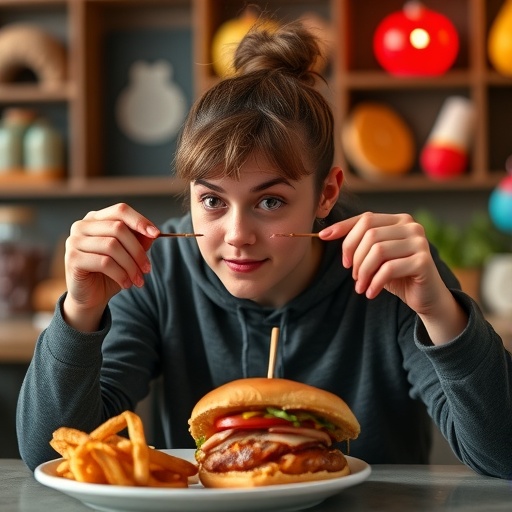
A new study suggests that TikTok’s endlessly scrolling stream of food videos may do more than entertain adolescents: it may cue hunger, intensify cravings, and make young people want to try or obtain the foods they see. In focus groups, teenagers aged 15 and 16 described recipes, restaurant reviews, viral food challenges, influencer promotions, “What I eat in a day” videos, and advertisements as powerful prompts for eating-related thoughts and desires. The findings, published in the Journal of Nutrition Education and Behavior, also point to a potential protective role for parents. Although adolescents generally viewed parents as having little involvement in their everyday TikTok use, they said family meals, shared activities, and critical conversations about online content could reduce exposure and help them question persuasive food and body-related messages.
The study was based on four focus groups involving 25 adolescents from a Midwestern high school. Researchers asked participants how they used TikTok, what kinds of food content appeared in their feeds, how they judged its credibility, and whether parents influenced their social media habits or eating behaviors. The researchers used the discussions to examine how young people themselves interpret food-related media, rather than attempting to measure dietary intake directly. This distinction is important: the study documents reported reactions to TikTok content, including hunger and cravings, but it does not establish that watching a particular video causes a teenager to eat a specific food or consume more calories.
Participants frequently described food content as an immediate sensory and psychological cue. Attractive close-up images, dramatic cheese pulls, crisp textures, oversized portions, and rapid editing could make food seem especially desirable. Some adolescents said videos caused them to think about eating even when they had not previously felt hungry. Others reported wanting to taste a food they had never tried, visit a restaurant shown in a video, or purchase a product promoted by a creator. These reactions are consistent with the concept of cue-induced eating, in which external signals associated with food activate attention, memory, motivation, and craving. Digital platforms can deliver such cues repeatedly and at high speed, potentially exposing users to food stimuli long after a single moment of interest would otherwise have passed.
TikTok’s recommendation system may amplify this process by personalizing the stream according to a user’s viewing behavior. The platform’s algorithm can infer interests from signals such as watch time, replays, likes, comments, shares, searches, and whether a viewer watches a video to completion. Once a user engages with food content, the system may supply more of it, creating a feedback loop between attention and recommendation. The study did not experimentally test TikTok’s algorithm or quantify the number of food videos viewed by each participant. However, the adolescents’ descriptions illustrate how a personalized media environment can make food-related cues feel continuous and unavoidable. The same design features that keep users engaged may also increase the frequency with which eating-related stimuli enter their daily routines.
The teenagers also described the social dynamics that make food videos persuasive. Comments from other users could function as a form of social proof, suggesting that a trend was popular, enjoyable, or worth trying. Influencers could make products seem more trustworthy because viewers recognized them and felt familiar with their personalities, routines, or tastes. This familiarity can resemble a one-sided social relationship, sometimes called a parasocial connection, in which audiences feel they know a creator even without direct interaction. Participants were often aware that some posts were sponsored and expressed skepticism about advertising. Yet they acknowledged that promotions could remain influential when delivered by a creator they considered credible or relatable. Disclosures may identify commercial content without eliminating the persuasive effects of familiarity, visual appeal, or repeated exposure.
Food marketing on TikTok can also blur the boundaries between entertainment, personal testimony, and advertising. A restaurant review may appear to be an informal recommendation, while a “day of eating” video can combine lifestyle storytelling with implicit messages about health, body shape, discipline, or success. A recipe may inspire cooking, but it can also normalize unusually large portions, highly processed ingredients, or restrictive dietary patterns. Adolescents in the study said they sometimes questioned whether influencers were being paid or whether their results were realistic. They nevertheless recognized that a creator’s presentation could influence what they wanted to eat. The researchers emphasize the importance of helping young people evaluate not only whether a claim is sponsored, but also whether it is scientifically supported, representative, and relevant to their own bodies and circumstances.
Parents emerged as a potentially important interruption to this cycle, even though most participants did not describe parents as closely monitoring their TikTok use. Adolescents said they spent less time on the platform when parents encouraged family meals, planned shared activities, or created opportunities for face-to-face interaction. These actions may work not through strict surveillance but by changing the environment in which scrolling occurs. A family meal, for example, can interrupt automatic viewing and provide a predictable period without a phone. Shared activities can compete with the platform’s attention-capturing design. Such interruptions may be especially valuable because short-form video systems are engineered to reduce natural stopping points; when one video ends, another begins almost immediately.
The study also suggests that parental conversations could strengthen adolescents’ media literacy. Rather than simply banning food videos or criticizing social media, parents could ask who created a post, whether the creator received compensation, what information is missing, and whether the depicted lifestyle is realistic. Conversations about body image may be particularly important. Influencers often present carefully selected meals, edited images, controlled lighting, and highly managed routines, while viewers see only a narrow and polished portion of daily life. Parents can help adolescents distinguish personal experience from medical evidence and recognize that an influencer’s body, diet, or reported results may not be attainable or appropriate for everyone. This approach may support critical thinking without treating teenagers as passive recipients of media messages.
Adrianna N. Bell, PhD, RN, PHN, a senior research consultant at Delta Consulting Group and a contributor to the study, said adolescents portrayed TikTok as a highly engaging environment in which food content could quickly capture attention and cue a desire to eat or try something new. She noted that participants generally saw parents as uninvolved in routine TikTok use, yet also described situations in which parents interrupted exposure to food-related content and encouraged critical discussion. The researchers say these observations could inform nutrition education and media-literacy programs that involve both adolescents and parents. Such programs might teach young people to identify advertising, evaluate health claims, understand algorithmic recommendations, and recognize how visual presentation affects appetite and judgment.
The researchers caution that more evidence is needed before the findings can be translated into precise dietary recommendations. The study involved a small group of adolescents from one Midwestern high school, and the focus-group format captures perceptions and shared accounts rather than objectively measured behavior. Future research could combine screen-use records, content analysis, dietary assessments, and real-time measurements of hunger or craving to determine how often TikTok exposure changes what adolescents actually eat. Researchers will also need to examine whether different types of content—such as restaurant marketing, diet videos, recipes, or body-focused posts—produce different effects. For now, the study highlights a rapidly evolving public-health question: when a platform is designed to hold attention and food is among its most visually compelling subjects, critical guidance from parents may help young viewers recognize when a craving has been sparked by an algorithm rather than by hunger alone.
News Publication Date: August 19, 2026
Web References: Journal of Nutrition Education and Behavior — https://www.jneb.org/ ; DOI — https://doi.org/10.1016/j.jneb.2026.05.006
References: Bell, A. N. et al., “I wanna try it so bad”: How TikTok Influences Adolescent Eating and the Role of Parents, Journal of Nutrition Education and Behavior, DOI: 10.1016/j.jneb.2026.05.006
Cite Scienmag News
Courtney Benton. (August 20, 2026). Teens say TikTok food videos influence cravings; parents can help guide choices. Scienmag. https://scienmag.com/teens-say-tiktok-food-videos-influence-cravings-parents-can-help-guide-choices/
Courtney Benton. "Teens say TikTok food videos influence cravings; parents can help guide choices." Scienmag, 20 August 2026, https://scienmag.com/teens-say-tiktok-food-videos-influence-cravings-parents-can-help-guide-choices/. Accessed 3 September 2026.
Courtney Benton. "Teens say TikTok food videos influence cravings; parents can help guide choices." Scienmag. August 20, 2026. https://scienmag.com/teens-say-tiktok-food-videos-influence-cravings-parents-can-help-guide-choices/


