


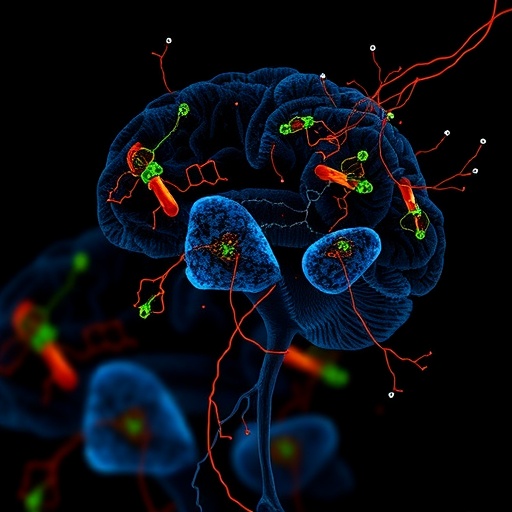
Major depressive disorder may be driven not only by changes in brain chemistry, stress hormones, or neural circuits, but also by a breakdown in the immune system’s ability to control itself. A new study published in Translational Psychiatry identifies interleukin-6, or IL-6, as a potential molecular switch linking chronic inflammation to dysfunctional immune regulation in people with major depressive disorder. The research suggests that excessive IL-6 signaling can weaken regulatory T cells, commonly known as Tregs, while encouraging the emergence of aggressive, Th1-like immune cells. This shift may help explain why some patients experience persistent inflammation, treatment resistance, and symptoms that cannot be fully accounted for by conventional neurotransmitter models.
Tregs are a specialized population of CD4-positive T cells whose primary role is to prevent excessive or misdirected immune responses. They act as a biological braking system, limiting inflammation and protecting tissues from damage caused by the immune system itself. In a healthy immune environment, Tregs suppress the activation of potentially harmful T cells through inhibitory molecules, anti-inflammatory cytokines, and direct cell-to-cell interactions. Their activity is particularly important in maintaining immune tolerance, the state in which the body can distinguish dangerous threats from its own tissues. When Treg function is compromised, inflammatory pathways can remain active for too long, creating a persistent immune state that may influence the brain and behavior.
IL-6 is one of the immune system’s most important communication molecules. Produced by immune cells, endothelial cells, and other tissues in response to infection, injury, or stress, it can promote inflammation and alter the development of T cells. IL-6 does not act through a single pathway. It binds to its receptor and activates intracellular signaling networks, including the Janus kinase-signal transducer and activator of transcription 3 pathway, commonly known as JAK-STAT3. This signaling cascade changes gene expression inside immune cells. Depending on the cellular environment, IL-6 can support the survival and expansion of inflammatory T-cell populations while interfering with the stability of Tregs, whose identity depends partly on the transcription factor FOXP3.
The study by Gao, Lei, Zhan and colleagues focuses on the possibility that this IL-6-driven imbalance is central to immune abnormalities associated with major depressive disorder. Rather than viewing inflammation as a secondary consequence of depression, the researchers’ findings support a model in which inflammatory signaling actively reshapes immune-cell behavior. In this model, elevated or persistent IL-6 activity reduces the suppressive capacity of Tregs. These cells may still be present, but they become less effective at restraining immune activation. At the same time, conventional T cells can acquire a Th1-like profile, characterized by stronger production of inflammatory mediators and a greater potential to amplify immune responses.
The term “Th1-like” is important because it describes more than a simple increase in the number of helper T cells. Th1-oriented cells are typically associated with cell-mediated immunity and the production of cytokines such as interferon-gamma. In appropriate circumstances, this response helps the body eliminate intracellular pathogens. When it becomes excessive or poorly controlled, however, Th1-associated inflammation can damage tissues and maintain a self-reinforcing cycle of immune activation. The study indicates that, in major depressive disorder, some T cells may take on this pathogenic, Th1-like character while losing the checks normally imposed by Tregs. This combination could produce an immune environment that is both more inflammatory and less capable of returning to equilibrium.
The connection between this immune imbalance and depression may involve several biological routes. Inflammatory cytokines can influence the blood-brain barrier, alter communication between immune cells and neurons, and affect the activity of microglia, the brain’s resident immune cells. They can also change the metabolism of tryptophan, an amino acid used to produce serotonin, by redirecting it toward the kynurenine pathway. Some kynurenine metabolites can influence glutamate signaling and neuronal excitability, while others may contribute to oxidative stress. In parallel, inflammation can disturb the hypothalamic-pituitary-adrenal axis, the hormonal system that coordinates the body’s response to stress. These mechanisms provide plausible links between peripheral immune dysregulation and symptoms such as low mood, fatigue, impaired concentration, and disrupted sleep.
The findings also raise the possibility that immune profiles could help identify biologically distinct forms of depression. Major depressive disorder is diagnosed through symptoms, but it is not a single uniform disease at the molecular level. Some patients show stronger evidence of systemic inflammation, while others may have little measurable inflammatory activity. If IL-6 signaling and Treg instability are confirmed as meaningful features of a specific subgroup, blood-based immune markers could eventually help classify patients more precisely. Such classification might guide the development of treatments aimed at inflammation, rather than relying exclusively on medications that alter monoamine signaling. However, immune markers alone are unlikely to replace clinical diagnosis, because IL-6 levels can also rise with infection, obesity, autoimmune disease, sleep disruption, and psychological stress.
One of the most striking implications of the research is that Treg dysfunction could be more important than the absolute amount of inflammation. Two people may have similar levels of circulating cytokines but very different immune outcomes depending on whether their regulatory cells remain functional. A Treg that cannot maintain FOXP3 expression, suppress effector T cells, or produce regulatory signals may fail to control inflammation even when its numbers appear normal. IL-6 may contribute to this instability by activating STAT3 and altering the transcriptional programs that define Treg identity. This provides a mechanistic explanation for how a chronic inflammatory signal can transform the balance between immune restraint and immune aggression.
The work could also influence the search for new therapeutic strategies, although clinical applications remain ahead. Blocking IL-6 or its receptor is already possible in certain inflammatory disorders, but such drugs carry risks, including increased susceptibility to infection and other immune complications. Any attempt to use them in depression would require careful patient selection and rigorous trials. Another approach could involve strengthening Treg stability or restoring the molecular pathways that allow these cells to suppress inflammatory T-cell responses. Treatments that combine conventional antidepressants with immune-targeted interventions might ultimately prove useful for patients whose depression is accompanied by pronounced inflammation. Yet the study does not establish that IL-6 blockade will relieve depressive symptoms, and it does not show that immune dysfunction is the sole cause of the disorder.
The research instead offers a sharper biological framework for understanding how immune regulation may shape mental health. It places Tregs and pathogenic Th1-like polarization at the center of a chain of events beginning with IL-6 signaling and extending toward systemic inflammation and altered brain function. The concept helps connect findings from immunology, psychiatry, and neuroscience without reducing depression to a single molecule. Further studies will need to determine whether IL-6-driven Treg dysfunction precedes depressive symptoms, develops as a consequence of chronic illness, or interacts bidirectionally with stress and behavior. Researchers must also establish whether the mechanism appears across diverse populations and whether it predicts response to specific treatments. For now, the findings suggest that the immune system’s failure to apply the brakes may be an important part of the biology underlying major depressive disorder.
Cite Scienmag News
Glenn Wilkins. (August 18, 2026). IL-6 Signaling Impairs Tregs and Promotes Pathogenic Th1-Like Cells in Depression. Scienmag. https://scienmag.com/il-6-signaling-impairs-tregs-and-promotes-pathogenic-th1-like-cells-in-depression/
Glenn Wilkins. "IL-6 Signaling Impairs Tregs and Promotes Pathogenic Th1-Like Cells in Depression." Scienmag, 18 August 2026, https://scienmag.com/il-6-signaling-impairs-tregs-and-promotes-pathogenic-th1-like-cells-in-depression/. Accessed 3 September 2026.
Glenn Wilkins. "IL-6 Signaling Impairs Tregs and Promotes Pathogenic Th1-Like Cells in Depression." Scienmag. August 18, 2026. https://scienmag.com/il-6-signaling-impairs-tregs-and-promotes-pathogenic-th1-like-cells-in-depression/


