


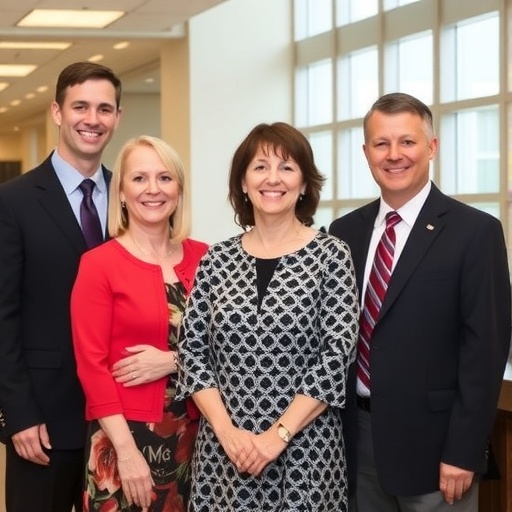
HOUSTON, Aug. 17, 2026 — The University of Texas MD Anderson Cancer Center has announced its 2026 class of Andrew Sabin Family Fellows, recognizing 10 early-career researchers whose work spans cancer biology, genetics, hematologic malignancies, molecular pathology, medical imaging, radiation oncology, breast cancer, biostatistics and behavioral science. The new cohort brings the total number of investigators supported through the program to 102, marking a significant milestone for a philanthropic initiative designed to give emerging scientists and clinicians the time, funding and flexibility needed to pursue high-impact cancer research.
The Andrew Sabin Family Fellowship was established through the Andrew Sabin Family Foundation and is supported by a $30 million endowment. Each fellow receives $100,000 over two years, a level of flexible funding intended to help investigators develop ambitious projects during a critical stage of their careers. Early-career researchers often face intense pressure to secure external grants while simultaneously building laboratories, recruiting research teams and generating preliminary data. By reducing that financial burden, the fellowship can allow scientists to investigate unconventional ideas, test new methods and move promising observations toward clinical applications.
The program’s reach reflects the increasingly interdisciplinary nature of modern oncology. Cancer is not a single disease but a collection of disorders driven by genetic alterations, abnormal cellular signaling, changes in tissue architecture, immune interactions and environmental or behavioral factors. Understanding and treating these diseases requires collaboration among laboratory scientists, physicians, imaging specialists, statisticians and population researchers. The 2026 fellows represent that broad scientific ecosystem, linking fundamental discoveries about cancer cells with tools for diagnosis, treatment selection, prevention and long-term patient care.
Among the basic and translational scientists selected is Luigi Perelli, M.D., Ph.D., an assistant professor in Cancer Biology. He is joined by Georgios Karras, Ph.D., an associate professor in Genetics; Palaniraja Thandapani, Ph.D., an assistant professor in Hematopoietic Biology and Malignancy; and Wantong Yao, M.D., Ph.D., an associate professor in Translational Molecular Pathology. Together, these fields address several central questions in cancer science: how malignant cells arise, how genetic information influences disease behavior, how cancers of the blood develop and resist therapy, and how molecular changes can be detected and interpreted in patient tissues.
Genetics and cancer biology provide the foundation for identifying the mutations and cellular programs that enable tumors to grow, spread or evade treatment. Research in hematopoietic malignancies is particularly important because cancers affecting blood-forming tissues can evolve rapidly and often require therapies capable of targeting genetically diverse populations of malignant cells. Translational molecular pathology helps bridge laboratory discoveries and clinical practice by examining the molecular features of tumors directly in patient specimens. These approaches can support more precise classifications of disease and may ultimately help physicians match patients with therapies most likely to be effective.
The clinical researchers in the new class are Mark Hamilton, M.D., an assistant professor in Lymphoma and Myeloma, and Simone Krebs, M.D., an associate professor working in Nuclear Medicine and Imaging Physics. Their disciplines illustrate how cancer care increasingly depends on the integration of clinical expertise, quantitative measurement and advanced imaging. Nuclear medicine uses radioactive tracers to visualize biological processes inside the body, while imaging physics provides the technical foundation for producing accurate and interpretable scans. In lymphoma and myeloma, imaging can help determine the extent of disease, assess response to treatment and identify changes that may not be apparent through symptoms alone.
Two physician-scientists, Chelain Goodman, M.D., Ph.D., an assistant professor in Breast Radiation Oncology, and Clinton Yam, M.D., an associate professor in Breast Medical Oncology and Translational Molecular Pathology, will also receive fellowships. Physician-scientists occupy a distinctive position in cancer research because they work directly with patients while conducting laboratory or translational studies. Their clinical experience can reveal unanswered questions about treatment response, recurrence and toxicity, while their research can generate evidence that is rapidly evaluated in real-world care. In breast cancer, where treatment decisions may involve surgery, radiation, systemic therapy and molecular profiling, this connection between clinical observation and biological investigation is especially important.
The population and quantitative sciences are represented by Chong Wu, Ph.D., an assistant professor in Biostatistics, and Jane Montealegre, Ph.D., an associate professor in Behavioral Science. Biostatistics is essential for designing clinical studies, evaluating treatment outcomes, measuring uncertainty and distinguishing meaningful patterns from random variation. As cancer research produces increasingly large and complex datasets, statistical methods are needed to analyze genomic information, imaging results, electronic health records and longitudinal patient outcomes. Behavioral science adds another crucial dimension by examining how social conditions, communication, health beliefs and individual behavior influence cancer prevention, screening, treatment adherence and survivorship.
The new fellows join a broader community of researchers supported by the Sabin Family Fellowship since its creation. Peter WT Pisters, M.D., president of UT MD Anderson, said the institution is proud of the cohort and credited the Andrew Sabin Family Foundation with helping accelerate discoveries that could improve oncology. Albert Koong, M.D., Ph.D., chief scientific officer at MD Anderson, described the fellowship as a catalyst for innovation at a critical point in investigators’ careers. The program’s structure is intended not only to honor scientific achievement but also to create conditions in which high-risk, high-reward ideas can be developed before larger grants or clinical programs become possible.
The foundation has also committed an additional $10 million to support immunotherapy research through the Andrew Sabin Family Excellence Endowment and the Andrew Sabin Family Recruitment and Retention Fund at the James P. Allison Institute. That support contributed to the recruitment of Betty Kim, M.D., Ph.D., a professor of Neurosurgery, as a core member of the institute in 2026. Kim was previously named a Sabin Family Fellow in 2021. Andrew Sabin, a senior member of the UT MD Anderson Cancer Center Board of Visitors, said the foundation’s support has now reached more than 100 scientists and clinicians. The expanding network reflects a long-term investment in research talent, with the ultimate goal of transforming discoveries in cancer biology, diagnosis and treatment into benefits for patients worldwide.
News Publication Date: August 17, 2026
Web References: University of Texas MD Anderson Cancer Center; Andrew Sabin Family Fellowship; James P. Allison Institute
Cite Scienmag News
Nathaniel Bowman. (August 18, 2026). MD Anderson Announces 2026 Andrew Sabin Family Fellows. Scienmag. https://scienmag.com/md-anderson-announces-2026-andrew-sabin-family-fellows/
Nathaniel Bowman. "MD Anderson Announces 2026 Andrew Sabin Family Fellows." Scienmag, 18 August 2026, https://scienmag.com/md-anderson-announces-2026-andrew-sabin-family-fellows/. Accessed 4 September 2026.
Nathaniel Bowman. "MD Anderson Announces 2026 Andrew Sabin Family Fellows." Scienmag. August 18, 2026. https://scienmag.com/md-anderson-announces-2026-andrew-sabin-family-fellows/


