

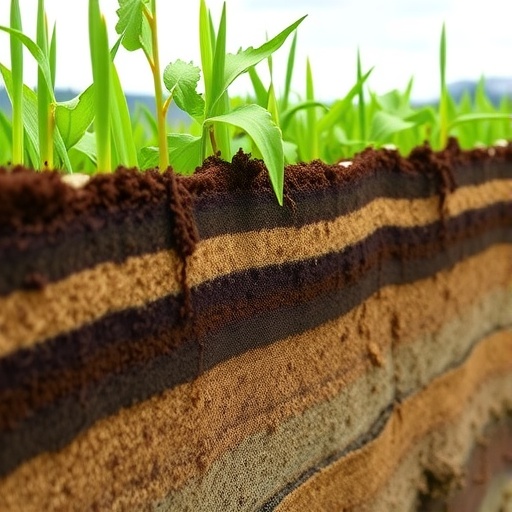
A correction published in Nature Communications has drawn renewed attention to one of the most consequential—and least visible—processes in agricultural soils: the soil priming effect. The notice, authored by X. Dong, A. Vera, M. Patiño and colleagues, is titled “Author Correction: Low-intensity management promotes the soil priming effect in European agroecosystems.” Although the publication is formally an author correction rather than a new research article, its subject reaches far beyond a bibliographic update. It concerns how agricultural management can alter the way soils process organic carbon, with implications for climate policy, nutrient cycling and the long-term sustainability of European farming systems.
The soil priming effect describes a change in the decomposition of existing soil organic matter after fresh carbon enters the soil. Plant roots, root exudates, manure, crop residues and other organic inputs can stimulate microorganisms, which may then break down older carbon compounds that would otherwise decompose more slowly. This response can be positive, accelerating the release of carbon dioxide, or negative, suppressing the decomposition of native organic matter and potentially increasing carbon retention. The direction and magnitude of the effect depend on microbial communities, soil texture, nutrient availability, moisture, temperature and the chemical composition of the added organic material.
The study’s central message, as reflected in its title, is that low-intensity management promotes the soil priming effect across European agroecosystems. The phrase “low-intensity management” generally refers to farming practices that apply fewer external inputs or exert less mechanical and chemical pressure on the soil than intensive systems. Such practices may influence plant growth, root activity, residue inputs and microbial habitat, all of which can change the balance between newly added carbon and older organic matter. The result is not simply a question of whether a soil gains carbon from plants; it is also a question of whether that new carbon causes microbes to unlock carbon already stored in the ground.
That distinction is crucial because soil carbon accounting can otherwise become deceptively simple. If a management practice increases plant biomass or returns more residues to the soil, the additional carbon may appear to represent a straightforward climate benefit. Yet a priming response can alter the outcome. Microorganisms receiving fresh, energy-rich carbon may produce enzymes that decompose more resistant organic compounds, releasing some of the soil’s previously stored carbon as carbon dioxide. In other cases, fresh inputs can support microbial growth and lead to the formation of mineral-associated organic matter, a comparatively stable carbon pool protected by interactions with clay and minerals. The same agricultural intervention may therefore produce different results depending on local soil conditions.
European agroecosystems provide a particularly important setting for this question because they span wide climatic and geological gradients. Agricultural soils in the region range from sandy, rapidly draining soils to clay-rich systems capable of protecting organic matter, while rainfall and temperature vary from Mediterranean environments to cool northern landscapes. Cropping patterns, pasture management, residue handling and fertilizer use also differ substantially among countries. A management strategy that produces one microbial response in a dry, carbon-poor soil may produce another in a moist soil rich in organic matter. Studying the priming effect across such diverse systems can help scientists identify broad patterns while showing why local measurements remain essential.
The correction itself should be interpreted accurately. An author correction is issued to amend an error or omission in the published record; it does not automatically mean that the study’s main conclusions have been overturned. The citation supplied for this notice does not specify which portion of the original article was corrected, whether the change involved text, data presentation, figures, affiliations or another element of the record. It is therefore not scientifically responsible to infer that the correction changes the reported relationship between management intensity and soil priming. What it does establish is that the authors and journal have formally updated the article, preserving a more accurate version for readers who rely on the findings.
The renewed visibility of the paper comes at a moment when soil is being asked to perform several climate and ecological functions simultaneously. Agricultural soils store carbon, regulate water movement, support biodiversity and supply nutrients to crops. Policies encouraging reduced disturbance, lower chemical inputs or other forms of lower-intensity management often assume that improving soil health will also increase carbon storage. The priming effect complicates that assumption without making it irrelevant. Instead, it shows that carbon outcomes must be assessed over time and at the level of soil processes, not only by measuring how much residue enters a field or how much organic carbon is present at a single sampling date.
For farmers and land managers, the findings point toward a need for more precise recommendations rather than universal prescriptions. Low-intensity management may benefit soil structure, microbial diversity and nutrient cycling, but its influence on stored carbon can depend on whether fresh inputs are transformed into persistent organic matter or stimulate the decomposition of older reserves. Monitoring soil carbon at different depths, measuring microbial activity and tracking carbon dioxide emissions can help distinguish these pathways. Advanced approaches such as isotope tracing, molecular analysis of microbial enzymes and long-term field trials are especially valuable because they reveal where carbon moves and how long it remains in the soil.
The correction also highlights a broader principle of modern environmental science: reliable conclusions depend not only on a compelling result but on a carefully maintained scientific record. As interest in agricultural carbon removal accelerates, researchers, policymakers and businesses are increasingly using published studies to guide investments and claims about climate benefits. Precise corrections, transparent reporting and replication across regions are therefore essential. The message associated with Dong, Vera, Patiño and colleagues is not that every low-intensity field will release more carbon, nor that soil carbon gains are impossible. It is that management can activate complex microbial feedbacks, and that the fate of agricultural carbon cannot be understood without accounting for the soil priming effect.
Subject of Research: Soil priming effects, soil carbon cycling and low-intensity management in European agroecosystems.
Article Title: Author Correction: Low-intensity management promotes the soil priming effect in European agroecosystems.
Article References: Dong, X., Vera, A., Patiño, M. et al. Author Correction: Low-intensity management promotes the soil priming effect in European agroecosystems. Nature Communications 17, 8258 (2026). https://doi.org/10.1038/s41467-026-76642-w
Image Credits: AI Generated
DOI: 10.1038/s41467-026-76642-w


