


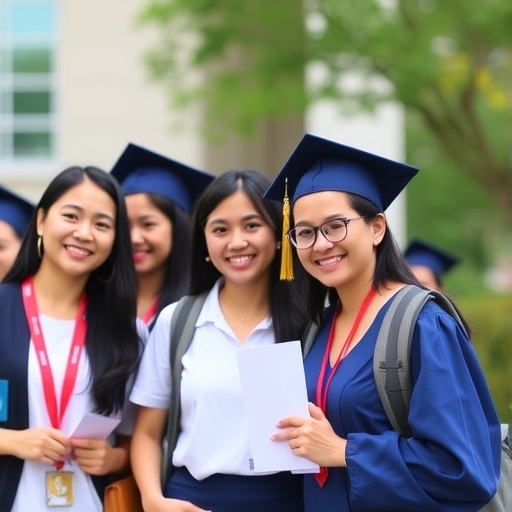
SINGAPORE, 14 August 2026—Medicine is increasingly being shaped by people who have already worked in communities, laboratories, classrooms, hospitals and social-service organisations, and Duke-NUS Medical School’s newest cohort offers a vivid example of that shift. At the school’s 20th White Coat Ceremony, 78 aspiring physicians formally began their medical education, bringing professional experience and perspectives that extend well beyond the conventional pre-medical route. Among them are a disability advocate and theatre performer, a population health specialist, a former ballet teacher, a traditional Chinese medicine practitioner, a dentist, an engineer and professionals from fields including finance, psychology, anthropology, mathematics, music and public health. Their arrival highlights the central premise of Singapore’s only graduate-entry medical school: that medicine can be strengthened when scientific training is combined with knowledge gained in workplaces and communities.
The Class of 2030 includes 38 former working professionals, making prior employment one of the defining features of the intake. Women account for nearly two-thirds of the cohort, the largest proportion of women admitted to Duke-NUS’ four-year Doctor of Medicine programme to date. The students range in age from 21 to 33, reflecting a model in which medical education begins after an undergraduate degree rather than immediately after secondary school. Ten students hold Master’s degrees and one holds a PhD, while eight entered through the Pathways to Medicine programme, which allows students from partner institutions to explore different academic disciplines before progressing towards graduate-entry medicine. The cohort comprises 59 Singapore citizens and permanent residents and 19 international students from China, India, Indonesia, South Korea and the United States.
The ceremony marked more than a symbolic transition from university graduate to medical student. Led by Clinical Associate Professor Chan Yoke Hwee, chief executive officer of KK Women’s and Children’s Hospital, the students recited the Hippocratic Oath and committed themselves to professional standards governing patient care, confidentiality, integrity and responsibility. The white coat represents the clinical role they will eventually assume, but it also signals the beginning of a demanding process in which scientific knowledge must be translated into safe decisions for individual patients. During the programme, students will study the biological mechanisms of disease, learn to interpret diagnostic evidence, develop clinical reasoning and practise communication skills required to work with patients whose circumstances may be medically complex, emotionally difficult or socially constrained.
Professor Patrick Tan, welcoming the cohort at his first White Coat Ceremony as Dean of Duke-NUS Medical School, described the graduate-entry model as “a different door into medicine”. Rather than treating previous careers as diversions, the school views them as sources of transferable capability. A professional who has worked in social services may understand barriers to accessing care; a population health analyst may recognise how housing, income and family support influence disease outcomes; an engineer may bring systems thinking to clinical problems; and an educator may have refined the ability to adapt communication to different levels of understanding. These experiences do not replace the need for rigorous training in anatomy, physiology, pharmacology, pathology and clinical medicine, but they can influence how students apply that knowledge when treating real people.
Keryna Chandra is entering medicine after working to advance inclusion for children and young people with disabilities and to promote more meaningful participation in community life. With an academic background in anthropology and experience as a theatre performer, she has spent time observing how individual needs, environments and social expectations shape people’s experiences. Her transition to medicine reflects a growing understanding that disability is influenced not only by a person’s physical or cognitive condition but also by the accessibility of institutions, communication systems and public spaces. Chandra said that working with people with disabilities had taught her to remain emotionally regulated while navigating challenging situations, understand each person’s circumstances and approach complex problems with flexibility. She hopes to use those skills to help patients and families manage illness and disability while strengthening connections between healthcare and social services.
Natalie Low, a graduate of the School of the Arts, Singapore, and a former ballet instructor, sees a direct connection between teaching movement and caring for patients. Dance instruction requires close observation: a teacher must identify how an individual learns, where movement breaks down and which explanation or adjustment will make a skill accessible. In clinical care, the equivalent process involves listening carefully, recognising that patients respond differently to illness and treatment, and adapting explanations so that medical information can be understood and acted upon. Low said that no two people learn, respond or heal in exactly the same way. Her experience teaching students of different ages and abilities may therefore become a practical foundation for patient-centred communication, particularly when treatment plans must be tailored to a patient’s physical capacity, confidence, culture or personal priorities.
Aparna Giri Shankar brings another perspective from population health, a field that examines patterns of illness and healthcare use across groups rather than focusing on a single patient. Before entering medical school, she analysed disease prevalence, frailty, treatment outcomes and healthcare utilisation to understand how health could be improved across communities. Such work relies on epidemiological methods, statistical analysis and the interpretation of large datasets, but its conclusions are ultimately shaped by human circumstances. A treatment may be clinically effective yet difficult to follow if patients cannot afford transport, lack family support, face language barriers or live far from medical services. Shankar said population health taught her to look beyond a diagnosis and consider the social and economic conditions influencing long-term health. She now hopes to carry that systems-level perspective into clinical encounters, linking the individual presentation of disease to the wider environment in which it occurs.
Associate Professor Shiva Sarraf-Yazdi, Vice-Dean for Education at Duke-NUS, said the school’s students arrive with diverse academic backgrounds and life experiences that help shape their professional identities. That diversity can be particularly valuable in a healthcare system confronting ageing populations, chronic disease, mental-health needs and growing demands for coordinated care. Modern medicine depends on more than the ability to identify a disease or prescribe a drug. Physicians must evaluate evidence, manage uncertainty, communicate risk, work across professional boundaries and understand how patients make decisions within families and communities. A cohort with experience in different sectors can broaden classroom discussion and expose students to forms of reasoning that are not always present in a traditional science-based pathway. The challenge, however, is to integrate those perspectives with the precise, evidence-based standards required for safe medical practice.
Duke-NUS students will complete most of their clinical education at SingHealth institutions during the four-year MD programme. Their training will move progressively from foundational biomedical science to supervised patient encounters, where they will learn to take medical histories, perform physical examinations, formulate differential diagnoses and evaluate treatment options. Clinical education also requires students to understand the limits of their knowledge and to seek assistance when a case exceeds their experience. Upon graduation, they will receive an MD degree jointly conferred by Duke University and the National University of Singapore. The school’s graduate-entry structure is designed to prepare doctors who can contribute not only as clinicians but also as researchers, innovators and healthcare leaders capable of improving systems of care.
The Class of 2030 arrives at a time when medicine is becoming more data-driven, interdisciplinary and dependent on collaboration between healthcare institutions and the communities they serve. Its members’ previous experiences will not automatically make them better doctors; they must still master the scientific and clinical disciplines that underpin diagnosis and treatment. But those experiences may influence the questions they ask, the assumptions they challenge and the way they recognise patients as people whose health is shaped by biology, behaviour, family, work and society. As the new students took their first steps in white coats, Duke-NUS presented their varied routes into medicine as a potential strength: a broader pipeline through which scientific expertise and lived experience can converge at the bedside.
News Publication Date: 14 August 2026
Web References: https://mediasvc.eurekalert.org/Api/v1/Multimedia/67a54eee-4e07-4c41-a28b-b5e8a52afe40/Rendition/low-res/Content/Public
Cite Scienmag News
Courtney Benton. (August 14, 2026). Duke-NUS Welcomes Record Number of Women in Diverse Class of 2030. Scienmag. https://scienmag.com/duke-nus-welcomes-record-number-of-women-in-diverse-class-of-2030/
Courtney Benton. "Duke-NUS Welcomes Record Number of Women in Diverse Class of 2030." Scienmag, 14 August 2026, https://scienmag.com/duke-nus-welcomes-record-number-of-women-in-diverse-class-of-2030/. Accessed 3 September 2026.
Courtney Benton. "Duke-NUS Welcomes Record Number of Women in Diverse Class of 2030." Scienmag. August 14, 2026. https://scienmag.com/duke-nus-welcomes-record-number-of-women-in-diverse-class-of-2030/


