


Heatwaves are no longer an occasional urban inconvenience. Across the world, extreme heat is becoming a recurring public-health emergency, and its most severe consequences are often concentrated in communities with the fewest resources to respond. A new study by D.O.B. Prosdocimi, K. Klima and M. DeYoreo, published in npj Urban Sustainability in 2026, places informal settlements at the center of this rapidly intensifying climate challenge. Titled “Upgrading slums as pathway to climate resiliency: evaluating urban infrastructure impact on health during heatwaves,” the research examines whether improvements to basic urban infrastructure can reduce the health risks associated with extreme heat. Its central question is both practical and urgent: can upgrading neighborhoods save lives as temperatures rise?
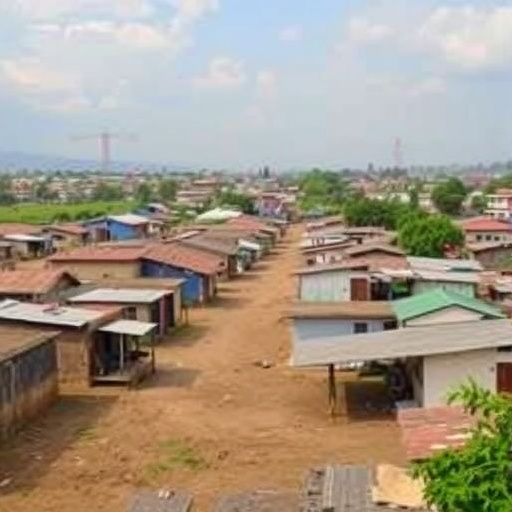
The study addresses a problem that is frequently obscured by citywide averages. A single temperature reading can suggest that an entire city is experiencing the same conditions, while residents in different neighborhoods may face dramatically different levels of heat exposure. Informal settlements often contain dense housing, limited tree cover, narrow pathways, extensive metal or concrete surfaces and inadequate ventilation. Homes may be built with materials that absorb solar radiation during the day and release heat slowly at night, preventing the body from recovering between consecutive hot days. In many communities, unreliable electricity, limited access to cooling and insufficient water infrastructure further increase exposure. These factors can transform an extreme-weather event into a prolonged physiological stress test.
Heat affects the human body through several interacting mechanisms. Under normal conditions, the body sheds excess heat through radiation, convection and evaporation, especially sweating. During a heatwave, high air temperatures reduce the efficiency of radiation and convection, while high humidity slows the evaporation of sweat. The result is a rising core temperature that can impair cardiovascular, renal and neurological function. The danger is particularly acute at night, when persistently warm indoor conditions interfere with sleep and prevent thermal recovery. Older adults, infants, people with chronic illnesses, outdoor workers and residents taking medications that alter hydration or cardiovascular responses may be especially vulnerable. The study’s focus on infrastructure recognizes that health outcomes are shaped not only by individual behavior, but also by the physical environments in which people live.
Urban infrastructure can influence heat exposure at multiple scales, from an individual dwelling to an entire neighborhood. Roofing materials, wall construction, window placement and ventilation determine how quickly heat enters and leaves a home. At the street level, pavement and unshaded surfaces can absorb solar energy and intensify the urban heat island effect, in which built-up areas become warmer than surrounding rural or less developed landscapes. Vegetation can cool the environment through shade and evapotranspiration, the process by which plants release water vapor into the atmosphere. Water access, drainage systems, sanitation and reliable electricity can also affect whether residents can cool themselves safely, remain hydrated and avoid secondary health threats during extreme weather. An infrastructure upgrade, therefore, is not a single intervention but a network of changes that may alter exposure, vulnerability and the ability to recover.
Prosdocimi, Klima and DeYoreo frame slum upgrading as a potential pathway to climate resilience rather than solely as a housing or economic-development policy. The distinction matters because adaptation measures can produce unequal outcomes if they ignore how neighborhoods actually function. A new road may improve emergency access but also replace permeable ground with heat-retaining pavement. A roof replacement may reduce indoor temperatures, while poorly planned construction could restrict airflow. Tree planting can provide shade, but only if species are suited to local conditions and maintenance is sustained. Electrification may allow households to use fans or cooling systems, yet it can also increase costs or place pressure on fragile power networks. Evaluating infrastructure through a health lens helps reveal these trade-offs before they are treated as evidence of resilience.
The technical challenge is connecting physical changes in the built environment to measurable health effects. Researchers studying heat risk commonly combine meteorological data with indicators such as air temperature, humidity, wind speed and radiant heat. Measures including the heat index, wet-bulb globe temperature and physiological heat-balance models can provide more realistic estimates of human stress than air temperature alone. Indoor conditions may require separate monitoring because walls, roofs and ventilation can produce temperatures that differ substantially from outdoor weather-station readings. Health analysis can then consider outcomes such as heat exhaustion, heatstroke, dehydration, cardiovascular strain, kidney stress, hospital admissions or excess mortality. By evaluating infrastructure in relation to these pathways, the study speaks to a growing field of climate-health research that treats the city itself as part of the exposure system.
The paper is also significant because informal settlements are not interchangeable. Their risks depend on local climate, topography, housing materials, population density, access to services and social networks. A community in a humid tropical region may face dangerous nighttime heat and limited evaporative cooling, while a dry-climate settlement may experience intense daytime solar exposure and severe water scarcity. Hillside neighborhoods may have different airflow patterns from settlements built in low-lying basins. Residents may develop local strategies—sharing water, opening communal spaces or checking on vulnerable neighbors—that reduce risk but are difficult to capture in conventional datasets. Any meaningful assessment of upgrading must therefore account for social capacity as well as concrete, asphalt and building envelopes.
The research arrives as cities and governments search for adaptation strategies that can be implemented before the next record-breaking summer. Large-scale cooling centers, heat-warning systems and emergency medical responses remain essential, but they are often activated only after dangerous conditions have already emerged. Infrastructure upgrades offer the possibility of reducing exposure in advance. Reflective or insulated roofs, improved ventilation, shaded public areas, permeable surfaces, expanded vegetation, dependable water supplies and better access to electricity could function as layers of protection. The most effective interventions may be those that deliver multiple benefits at once, improving thermal comfort while also reducing energy demand, supporting public health and strengthening everyday living conditions.
Yet upgrading carries a political risk: improvements intended to protect residents can trigger displacement. When infrastructure raises land values without guaranteeing secure tenure or affordable housing, existing communities may be pushed out and replaced by wealthier populations. Climate resilience can then become a mechanism of climate exclusion. A health-centered approach must ask not only whether a neighborhood becomes cooler, but also who remains able to live there, who receives the benefits and who bears the cost. The study’s emphasis on slum upgrading therefore connects heat adaptation to environmental justice. Protecting residents from extreme heat requires investment in physical systems, but it also requires policies that preserve community stability and ensure that resilience is not measured solely through property values or redevelopment.
The broader message is that heatwaves expose the hidden architecture of inequality. Climate change raises the temperature hazard, but infrastructure determines how much of that hazard reaches the body. By evaluating the relationship between urban upgrades and health during heatwaves, Prosdocimi, Klima and DeYoreo contribute to a debate that cities can no longer postpone. The future of heat adaptation may depend less on isolated technological fixes than on coordinated improvements to housing, streets, vegetation, water, electricity and public services. If upgrading informal settlements can reduce dangerous exposure while protecting residents from displacement, it could become one of the most consequential climate-health strategies available to rapidly growing cities. As heat records continue to fall, the question is no longer whether urban infrastructure affects health, but whether cities will redesign it quickly enough to prevent extreme heat from becoming a routine cause of illness and death.
Cite Scienmag News
Sloane Callahan. (August 13, 2026). Upgrading Informal Settlements May Strengthen Climate Resilience and Protect Health During Heatwaves. Scienmag. https://scienmag.com/upgrading-informal-settlements-may-strengthen-climate-resilience-and-protect-health-during-heatwaves/
Sloane Callahan. "Upgrading Informal Settlements May Strengthen Climate Resilience and Protect Health During Heatwaves." Scienmag, 13 August 2026, https://scienmag.com/upgrading-informal-settlements-may-strengthen-climate-resilience-and-protect-health-during-heatwaves/. Accessed 5 September 2026.
Sloane Callahan. "Upgrading Informal Settlements May Strengthen Climate Resilience and Protect Health During Heatwaves." Scienmag. August 13, 2026. https://scienmag.com/upgrading-informal-settlements-may-strengthen-climate-resilience-and-protect-health-during-heatwaves/


