


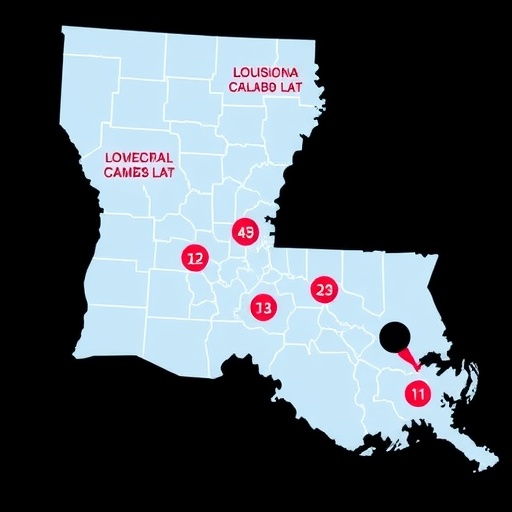
A statewide cancer prevention program in Louisiana has received more than $3 million from the U.S. Centers for Disease Control and Prevention to expand access to breast and cervical cancer screening, diagnostic testing and patient navigation. The Louisiana Breast and Cervical Health Program, known as LBCHP, is administered through the LSU LCMC Health Cancer Center and housed at the LSU Health New Orleans School of Public Health. The new award represents the program’s fifth consecutive year of CDC funding and is intended to improve the detection of cancer at earlier stages, when treatment is generally more effective and less complex.
Led by Donna Williams, MPH, Dr.PH, associate dean of public health at LSU Health New Orleans School of Public Health and associate director of community outreach and engagement for the LSU LCMC Health Cancer Center, LBCHP serves women throughout Louisiana who face financial, geographic or structural barriers to preventive care. The program provides eligible women with breast and cervical cancer screening at no cost, as well as diagnostic services when an abnormal result requires further investigation. It also connects participants with patient navigators, specialized professionals who help coordinate appointments, explain medical information and address practical obstacles that might otherwise interrupt care.
The scale of the program’s historical impact illustrates the importance of sustained screening infrastructure in a state with substantial cancer disparities. Since its establishment in 2002, LBCHP has screened more than 118,000 women, identified 1,648 breast cancers and diagnosed 249 cervical cancers. The program has also delivered 44,497 patient navigation encounters. These figures represent more than isolated clinical appointments: they reflect a continuing public health system designed to move patients from prevention to screening, from screening to diagnosis and, when necessary, from diagnosis to treatment. That sequence is critical because an abnormal screening result is not itself a cancer diagnosis, but delays in follow-up can allow disease to progress before treatment begins.
Breast and cervical screening are based on different biological and technical approaches. Breast cancer screening commonly uses mammography, which produces low-dose X-ray images capable of revealing masses, architectural distortions or clusters of tiny calcium deposits that may be associated with early malignancy. Cervical cancer prevention relies primarily on tests that detect high-risk human papillomavirus, or HPV, and cellular changes in cervical tissue. Persistent infection with certain HPV types can cause precancerous abnormalities over time. Detecting those changes makes it possible to remove or monitor abnormal tissue before invasive cervical cancer develops. In both cases, screening is intended to identify disease or risk before symptoms appear, when intervention can substantially alter the course of illness.
The grant comes as the program reports an 18% increase in the number of uninsured women it serves and a return to service levels above those recorded before the COVID-19 pandemic. Carleigh Baudoin, assistant director of the Louisiana Cancer Prevention and Control Programs, said the next phase will focus on reaching more women in rural communities and those who have rarely or never been screened. Rural residents may live far from mammography facilities, gynecologic services or diagnostic centers, while uninsured patients can postpone care because of cost. Other barriers include transportation, limited appointment availability, language differences, low health literacy, cultural concerns and fear of a possible diagnosis. Patient navigation is designed to address these factors individually rather than treating missed care as a simple failure of compliance.
Navigation can be especially important after a screening abnormality, when patients may need multiple appointments and unfamiliar procedures. A navigator may help arrange transportation, identify a participating provider, coordinate imaging or biopsy appointments, clarify instructions and connect a patient with financial assistance. For someone who speaks limited English, language support can reduce the risk that crucial information about preparation, follow-up or treatment will be misunderstood. From a health systems perspective, navigation also reduces the fragmentation that can occur when screening, diagnostic imaging, pathology and treatment are delivered by different organizations. The goal is not only to increase the number of women screened, but to ensure that abnormal findings lead to timely diagnostic resolution.
Women diagnosed with breast or cervical cancer through the program, as well as some women diagnosed with specific precancerous conditions, may qualify for no-cost health coverage through Louisiana’s Breast and Cervical Cancer Medicaid program. This connection is important because screening without access to treatment cannot produce the full public health benefit of early detection. A mammogram or HPV-related abnormality can identify risk, but survival depends on completing the next steps, which may include diagnostic imaging, tissue sampling, surgery, radiation, chemotherapy, endocrine therapy or other evidence-based interventions. By linking screening services to potential coverage and care coordination, LBCHP seeks to reduce the gap between finding disease and treating it.
The program is the largest initiative within Louisiana Cancer Prevention and Control Programs and is described by LSU Health New Orleans as the only CDC-funded National Breast and Cervical Cancer Early Detection Program in the United States based at an academic institution. Its position within a university-based public health system allows the program to combine clinical outreach with population-level analysis. Statewide cancer data can reveal communities with low screening rates, higher disease burdens or limited access to providers. Those data can then guide partnerships with health systems, community organizations and healthcare practices. The CDC award will support efforts to implement proven screening practices in clinical settings, connect women with available services and strengthen systems that promote timely follow-up.
The initiative also forms part of the LSU LCMC Health Cancer Center’s broader effort to reduce Louisiana’s cancer burden and pursue designation from the National Cancer Institute. Dr. Lucio Miele, director of the cancer center, described prevention and earlier detection as essential to changing cancer outcomes in the state. The center includes more than 100 cancer researchers whose work, through the Stanley S. Scott Cancer Research Center of Excellence, focuses on cancer prevention, early detection and the development of new therapies. In this framework, LBCHP provides a statewide platform for translating cancer-control knowledge into community-level action. Its screening network can help identify unmet needs while its partnerships create pathways for research-informed prevention and care.
Women seeking information about eligibility or screening locations can visit louisianacancer.org or call 1-888-599-1073. The program’s stated objective is straightforward but scientifically consequential: increase the number of women who receive recommended screening, reduce delays after abnormal results and ensure that financial or logistical barriers do not determine who receives potentially lifesaving care. In Louisiana, where geography, insurance status and healthcare access can strongly influence cancer outcomes, the expansion of LBCHP represents an investment in the infrastructure surrounding early detection. The program’s accumulated record—more than 118,000 women screened and thousands of cancers or precancerous conditions identified—shows how sustained public health intervention can convert screening technology into measurable population benefit.
Web References: https://louisianacancer.org/
References: Centers for Disease Control and Prevention funding information and program statistics provided by the Louisiana Breast and Cervical Health Program, LSU Health New Orleans School of Public Health and the LSU LCMC Health Cancer Center.
Cite Scienmag News
Nathaniel Bowman. (August 12, 2026). CDC Awards Louisiana Breast and Cervical Health Program More Than $3 Million. Scienmag. https://scienmag.com/cdc-awards-louisiana-breast-and-cervical-health-program-more-than-3-million/
Nathaniel Bowman. "CDC Awards Louisiana Breast and Cervical Health Program More Than $3 Million." Scienmag, 12 August 2026, https://scienmag.com/cdc-awards-louisiana-breast-and-cervical-health-program-more-than-3-million/. Accessed 4 September 2026.
Nathaniel Bowman. "CDC Awards Louisiana Breast and Cervical Health Program More Than $3 Million." Scienmag. August 12, 2026. https://scienmag.com/cdc-awards-louisiana-breast-and-cervical-health-program-more-than-3-million/


