


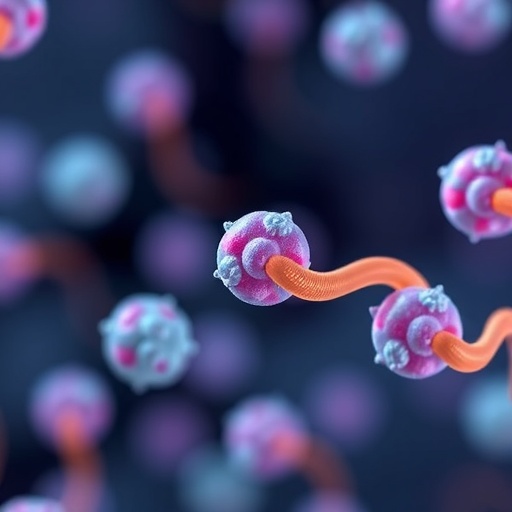
RNA medicines are moving rapidly from experimental therapies toward practical treatments, but one of the field’s biggest obstacles remains the same: getting fragile genetic cargo into the right cells, in the right organ, at the right dose. A study published in Nature Chemical Engineering reports a new polymer–lipid hybrid nanoparticle platform designed to address that challenge. The researchers engineered tunable polymers that work together with lipid components to package and transport a broad range of RNA molecules, including messenger RNA, small interfering RNA, circular RNA, gene-editing systems and vaccine payloads. Their findings suggest that chemically programmable delivery materials could offer greater flexibility than conventional lipid nanoparticles, particularly when the size, structure and biological function of the RNA cargo vary substantially.
RNA therapeutics are inherently difficult to formulate because they are large, negatively charged and chemically vulnerable molecules. Unlike many small-molecule drugs, RNA does not readily cross the hydrophobic membranes that surround cells. It can also be rapidly degraded by enzymes in biological fluids and may trigger unwanted immune responses if it remains exposed. Delivery systems therefore need to perform several jobs simultaneously: protect RNA during circulation, transport it through the body, promote uptake by target cells and release the cargo inside those cells. The challenge becomes even more complex when the RNA is intended for different organs. A formulation optimized for the liver, for example, may not efficiently reach lung or spleen tissue.
Lipid nanoparticles have become one of the most successful technologies for RNA delivery, with their capabilities demonstrated by several approved nucleic-acid medicines and vaccines. However, the chemical space of many lipid systems is constrained by the need to use relatively small, synthetically accessible molecules with carefully balanced charge and hydrophobicity. These limitations can make it difficult to accommodate RNA cargos that differ widely in length, folding, rigidity or biological purpose. The new platform approaches the problem by adding rationally designed polymers to the lipid formulation. Polymers can be built with repeating units and adjustable side chains, creating a broader molecular framework for controlling how RNA interacts with the nanoparticle.
The researchers systematically modified the polymers’ side-chain functionalities, hydrophobic chain substitution and the overall composition of the hybrid nanoparticles. These variables influence several physical and chemical properties at once, including the strength of RNA binding, particle stability, interactions with biological membranes and behavior in physiological environments. A polymer that binds RNA too weakly may fail to encapsulate it efficiently, while one that binds too strongly could prevent release after cellular uptake. Similarly, excessive hydrophobicity may improve association with membranes but can also alter particle aggregation, circulation or toxicity. By tuning these features rather than relying on a single fixed carrier chemistry, the researchers sought to create a delivery system capable of adjusting its behavior for different RNA payloads.
At the molecular level, the platform is designed to modulate the interactions between the genetic cargo and the nanoparticle matrix. RNA contains a negatively charged phosphate backbone, allowing it to associate with positively charged or otherwise interactive polymer segments. Side-chain chemistry can alter the density and accessibility of these interactions, while hydrophobic domains can help organize the polymer and lipid components into stable nanoscale structures. The resulting hybrid architecture combines the modularity of polymer chemistry with the membrane-related functions of lipids. Such a combination may support more efficient encapsulation while also influencing how particles interact with serum proteins, cell membranes and intracellular compartments after administration.
The reported optimization produced nanoparticles with delivery activity across multiple organs, including the lungs, liver and spleen. Organ selectivity is a central goal in RNA medicine because the therapeutic effect often depends not only on whether a nanoparticle reaches the body, but also on where it accumulates and which cell populations internalize it. The researchers’ ability to modulate delivery through polymer structure and nanoparticle composition indicates that distribution is not determined solely by the lipid component. Instead, it can emerge from the combined effects of particle size, surface chemistry, hydrophobicity, RNA binding and interactions with biological barriers. This type of materials-based control could eventually help researchers design carriers for tissue-specific therapies rather than adapting one universal formulation to every application.
The platform was evaluated with a diverse collection of RNA cargos. Messenger RNA can be translated into therapeutic proteins, but its relatively large size and structural sensitivity can make formulation demanding. Small interfering RNA operates through gene-silencing pathways and requires delivery into the cytoplasm, where it can guide the degradation of specific messenger RNAs. Circular RNA offers a more persistent RNA architecture and has attracted interest for sustained protein production. Gene editors introduce an additional layer of complexity because they may require delivery of nucleases, guide RNAs or other components in coordinated combinations. Vaccines, meanwhile, depend on efficient expression of antigens and appropriate immune stimulation. Demonstrating compatibility with this range of payloads suggests that the hybrid nanoparticles are not limited to a single therapeutic mechanism.
The study also highlights the importance of manufacturing considerations. Advanced RNA medicines must ultimately be produced reproducibly and at a scale suitable for clinical development. The researchers describe a scalable nanoparticle synthesis strategy, linking molecular design with practical production requirements. This connection is significant because a material that performs well only under small-batch laboratory conditions may be difficult to translate into a medical product. Consistent control over polymer composition, lipid ratios, particle formation and RNA encapsulation will be essential for maintaining dose accuracy and safety. The work therefore places delivery chemistry within a broader engineering framework that includes formulation optimization, molecular transport and manufacturing.
Although the findings represent an advance in nanoparticle design, further studies will be needed before the technology can be assessed as a clinical platform. Organ accumulation does not automatically demonstrate therapeutic benefit, and successful delivery must be evaluated alongside the amount of functional RNA released inside target cells. Future investigations will also need to examine dose response, repeat administration, immune activation, toxicity, pharmacokinetics and performance in disease models. The biological differences between laboratory models and human patients can substantially affect nanoparticle distribution. Even so, the study provides a strategy for addressing one of RNA medicine’s defining problems: the need for delivery systems that can be chemically reprogrammed as the cargo and target tissue change.
By combining tunable polymers with established lipid nanoparticle concepts, the researchers propose a more adaptable route for transporting genetic medicines through the body. Rather than treating the nanoparticle as a fixed container, their approach treats it as an engineered interface whose interactions with RNA, cells and tissues can be adjusted through molecular design. That principle could be valuable as RNA therapeutics expand beyond conventional vaccines and liver-directed medicines toward gene regulation, protein replacement, genome editing and treatments for diseases affecting less accessible organs. The work suggests that future delivery systems may be built not around one optimal material, but around programmable families of materials capable of matching distinct RNA cargos to specific biological destinations.
Cite Scienmag News
Neil Sanderson. (August 12, 2026). Tunable Polymers Enable Organ-Selective RNA Delivery Using Polymer–Lipid Hybrid Nanoparticles. Scienmag. https://scienmag.com/tunable-polymers-enable-organ-selective-rna-delivery-using-polymer-lipid-hybrid-nanoparticles/
Neil Sanderson. "Tunable Polymers Enable Organ-Selective RNA Delivery Using Polymer–Lipid Hybrid Nanoparticles." Scienmag, 12 August 2026, https://scienmag.com/tunable-polymers-enable-organ-selective-rna-delivery-using-polymer-lipid-hybrid-nanoparticles/. Accessed 5 September 2026.
Neil Sanderson. "Tunable Polymers Enable Organ-Selective RNA Delivery Using Polymer–Lipid Hybrid Nanoparticles." Scienmag. August 12, 2026. https://scienmag.com/tunable-polymers-enable-organ-selective-rna-delivery-using-polymer-lipid-hybrid-nanoparticles/


