


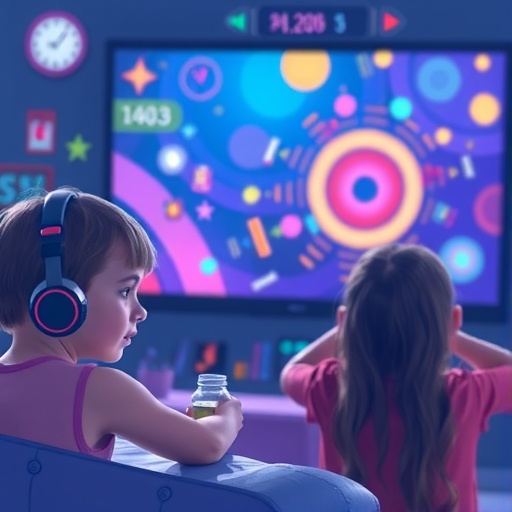
A Finnish study following children for eight years has found that greater screen time from childhood to adolescence was associated with better cognitive processing by the teenage years, challenging the increasingly common assumption that time spent with digital devices is automatically harmful. The researchers emphasize that the finding does not mean unlimited phone, computer, or gaming use is beneficial. Instead, it suggests that the cognitive consequences of screen exposure may depend heavily on what young people do while looking at a screen, how actively they engage with the content, and how digital activities fit alongside movement, sleep, social interaction, and schoolwork.
The study, based on data from the long-running Physical Activity and Nutrition in Children, or PANIC, project, examined 260 adolescents with an average age of 15.8 years. The participants included 124 girls and 136 boys who had been followed from childhood into adolescence. Researchers assessed physical activity and sedentary behavior using both questionnaires and a device that combined heart-rate monitoring with movement measurements. Cognitive performance was evaluated with the CogState test battery, a computerized set of assessments designed to measure functions including learning, attention, and working memory. Together, these data allowed the researchers to compare patterns of behavior across development with how efficiently participants processed information during adolescence.
The strongest overall association involved screen time. Adolescents who had accumulated more screen exposure since childhood tended to show better cognitive processing during the teenage years. The result is notable because public discussions about children and technology often treat screen use as a single, uniform behavior. In reality, the mental demands of watching a documentary, solving problems in a video game, creating digital content, communicating with friends, or passively scrolling through short videos can be very different. The study did not establish that screen time directly improved cognition, but it raises the possibility that certain forms of digital engagement may exercise attention, decision-making, memory, visual processing, and problem-solving.
“Screen time can support children’s and adolescents’ cognitive processing,” said Petri Jalanko, a doctoral researcher at the University of Jyväskylä and one of the study’s researchers. He suggested that parents and teachers should focus less on treating screens as inherently dangerous and more on guiding young people toward activities that encourage active thinking, creativity, learning, and the solution of complex problems. This distinction is important because a measurement of total screen time cannot reveal the mental content of that time. Two adolescents may spend the same number of hours using digital devices while engaging in entirely different cognitive experiences, ranging from demanding interactive tasks to largely passive consumption.
The investigation also found that the relationship between physical activity and cognition was more complicated than a simple “more is better” pattern. Among girls, greater amounts of light-intensity physical activity accumulated from childhood were associated with stronger working memory in adolescence. Working memory is the brain’s limited-capacity system for temporarily holding and manipulating information, allowing a person to follow instructions, perform mental calculations, compare ideas, or keep track of a sequence of events. Among boys, higher levels of guided physical activity from childhood through adolescence were associated with better working memory. Guided activity may include organized sports, supervised exercise, or other structured forms of movement in which instruction and external support shape participation.
At the same time, the researchers observed an unexpected association: lower levels of self-reported unsupervised physical activity were linked with better cognitive processing in adolescence. This result should not be interpreted as evidence that independent movement harms the brain. It may reflect the limitations of self-reported behavior, differences in the types of activities adolescents described, or other factors that influence both participation and cognitive performance. For example, young people who spend more time in organized settings may also have different routines, educational opportunities, family support, or social environments than those whose activity is primarily unsupervised. Observational studies can identify patterns, but they cannot determine which factor causes another.
Physical activity and sedentary time recorded by the heart-rate and movement device were not significantly associated with cognitive processing. The researchers believe this may be partly because sensors can measure intensity and duration but cannot identify the context or purpose of an activity. A device may register that a person is sitting still, but it cannot tell whether they are reading, studying, watching educational material, talking with friends, or using social media. Similarly, a period of movement may represent structured training, casual play, commuting, or an activity requiring little cognitive engagement. Without information about context, a numerical record of movement can conceal important differences in how behavior affects the brain.
The findings also point to possible differences between boys and girls in the kinds of experiences most closely related to cognitive development. Light-intensity activity appeared relevant to girls’ working memory, while guided activity showed an association with boys’ working memory. These patterns may arise from differences in social environments, activity preferences, biological development, or the way young people respond to structured and unstructured movement. However, the researchers caution that the sex-specific results require further investigation. The sample was relatively modest, and associations observed in one group of Finnish children may not apply equally to adolescents in other countries, cultures, or socioeconomic circumstances.
The study arrives at a time when families, educators, and public-health authorities are searching for practical guidance on children’s digital lives. Screen use is often discussed as if it were competing directly with physical activity, but the new findings suggest that the relationship may be more nuanced. A child can be physically active and use technology in cognitively demanding ways, while another may be sedentary without gaining any meaningful educational or mental benefit from screen exposure. The central question may therefore be not simply how many hours a young person spends on a device, but whether those hours promote curiosity, concentration, creativity, social connection, and problem-solving while leaving sufficient time for sleep, exercise, and face-to-face life.
The researchers stress that intervention studies are still needed to determine causality. Because the PANIC analysis followed naturally occurring behaviors rather than assigning children to specific amounts or types of screen use, it cannot prove that more screen time produced better cognitive processing. It is possible that adolescents with stronger cognitive abilities were more likely to choose certain digital activities, or that another factor influenced both their screen habits and test performance. Even so, the eight-year follow-up provides valuable evidence that the effects of screen exposure, physical activity, and sedentary behavior cannot be understood through simple labels. The emerging message is not that screens are universally beneficial, but that intelligently designed digital experiences may contribute to learning—and that healthy development is most likely to be supported by a balanced combination of active thinking, regular movement, and varied everyday experiences.
Web References: https://doi.org/10.1123/pes.2025-0083
References: Pediatric Exercise Science; DOI: 10.1123/pes.2025-0083
Cite Scienmag News
Courtney Benton. (August 12, 2026). More childhood screen time linked to better adolescent cognitive processing. Scienmag. https://scienmag.com/more-childhood-screen-time-linked-to-better-adolescent-cognitive-processing/
Courtney Benton. "More childhood screen time linked to better adolescent cognitive processing." Scienmag, 12 August 2026, https://scienmag.com/more-childhood-screen-time-linked-to-better-adolescent-cognitive-processing/. Accessed 4 September 2026.
Courtney Benton. "More childhood screen time linked to better adolescent cognitive processing." Scienmag. August 12, 2026. https://scienmag.com/more-childhood-screen-time-linked-to-better-adolescent-cognitive-processing/


