


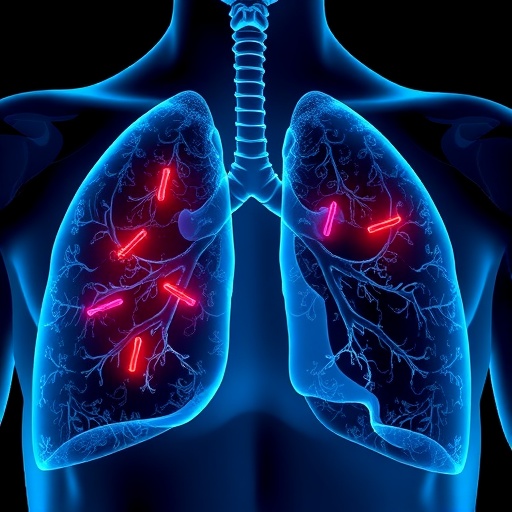
Researchers at Trinity College Dublin and St. James’s Hospital have found that dexamethasone can suppress damaging inflammation caused by Mycobacterium avium without impairing the ability of human macrophages to control the bacterium. The findings, published in the Journal of Infectious Diseases, suggest that the widely used corticosteroid could be investigated as a host-directed treatment alongside antibiotics for nontuberculous mycobacterial (NTM) disease.
NTM infections are becoming an increasingly important global health problem. The organisms are found widely in soil and water and can cause serious, persistent lung disease, particularly in people with bronchiectasis, chronic obstructive pulmonary disease, cystic fibrosis or other underlying respiratory conditions. The Mycobacterium avium complex is among the most common causes of NTM pulmonary infection. Treatment typically involves several antibiotics taken for many months, yet even when bacterial numbers are reduced, patients may continue to experience coughing, fatigue, breathlessness and progressive lung damage associated with chronic inflammation.
Corticosteroids have traditionally been used cautiously during mycobacterial infections because they suppress immune activity. The concern is that dampening T-cell or innate immune responses could allow bacteria to multiply more rapidly. The new study addresses a central question in NTM treatment: whether it is possible to reduce excessive inflammation without eliminating the immune mechanisms that help contain the infection.
The Trinity research team examined the response of primary human macrophages to M. avium. Macrophages are immune cells that engulf microbes and coordinate early antimicrobial defence. Once infected, they undergo major functional and metabolic changes. These include increased glycolysis, a process in which cells rapidly convert glucose into energy and metabolic intermediates. Although glycolysis can support immune activation, an excessive or prolonged metabolic shift may also drive the production of inflammatory molecules that contribute to tissue injury.
Using real-time metabolic measurements, the researchers observed that M. avium infection increased macrophage metabolic activity. Dexamethasone significantly reduced this infection-associated metabolic response. The steroid also lowered the production of several inflammatory cytokines and chemokines, including tumour necrosis factor, interleukin-1 beta, interleukin-6 and interleukin-8. These signalling proteins recruit and activate additional immune cells, but sustained production can intensify inflammation in infected tissues.
The key result was that the reduction in inflammatory activity did not appear to come at the cost of bacterial control. Macrophages treated with dexamethasone did not show increased growth of M. avium compared with untreated infected cells. In other words, the steroid separated two responses that are often assumed to be inseparable: the inflammatory reaction and the cell’s ability to restrict intracellular bacteria. This distinction is important because inflammation is not always equivalent to effective antimicrobial protection.
The findings build on earlier work from the same research group involving Mycobacterium tuberculosis. In that setting, the researchers showed that dexamethasone could alter the metabolism of infected macrophages. The new results indicate that related metabolic pathways may also shape the immune response to NTM, although the biological behaviour of NTM species differs from that of the tuberculosis bacterium. The work further supports the idea that metabolic changes in myeloid cells can influence inflammation without necessarily determining whether bacteria are controlled.
“Our study suggests that it may be possible to fine-tune this response by reducing damaging inflammation while still preserving the immune defences that help control infection,” said Dr Donal Cox, senior author and a researcher at the Trinity Translational Medicine Institute. The study’s results, he added, provide a rationale for examining corticosteroids as potential host-directed therapies rather than using them solely for their conventional anti-inflammatory effects.
Professor Joseph Keane, Professor of Medicine at Trinity, said the research demonstrated a central role for glycolysis in the macrophage response to NTM. The metabolic shift was sufficient to accompany the inflammatory response, but it was not necessary for the macrophages’ antimicrobial activity. This suggests that the pathways producing inflammation and those responsible for bacterial restriction may be selectively targeted, at least in human cells grown under laboratory conditions.
The researchers emphasise that the study does not establish dexamethasone as a treatment for patients with NTM disease. The experiments were performed using primary human macrophages rather than whole organisms or clinical trial participants. Corticosteroids can have broad effects on immunity and, depending on dose, duration and the patient’s underlying condition, may increase susceptibility to other infections or produce significant side effects. Animal studies and carefully designed clinical investigations will therefore be needed to determine whether dexamethasone can safely improve symptoms or limit tissue damage when combined with standard antimicrobial therapy. Nevertheless, the results offer a potential new strategy for NTM disease: treating the host’s harmful inflammatory response while preserving the immune functions required to keep the bacteria under control.
Web References: https://doi.org/10.1093/infdis/jiag394
References: Journal of Infectious Diseases, DOI: 10.1093/infdis/jiag394
Cite Scienmag News
Barbara Leach. (August 12, 2026). Trinity study: Steroids curb inflammation in mycobacterial lung disease without weakening immunity. Scienmag. https://scienmag.com/trinity-study-steroids-curb-inflammation-in-mycobacterial-lung-disease-without-weakening-immunity/
Barbara Leach. "Trinity study: Steroids curb inflammation in mycobacterial lung disease without weakening immunity." Scienmag, 12 August 2026, https://scienmag.com/trinity-study-steroids-curb-inflammation-in-mycobacterial-lung-disease-without-weakening-immunity/. Accessed 5 September 2026.
Barbara Leach. "Trinity study: Steroids curb inflammation in mycobacterial lung disease without weakening immunity." Scienmag. August 12, 2026. https://scienmag.com/trinity-study-steroids-curb-inflammation-in-mycobacterial-lung-disease-without-weakening-immunity/


