


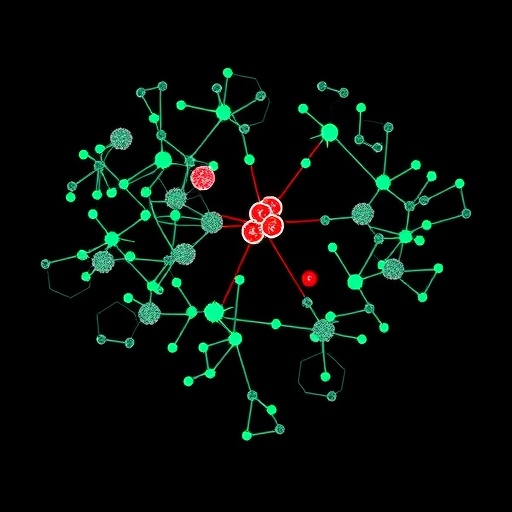
Researchers at Columbia University Mailman School of Public Health and the University of Chicago have developed a computational framework designed to identify genes that actively drive disease rather than merely appearing in genetic studies as statistical associations. The method, called DANDELION, combines genetic information with regulatory data from disease-relevant tissues to prioritize genes that may sit at the center of disease mechanisms. In a study published in Cell, the researchers used the framework to investigate asthma and uncovered a previously underappreciated biological pathway connected to the disease.
Modern genetic studies can identify hundreds or even thousands of DNA variants associated with conditions such as asthma. Yet an associated variant is not necessarily located within the gene responsible for disease, nor does it always reveal how the disease develops. Many variants influence gene activity from a distance, while several nearby genes may be affected by the same regulatory region. This makes it difficult to determine which genes are genuine disease drivers and which are simply passengers in a complex genetic signal.
DANDELION was developed to address this problem through a mediation-inspired analytical strategy. Rather than treating a genetic variant and a disease outcome as directly connected, the framework examines whether the variant may influence disease through changes in gene regulation. It incorporates trans-regulatory information, meaning regulatory effects that can operate across genomic regions, and integrates these data with genetic associations observed in large-scale studies. By tracing potential regulatory routes from DNA variation to gene activity and then to disease, the method seeks to distinguish biologically meaningful drivers from genes that are only indirectly associated with risk.
“Current genetic approaches and large-scale studies often identify hundreds of DNA changes linked to disease risk, but it can be difficult to determine which genes are actually causing the disease rather than simply being associated with it,” said Zhonghua Liu, ScD, assistant professor of biostatistics at Columbia University Mailman School of Public Health. According to the researchers, DANDELION offers a way to rank candidate genes according to their likely role in disease biology, potentially making genetic discoveries more useful for therapeutic development.
The team applied the framework to asthma, a chronic respiratory disease characterized by airway inflammation, variable airflow obstruction and heightened sensitivity to environmental triggers. After identifying candidate disease-driving genes, the researchers compared their results with single-cell gene-expression data from the Human Lung Cell Atlas. This allowed them to determine which individual lung cell types showed the strongest activity of the prioritized genes, providing a more precise view of where the implicated biological processes may operate.
The analysis highlighted protein palmitoylation, a chemical modification that attaches fatty acids to proteins, as a potentially important pathway in asthma. Palmitoylation can alter a protein’s stability, movement, interactions with other molecules and positioning within a cell. Because these functions influence signaling and immune activity, disruptions in palmitoylation could affect the behavior of cells involved in airway inflammation. The researchers’ findings suggest that this pathway may contribute to asthma in ways not captured by conventional gene-prioritization methods.
Laboratory experiments provided additional support for the computational results. The investigators found that enzymes involved in protein palmitoylation influenced inflammation-related processes associated with asthma. These experiments do not establish that the enzymes can be safely targeted in patients, but they strengthen the case that palmitoylation is biologically connected to the disease rather than being a statistical signal alone. The pathway could therefore serve as a starting point for future studies seeking treatments that modify disease mechanisms at the cellular level.
The study was co-led by Zhonghua Liu, Marcelo A. Nóbrega, MD, PhD, professor in the Department of Human Genetics at the University of Chicago, and Xuanyao Liu, PhD, assistant professor in the Departments of Medicine and Human Genetics at the University of Chicago. The investigators describe DANDELION as a general framework rather than an asthma-specific tool. Because it can integrate genetic data with regulatory information from relevant tissues, it may be applicable to other complex diseases in which multiple variants, cell types and biological pathways contribute to risk.
The researchers say the approach could help narrow the gap between genetic discovery and drug development. Genetic evidence is increasingly used to select potential therapeutic targets, but the large number of associations produced by genome-wide studies can make that process difficult. By highlighting genes that appear to mediate the effects of disease-associated variation, DANDELION may provide a more focused list of candidates for functional experiments and clinical investigation. The software and analysis code have been made publicly available, allowing other researchers to test the framework in additional diseases and datasets. The work was supported by the National Institutes of Health and the American Heart Association, including NIH grant R01AG086379 to Zhonghua Liu. The authors reported no competing interests.
Web References: https://www.github.com/mxxptian/DANDELION; https://www.mailman.columbia.edu/
References: Cell; DOI: 10.5281/zenodo.19911608
Cite Scienmag News
Juliet Wilcox. (August 12, 2026). New computational framework uncovers novel pathway linked to asthma. Scienmag. https://scienmag.com/new-computational-framework-uncovers-novel-pathway-linked-to-asthma/
Juliet Wilcox. "New computational framework uncovers novel pathway linked to asthma." Scienmag, 12 August 2026, https://scienmag.com/new-computational-framework-uncovers-novel-pathway-linked-to-asthma/. Accessed 4 September 2026.
Juliet Wilcox. "New computational framework uncovers novel pathway linked to asthma." Scienmag. August 12, 2026. https://scienmag.com/new-computational-framework-uncovers-novel-pathway-linked-to-asthma/


