


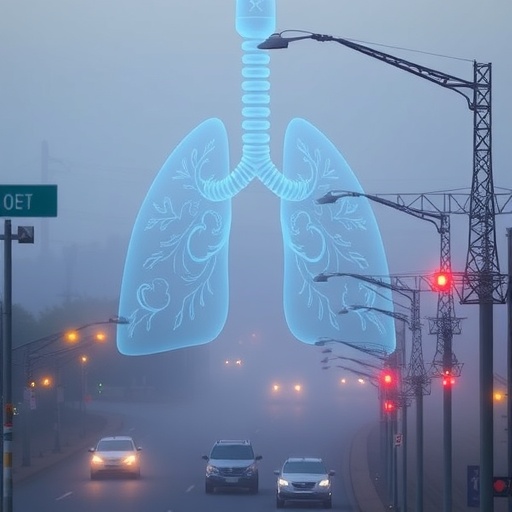
A new study published in Nature Communications has identified measurable molecular changes in human blood that may help explain how long-term air pollution exposure contributes to lung cancer. The findings, drawn from more than 1,300 cancer-free participants, suggest that pollution leaves a detectable biological signature years before a diagnosis. Researchers say the discovery could eventually support the development of blood-based tools for identifying people at elevated risk, particularly those who do not qualify for current lung cancer screening programs.
Outdoor air pollution is already recognized as a human carcinogen and a major environmental risk factor for lung cancer. Fine particulate matter, nitrogen dioxide, and other pollutants can penetrate deep into the respiratory system, where they may trigger chronic inflammation, oxidative stress, and cellular injury. Yet the biological steps connecting exposure to the eventual development of cancer remain incompletely understood. The new research addresses that gap by examining how pollution is reflected in the body’s circulating chemistry before lung cancer becomes clinically apparent.
The study was led by scientists from the American Cancer Society and Emory University’s Rollins School of Public Health. Researchers analyzed stored blood samples from 1,357 people enrolled in the American Cancer Society Cancer Prevention Study cohorts. All participants were free of cancer when their samples were collected. By combining blood-based molecular data with estimates of long-term air pollution exposure and subsequent cancer outcomes, the investigators were able to search for metabolic changes associated with both environmental exposure and future lung cancer risk.
Their analysis focused on metabolites, the small molecules produced or modified during normal biological processes. Metabolites are generated as the body breaks down nutrients, produces energy, responds to stress, and processes foreign chemicals. Because they can change rapidly in response to environmental conditions, they are often viewed as biochemical readouts of what is happening inside tissues and cells. In this study, pollution-associated alterations were observed in pathways involved in inflammation, oxidative stress, detoxification, and energy metabolism.
These pathways are biologically important because persistent disruption can create conditions favorable to cancer development. Oxidative stress occurs when reactive molecules overwhelm the body’s antioxidant defenses, potentially damaging DNA, proteins, and cell membranes. Chronic inflammation can encourage repeated tissue injury and repair, while also altering immune surveillance and cellular signaling. Detoxification pathways help the body process and eliminate harmful compounds, including chemicals carried on or generated by airborne particles. Changes in energy metabolism may reflect the altered demands placed on cells under prolonged stress.
Crucially, the molecular signals were detectable several years before participants were diagnosed with lung cancer. This timing suggests that the findings may represent more than metabolic changes caused by an already established tumor. Instead, they may reflect an exposure-related biological environment that precedes diagnosis and could contribute to the earliest stages of carcinogenesis. The researchers emphasize, however, that the results reveal associations and mechanisms that require further investigation; they do not yet constitute a clinical test or prove that any individual metabolite directly causes cancer.
The findings are especially relevant to people who have never smoked or who do not meet current eligibility requirements for routine screening. Lung cancer remains the leading cause of cancer death in the United States, but screening recommendations are currently focused on adults aged 50 to 80 with a substantial history of tobacco smoking. More than half of lung cancer cases occur among people who never smoked or who have smoked but are not eligible for screening under existing criteria, according to Donghai Liang, an associate professor at Emory’s Rollins School of Public Health and a co-senior author of the study.
Ying Wang, a senior principal scientist of epidemiology research at the American Cancer Society and co-senior author, said the strongest links between outdoor air pollution and lung cancer are often observed among never-smokers. That pattern indicates that exposure may activate distinct biological processes independent of tobacco-related carcinogens. The newly identified blood signatures offer a way to investigate those processes in living populations, potentially allowing scientists to track how environmental exposures influence human biology long before symptoms appear.
The researchers say the next step is validation in larger and more diverse populations, along with studies that determine whether the metabolite patterns can improve risk prediction beyond established factors such as age, smoking history, and family history. Future work may also examine whether reducing pollution exposure reverses some of the metabolic changes, or whether the signatures can identify people most likely to benefit from targeted prevention. If confirmed, these molecular fingerprints could help shape a new generation of prevention and early-detection strategies—linking what people breathe to measurable changes in their blood and, ultimately, to more personalized approaches to cancer risk.
News Publication Date: 11-Aug-2026
Web References: https://www.nature.com/articles/s41467-026-75116-3; https://doi.org/10.1038/s41467-026-75116-3
References: Nature Communications, DOI: 10.1038/s41467-026-75116-3
Cite Scienmag News
Nathaniel Bowman. (August 12, 2026). Study reveals precancerous link between air pollution exposure and lung cancer risk. Scienmag. https://scienmag.com/study-reveals-precancerous-link-between-air-pollution-exposure-and-lung-cancer-risk/
Nathaniel Bowman. "Study reveals precancerous link between air pollution exposure and lung cancer risk." Scienmag, 12 August 2026, https://scienmag.com/study-reveals-precancerous-link-between-air-pollution-exposure-and-lung-cancer-risk/. Accessed 3 September 2026.
Nathaniel Bowman. "Study reveals precancerous link between air pollution exposure and lung cancer risk." Scienmag. August 12, 2026. https://scienmag.com/study-reveals-precancerous-link-between-air-pollution-exposure-and-lung-cancer-risk/


