


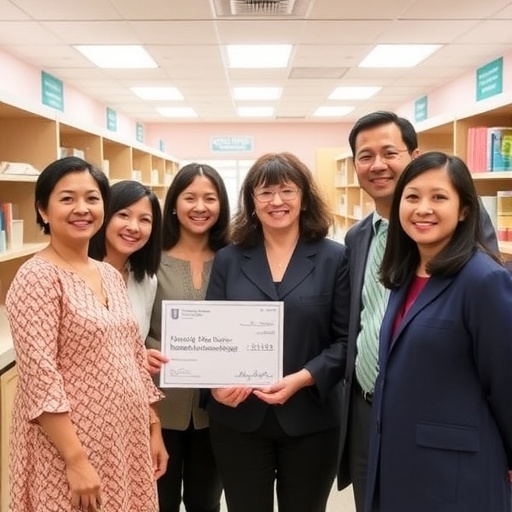
The University of Houston College of Pharmacy has secured more than $1 million in new funding for three research projects aimed at some of medicine’s most persistent challenges: sepsis and septic shock, Alzheimer’s disease and related dementias, and depression in people living with sickle cell disease. Although the studies focus on different conditions, they share a common objective—using more precise tools to improve prevention, diagnosis and treatment while addressing biological complexity that can make conventional approaches ineffective.
One of the most advanced projects involves a new nanomedicine designed to treat sepsis, a life-threatening condition in which the body’s response to infection becomes dangerously dysregulated. Assistant professor and Presidential Frontier Faculty member Fanfei Meng is developing a nanoparticle-based drug delivery system that combines antibacterial treatment with immune regulation. His team is pursuing patent protection for the technology after preliminary experiments produced what researchers describe as highly encouraging results.
Sepsis can begin when bacteria enter the bloodstream or infect tissues, but the danger extends beyond the microbes themselves. In severe cases, the immune system releases a cascade of inflammatory signals that can damage blood vessels, disrupt circulation and impair the function of vital organs. Antibiotics may eliminate bacteria without fully controlling this inflammatory response, while immune-suppressing drugs can carry their own risks. Meng’s approach is designed to address both sides of the disease process at the same time.
The nanoparticle carries two complementary therapies: an antibiotic intended to destroy the underlying bacteria and an immunomodulator intended to reduce excessive inflammatory signaling. Encapsulation within a nanoscale delivery system may help control how the drugs circulate, reach tissues and interact with one another. According to Meng, the formulation reduced drug toxicity, retained strong antibacterial activity and broadly suppressed inflammatory pathways. In a preclinical model of severe sepsis, the treatment achieved complete survival, a result that will need to be tested through additional studies before its relevance to human patients can be determined.
A separate project is applying artificial intelligence to the search for treatments for Alzheimer’s disease and related dementias. Tiansheng Wang, an assistant professor in the Department of Pharmaceutical Health Outcomes and Policy, is focusing on drug repurposing—the investigation of whether medicines already approved for one condition might also protect cognitive function or slow disease-related decline. Repurposing can potentially shorten the path to clinical testing because existing drugs have already undergone studies of manufacturing, dosing and safety.
Wang’s project will use AI to examine several categories of information that are often analyzed independently. These include medication histories and other real-world health data, genetic information, cognitive assessments and brain imaging. Integrating these sources could allow researchers to identify patterns that emerge before a formal dementia diagnosis appears in a medical record. Earlier indicators may also help distinguish whether a medication is associated with meaningful changes in cognitive performance, brain structure or disease risk.
The project reflects a broader shift in biomedical research toward computational methods capable of finding relationships within large, complex datasets. An AI system could screen many approved medicines and compare their effects across patient groups, genetic profiles and stages of cognitive change. Such findings would not by themselves prove that a drug treats dementia, but they could help prioritize the most promising candidates for laboratory experiments and clinical studies, potentially reducing the time and cost required to identify new therapeutic options.
The third investigation addresses depression among people with sickle cell disease, an inherited blood disorder in which abnormal hemoglobin causes red blood cells to become rigid and prone to blocking blood vessels. These blockages can produce episodes of severe pain, anemia and long-term organ complications. Research assistant professor Onye Ononogbu of Pharmacy Practice and Translational Research is creating a screening tool specifically for this patient population, where conventional depression assessments may be difficult to interpret.
The challenge is that many physical features of sickle cell disease overlap with symptoms commonly used to identify depression. Fatigue, disrupted sleep and changes in appetite may arise from depression, chronic pain, anemia or the cumulative demands of living with a serious illness. A screening instrument designed around the experiences of people with sickle cell disease could help clinicians separate psychological symptoms from disease-related physical effects, identify patients who need further evaluation and support more timely care. Together, the three projects show how nanotechnology, artificial intelligence and disease-specific clinical tools are being brought to bear on conditions that have resisted one-size-fits-all solutions.
Cite Scienmag News
Ophelia Keating. (August 12, 2026). UH Pharmacy College Receives Over $1 Million to Tackle Complex Health Challenges. Scienmag. https://scienmag.com/uh-pharmacy-college-receives-over-1-million-to-tackle-complex-health-challenges/
Ophelia Keating. "UH Pharmacy College Receives Over $1 Million to Tackle Complex Health Challenges." Scienmag, 12 August 2026, https://scienmag.com/uh-pharmacy-college-receives-over-1-million-to-tackle-complex-health-challenges/. Accessed 4 September 2026.
Ophelia Keating. "UH Pharmacy College Receives Over $1 Million to Tackle Complex Health Challenges." Scienmag. August 12, 2026. https://scienmag.com/uh-pharmacy-college-receives-over-1-million-to-tackle-complex-health-challenges/


