


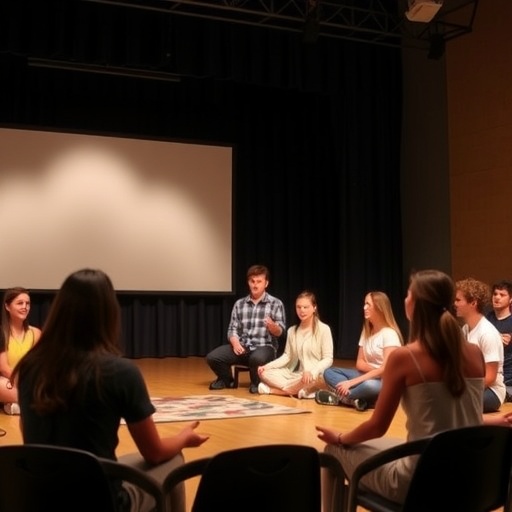
Adolescents who are already experiencing high levels of anxiety may be protected from worsening emotional difficulties by simple activities built into the school week, according to a new study conducted by researchers at the University of Geneva (UNIGE), UniDistance Suisse, the University of Fribourg and Geneva University Hospitals. The research compared improvisational theatre, mindfulness meditation and emotion-focused board games, finding that all three approaches helped prevent declines in mental health and self-efficacy among the most vulnerable students. Improvisational theatre produced an additional benefit: it strengthened cognitive empathy and willingness to collaborate across the full range of anxiety levels.
The findings arrive as concern about adolescent mental health continues to grow. Adolescence is a period of rapid neurological, emotional and social development, during which young people become increasingly sensitive to stress, peer relationships and perceptions of competence. The World Health Organization estimates that approximately one in seven people aged 10 to 19 lives with a mental health condition. The Covid-19 pandemic intensified many of these pressures, disrupting education, social contact and daily routines while increasing feelings of uncertainty and isolation.
Social and emotional learning is increasingly viewed as a potential way to help students manage these challenges. Such learning involves abilities including recognising emotions, regulating emotional reactions, understanding other people’s perspectives, cooperating with peers and maintaining confidence when facing difficulties. However, interventions that appear effective for an average student may not work equally well for everyone. The Geneva-led team therefore examined not only whether classroom activities improved students’ skills overall, but also whether their effects differed according to students’ initial anxiety levels.
The study included 300 students aged 15 and over from three schools in Geneva providing pre-vocational and upper secondary education. Many of the participants faced several forms of vulnerability, including emotional distress, school-related difficulties and an elevated risk of dropping out. For nine consecutive weeks, students attended one 90-minute session each week devoted to improvisational theatre, mindfulness meditation or board games designed to explore emotions. A fourth group attended a weekly office skills course focused on job seeking and other practical employment-related abilities, without a specific social or emotional component.
Researchers assessed students before and after the nine-week programme using measures of emotional and behavioural difficulties, self-efficacy, emotion regulation, empathy, emotion recognition and willingness to collaborate. Self-efficacy is a psychological concept describing a person’s belief that they can deal effectively with challenges and influence the situations they face. It is closely connected to persistence: students who believe they can improve or cope are more likely to continue trying when tasks become difficult.
The results did not show a broad improvement in social and emotional competencies across the entire group. Instead, the most striking pattern was one of prevention. In the control group, emotional and behavioural difficulties increased during the study period, while self-efficacy declined. Among students participating in improvisational theatre, mindfulness or emotion-focused board games, these measures remained broadly stable. The difference was particularly important among students who began the study with moderate to high anxiety, a group that represented almost one-third of all participants.
Mindfulness meditation appeared to offer the clearest reduction in emotional and interpersonal difficulties among the most anxious students. Mindfulness generally involves deliberately directing attention to present-moment experiences, such as breathing, bodily sensations or thoughts, while observing them without immediately reacting. This process may help young people create a psychological pause between an emotional trigger and their response. The study does not establish precisely which mechanisms produced the protective effect, but stabilising emotional difficulties during a period when they increased in the comparison group suggests that regular practice may be valuable for students under the greatest strain.
Improvisational theatre produced a different and particularly notable pattern. After nine sessions, students who took part demonstrated increased cognitive empathy, meaning a greater ability to understand another person’s perspective, intentions or likely point of view. They also showed greater willingness to collaborate, and these changes were not limited to students with high anxiety. In an improvisational exercise, participants must listen closely, interpret emotional and social signals, accept unexpected contributions and respond in real time. The activity therefore combines emotional expression, attention, perspective-taking and cooperation in a single social task.
The researchers describe improvisational theatre as a kind of social laboratory. Unlike conventional classroom exercises, it places students in situations where mistakes can become part of the performance rather than evidence of failure. This may reduce the fear of being judged while encouraging students to experiment with different ways of communicating. The playful nature of the activity may also explain why students rated it as the most enjoyable of the three interventions. Engagement is a crucial factor in adolescence: an activity perceived as entertaining and socially meaningful is more likely to sustain participation than one that feels like another compulsory lesson.
The findings suggest that schools may be able to support adolescent mental health without separating vulnerable students from their peers or relying exclusively on clinical services. Regular classroom activities that are experiential, socially connected and psychologically safe could help prevent deterioration among students already experiencing anxiety, while theatre-based exercises may strengthen skills useful for group work and relationships more broadly. The researchers caution that the study did not demonstrate a dramatic improvement for every participant, and the results should not be interpreted as a replacement for professional mental health care. Instead, they highlight the importance of looking beyond average effects and identifying which students benefit from which approaches. Supported by the Swiss National Science Foundation, the team is now conducting further research on improvisational theatre and its effects on students from migrant backgrounds.
News Publication Date: 22-Jun-2026
Web References: https://www.sciencedirect.com/science/article/pii/S2773233926000355
References: Social and Emotional Learning: Research, Practice, and Policy. DOI: 10.1016/j.sel.2026.100213
Cite Scienmag News
Glenn Wilkins. (August 11, 2026). Improvisational Theater, Meditation, and Games Help Ease Teen Anxiety. Scienmag. https://scienmag.com/improvisational-theater-meditation-and-games-help-ease-teen-anxiety/
Glenn Wilkins. "Improvisational Theater, Meditation, and Games Help Ease Teen Anxiety." Scienmag, 11 August 2026, https://scienmag.com/improvisational-theater-meditation-and-games-help-ease-teen-anxiety/. Accessed 3 September 2026.
Glenn Wilkins. "Improvisational Theater, Meditation, and Games Help Ease Teen Anxiety." Scienmag. August 11, 2026. https://scienmag.com/improvisational-theater-meditation-and-games-help-ease-teen-anxiety/


