


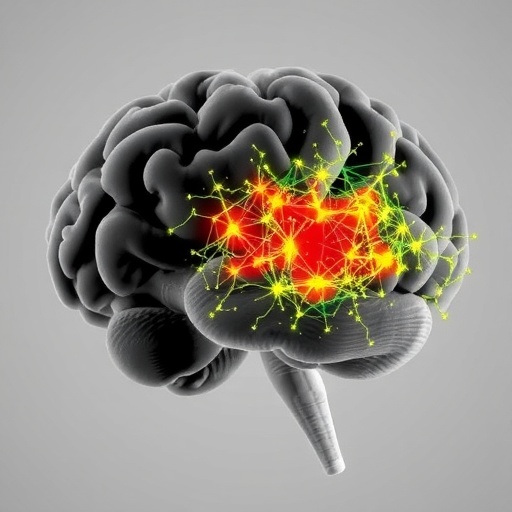
Major depressive disorder is often described through its most visible symptoms—persistent sadness, loss of motivation, sleep disruption, and low energy. Yet for many patients, the illness also affects memory, attention, decision-making, and the ability to process information. A new study published in Translational Psychiatry points to a possible brain-based link between two major risk factors for these cognitive problems: childhood trauma and depression. The research identifies reduced neurite orientation in the neostriatum as a potential biological pathway connecting early-life adversity with cognitive impairment.
The findings are significant because they move beyond the idea that childhood trauma and depression influence cognition only through psychological stress. Instead, they suggest that early adverse experiences may be associated with measurable changes in the microscopic organization of brain tissue. These changes could help explain why some people with major depressive disorder experience substantial cognitive difficulties, while others with similar emotional symptoms do not. The study, led by Xu, Zhou, Lu and colleagues, focuses on the architecture of the neostriatum, a region involved in learning, motivation, action selection, and the coordination of cognitive and emotional processes.
The neostriatum is a major component of the brain’s striatum, a deep structure that helps transform information into behavior. It receives signals from the cerebral cortex and works with networks involved in reward, attention, movement, and executive control. Within this region, neurons communicate through branching extensions known as neurites. These include dendrites, which receive incoming signals, and axons, which transmit information to other cells. The orientation of these neurites—their directional alignment and organization—can influence how efficiently neural circuits process information.
“Reduced neurite orientation” refers to a less orderly arrangement of these microscopic projections. It does not necessarily mean that neurons have disappeared or that a specific brain region has been destroyed. Rather, it describes a change in the structural organization of neural tissue. When neurites become less directionally coherent, communication across a circuit may become less efficient or less specialized. In brain systems that support attention, working memory, and flexible decision-making, even subtle disruptions in connectivity could contribute to cognitive symptoms.
The study’s central finding is described as a mediation effect. In statistical terms, mediation occurs when one factor appears to help explain the relationship between an initial factor and an outcome. Here, childhood trauma is the first factor, cognitive impairment in major depressive disorder is the outcome, and reduced neurite orientation in the neostriatum is the intermediate variable. The analysis therefore suggests that differences in neostriatal microstructure may partly account for the association between traumatic experiences during childhood and later cognitive difficulties in people with depression.
This interpretation is important, but it should not be mistaken for proof that childhood trauma directly causes neurite disorganization or that the structural changes alone produce cognitive impairment. Mediation analyses can reveal patterns consistent with a biological pathway, but they cannot establish causation by themselves. Brain structure may also be shaped by genetic vulnerability, chronic stress, medication exposure, sleep problems, inflammation, substance use, illness duration, or other factors. Long-term studies that follow people from childhood into adulthood will be needed to determine how these influences interact over time.
The research nevertheless offers a potentially valuable framework for understanding the “hidden” burden of depression. Emotional symptoms are usually assessed during clinical appointments, while cognitive problems may be overlooked or attributed to low motivation. A patient may appear calm and engaged yet struggle to retain information, shift between tasks, or make decisions. If neostriatal neurite organization is confirmed as a marker of vulnerability, brain-imaging measures could eventually help identify patients at higher risk for persistent cognitive impairment.
The findings may also encourage more targeted treatments. Current depression therapies are often evaluated primarily by their effects on mood, anxiety, and suicidal thinking. However, a treatment that improves emotional symptoms may not fully restore attention or memory. Understanding the brain circuits associated with trauma-related cognitive impairment could support the development of interventions designed to protect or strengthen neural connectivity. These might include cognitive remediation, structured psychotherapy, physical activity, sleep-focused treatment, neuromodulation, or medications aimed at improving circuit function. At present, the study does not establish that any particular therapy can restore neurite orientation.
The work also highlights why childhood trauma should be considered a long-term health exposure rather than only a historical event. Experiences such as abuse, neglect, household instability, or prolonged insecurity can influence stress-regulation systems during periods when the brain is developing rapidly. Over time, repeated activation of stress pathways may affect learning circuits, reward processing, and the biological systems that maintain neural tissue. The new findings suggest that the consequences of early adversity may be visible not only in behavior and mental health, but also in the fine-scale organization of brain regions involved in cognition.
By linking psychological history, brain microstructure, and cognitive performance, Xu and colleagues provide a more integrated picture of major depressive disorder. Their results suggest that depression associated with childhood trauma may involve distinct neural features that are not captured by mood symptoms alone. The neostriatum could become an important focus for future research into why depression takes different forms, why cognitive impairment persists in some patients, and how early intervention might reduce the long-term effects of adversity. For now, the study adds a compelling piece to the growing evidence that the biology of trauma and depression is written deep within the brain’s communication networks.
Cite Scienmag News
Glenn Wilkins. (August 11, 2026). Reduced Neostriatal Neurite Orientation Links Childhood Trauma to Cognitive Impairment in Depression. Scienmag. https://scienmag.com/reduced-neostriatal-neurite-orientation-links-childhood-trauma-to-cognitive-impairment-in-depression/
Glenn Wilkins. "Reduced Neostriatal Neurite Orientation Links Childhood Trauma to Cognitive Impairment in Depression." Scienmag, 11 August 2026, https://scienmag.com/reduced-neostriatal-neurite-orientation-links-childhood-trauma-to-cognitive-impairment-in-depression/. Accessed 4 September 2026.
Glenn Wilkins. "Reduced Neostriatal Neurite Orientation Links Childhood Trauma to Cognitive Impairment in Depression." Scienmag. August 11, 2026. https://scienmag.com/reduced-neostriatal-neurite-orientation-links-childhood-trauma-to-cognitive-impairment-in-depression/


