


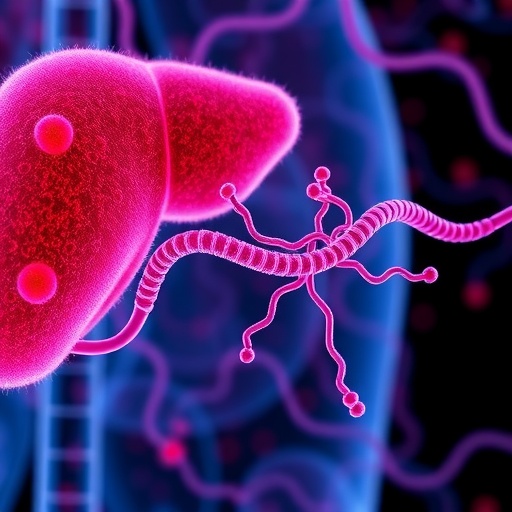
A new study in Nature Communications is drawing attention to a central question in cancer biology: why does the liver become increasingly vulnerable to tumors as its tissue structure declines? Led by Illendula, Hewett, Hayata and colleagues, the research examines how β-catenin—an essential regulator of cell behavior—can shift from supporting normal tissue maintenance to promoting cancerous growth when the liver loses its structural integrity. The findings place the condition of the surrounding tissue, not only the presence of genetic mutations, at the heart of liver cancer development.
β-catenin is best known as a key component of the Wnt signaling pathway, a molecular communication system that controls cell proliferation, differentiation and regeneration. In healthy liver tissue, these processes are tightly regulated. When cells are injured, β-catenin can help activate repair programs, encouraging surviving cells to divide and restore damaged areas. This regenerative function is normally beneficial, but the same pathways can become dangerous when tissue damage is persistent or when regulatory signals begin to fail.
The study’s concept of “adaptive oncogenesis” describes a process in which cancer-promoting traits emerge as a biological response to a deteriorating environment. In this model, cells are not operating in isolation. They adapt to changing conditions around them, including loss of tissue organization, chronic injury and reduced functional cooperation between neighboring cells. A signaling pathway that once helped the liver recover may therefore become a competitive advantage for cells capable of growing beyond normal limits.
This perspective challenges the traditional view that cancer begins primarily with a genetic alteration inside a single cell. Mutations remain crucial, but their effects can depend heavily on the environment in which they occur. A β-catenin-driven cell in an intact liver may be restrained by healthy neighbors and organized tissue architecture. The same cell in a damaged or disordered liver may gain space, nutrients or survival advantages, allowing abnormal growth to expand. The research suggests that declining tissue integrity can reveal or amplify the tumor-forming potential of β-catenin activity.
The liver is particularly suited to studying this relationship because it is both highly regenerative and frequently exposed to injury. Metabolic stress, toxins, viral infections, alcohol-associated damage and other chronic insults can progressively alter the organ’s architecture. Fibrosis, inflammation and changes in cell-to-cell communication may weaken the mechanisms that normally keep regeneration under control. As this protective framework erodes, the biological meaning of β-catenin signaling may change, turning a repair response into a driver of uncontrolled proliferation.
At the molecular level, β-catenin can influence gene expression after accumulating in the cell nucleus. There, it partners with transcription factors to activate genes involved in cell-cycle entry, survival and tissue remodeling. In many liver cancers, abnormal activation of this pathway is associated with excessive growth and altered cell identity. The new work highlights that pathway activation should not be viewed as a fixed, isolated event. Its consequences may evolve as the tissue surrounding the affected cells becomes less organized and less capable of enforcing normal constraints.
The implications extend beyond liver cancer. Many organs depend on controlled regeneration, and several cancer-associated pathways also function in normal wound healing. If tissue deterioration changes the selective pressures acting on cells, similar adaptive processes could occur in the intestine, skin, pancreas or other organs exposed to repeated injury. Cancer, in this view, may emerge partly through an ecological process: cells compete within a changing tissue landscape, and traits that are harmless or useful under one set of conditions can become malignant under another.
The findings also raise important questions for prevention and treatment. Therapies aimed only at tumor cells may not fully address the damaged environment that helped those cells thrive. Restoring tissue organization, reducing chronic injury or modifying signals exchanged between epithelial cells, stromal cells and immune cells could potentially reduce the advantage of β-catenin-active populations. Such strategies would not replace treatments that target established tumors, but they could complement them by addressing the conditions that make malignant growth more likely.
For researchers, the study offers a framework for understanding why the same molecular alteration can produce different outcomes in different tissues or at different stages of disease. For the public, its message is striking: cancer risk may be shaped not only by what happens inside a cell, but also by how well the organ around that cell is holding together. By connecting β-catenin biology with the gradual loss of liver tissue integrity, the research presents tumor formation as an evolving interaction between genetics, regeneration and the physical condition of the organ itself. It is a reminder that protecting tissue health may be one of the most fundamental ways to interrupt cancer before it gains momentum.
Cite Scienmag News
Nathaniel Bowman. (August 10, 2026). Declining Liver Integrity Triggers Adaptive β-Catenin Oncogenesis. Scienmag. https://scienmag.com/declining-liver-integrity-triggers-adaptive-%ce%b2-catenin-oncogenesis/
Nathaniel Bowman. "Declining Liver Integrity Triggers Adaptive β-Catenin Oncogenesis." Scienmag, 10 August 2026, https://scienmag.com/declining-liver-integrity-triggers-adaptive-%ce%b2-catenin-oncogenesis/. Accessed 4 September 2026.
Nathaniel Bowman. "Declining Liver Integrity Triggers Adaptive β-Catenin Oncogenesis." Scienmag. August 10, 2026. https://scienmag.com/declining-liver-integrity-triggers-adaptive-%ce%b2-catenin-oncogenesis/


