


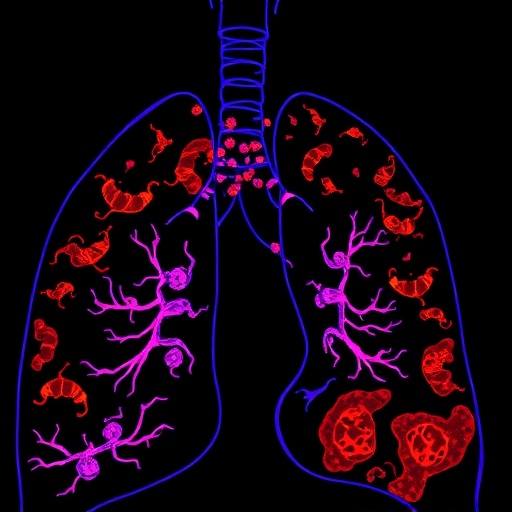
Lung adenocarcinoma is one of the most common forms of lung cancer and remains a major cause of cancer-related death worldwide. Although advances in imaging, molecular testing and targeted treatment have transformed care for some patients, the disease can behave very differently from one person to another. A new study published in the British Journal of Cancer is examining whether a protein called PDLIM2 could help explain that difference—and potentially become both a prognostic biomarker and a target for future therapies.
The research, led by Ashouri, Sun, Krause and colleagues, focuses on the biological and clinical significance of PDLIM2 in lung adenocarcinoma. A prognostic biomarker is a measurable feature that helps indicate how a disease may progress, including the likelihood of recurrence, treatment resistance or reduced survival. A therapeutic target, by contrast, is a molecule or pathway that can be manipulated with a drug or other intervention. The possibility that one protein could serve both roles makes PDLIM2 particularly interesting to cancer researchers.
PDLIM2 belongs to a family of proteins containing LIM domains, compact structural modules that help organize interactions between proteins. These proteins can act as molecular adaptors, bringing signaling components into the same cellular neighborhoods and influencing how cells respond to external stimuli. PDLIM2 has also been linked to the regulation of transcription factors, including nuclear factor kappa B, or NF-κB, a signaling regulator involved in inflammation, immune responses, cell survival and cancer biology. Because these processes are frequently altered in tumors, changes in PDLIM2 activity could have consequences extending far beyond a single cellular pathway.
Lung adenocarcinoma develops through the accumulation of genetic, epigenetic and environmental changes that allow abnormal cells to grow, invade surrounding tissue and spread to distant organs. Tumor cells also interact continuously with immune cells, connective tissue and blood vessels in their surrounding microenvironment. A protein such as PDLIM2 could influence cancer progression directly inside tumor cells or indirectly by altering inflammatory communication between the tumor and its surroundings. Understanding which of these possibilities is most important is essential before the protein can be considered a reliable clinical marker.
The investigators’ work explores whether PDLIM2 levels or activity are associated with meaningful features of lung adenocarcinoma. Such analyses typically compare molecular patterns in tumor and normal tissue, relate gene or protein expression to clinical outcomes, and examine whether a biomarker adds information beyond established factors such as tumor stage, histological characteristics and patient treatment. If PDLIM2 consistently tracks with disease behavior, it could eventually help doctors identify patients whose tumors require closer monitoring or more intensive treatment.
However, a biomarker is not automatically useful simply because it is statistically associated with cancer. For a molecule to become clinically valuable, researchers must establish how accurately and reproducibly it predicts outcomes, whether the result applies across different patient groups, and whether testing can be performed using practical samples and standardized methods. The distinction between correlation and causation is equally important. A high or low level of PDLIM2 may reflect an underlying cancer process without being responsible for it. The study’s therapeutic implications therefore depend on experimental evidence showing whether changing PDLIM2 can alter tumor-cell behavior.
The therapeutic-target question is especially challenging in lung adenocarcinoma, a disease that often contains several cancer-driving alterations at once. Targeted drugs against molecules such as EGFR, ALK, ROS1 and KRAS have produced significant benefits for selected patients, but resistance commonly emerges. Tumors can bypass blocked pathways, acquire new mutations or recruit protective signals from their microenvironment. If PDLIM2 participates in a separate or complementary network, targeting it could theoretically provide another way to disrupt tumor survival or progression. That possibility remains a research hypothesis requiring validation rather than an established treatment strategy.
Laboratory studies will be crucial for determining how PDLIM2 functions in different cellular contexts. Researchers may need to silence or increase the protein in lung adenocarcinoma models, monitor effects on proliferation, migration, invasion and cell death, and test whether PDLIM2 changes the response to existing therapies. Studies using animal models and patient-derived tumor systems could further reveal whether manipulating the protein affects tumor growth in a complex biological environment. At the same time, clinical datasets will be needed to establish whether PDLIM2 has independent prognostic value and whether it can support treatment decisions.
The appeal of the new research lies in its attempt to connect molecular biology with patient outcomes. Modern oncology increasingly depends on biomarkers that do more than describe a tumor; the most useful markers help predict what will happen and guide what should be done next. PDLIM2 could become part of that effort if future studies confirm its role across diverse populations and demonstrate that it can be measured reliably. For now, the work adds to a growing investigation into the signaling architecture of lung adenocarcinoma, where proteins once considered secondary components may hold clues to why some tumors remain controllable while others become aggressive and treatment-resistant.
Cite Scienmag News
Nathaniel Bowman. (August 8, 2026). Study Explores PDLIM2 as Prognostic Biomarker and Treatment Target in Lung Adenocarcinoma. Scienmag. https://scienmag.com/study-explores-pdlim2-as-prognostic-biomarker-and-treatment-target-in-lung-adenocarcinoma/
Nathaniel Bowman. "Study Explores PDLIM2 as Prognostic Biomarker and Treatment Target in Lung Adenocarcinoma." Scienmag, 8 August 2026, https://scienmag.com/study-explores-pdlim2-as-prognostic-biomarker-and-treatment-target-in-lung-adenocarcinoma/. Accessed 4 September 2026.
Nathaniel Bowman. "Study Explores PDLIM2 as Prognostic Biomarker and Treatment Target in Lung Adenocarcinoma." Scienmag. August 8, 2026. https://scienmag.com/study-explores-pdlim2-as-prognostic-biomarker-and-treatment-target-in-lung-adenocarcinoma/


