


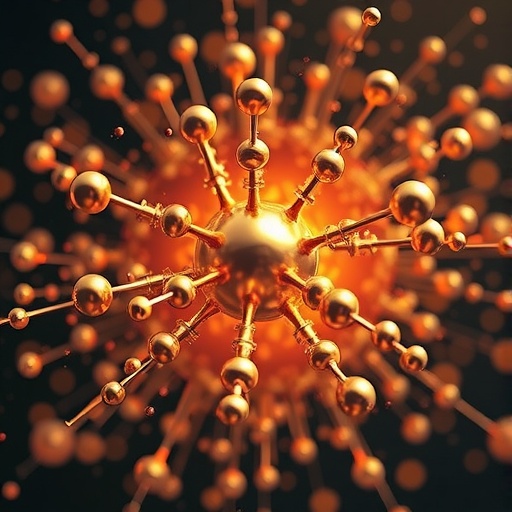
From schools of fish and flocks of birds to microscopic particles that assemble, scatter, and move as though they were alive, active matter is challenging long-held ideas about how collective behavior emerges. These systems are made of individual units that continuously consume energy, either to propel themselves or to influence their surroundings. Now, researchers in Japan have demonstrated a striking example of collective motion in which more than 10,000 ordinary colloidal particles form moving pairs, build temporary clusters, and repeatedly break apart rather than settling into a permanent mass.
The study, led by Professor Yutaka Sumino and Assistant Professor Kiwamu Yoshii of the Tokyo University of Science, focuses on a phenomenon known as nonreciprocal interaction. In a conventional passive system, interactions generally obey action–reaction symmetry: if one particle exerts a force on another, the second particle responds with an equal and opposite force. Nonreciprocal interactions violate this balance. One particle can influence another more strongly than it is influenced in return, creating behavior that is impossible for isolated passive particles in equilibrium.
To build this unusual system, the researchers suspended polystyrene colloids in water between transparent electrodes coated with indium tin oxide. The suspension contained two particle sizes, with radii of approximately 1 and 1.5 micrometers. When the team applied an alternating electric field, fluid began to circulate around the particles through electrohydrodynamic, or EHD, effects. These flows were not simply a passive response to the field: they were generated around each particle and altered the motion of neighboring particles throughout the suspension.
The crucial feature was the difference in particle size. EHD flow strength depends strongly on particle dimensions, so the larger colloids produced substantially stronger flows than the smaller ones. This made the attraction between unlike particles unequal. A large particle could draw a small particle toward it more effectively than the small particle could influence the large one in return. The resulting imbalance produced a form of effective attraction that did not satisfy Newtonian action–reaction symmetry, even though the particles themselves were not equipped with motors or other self-propulsion mechanisms.
When differently sized particles came into contact, they spontaneously formed asymmetric pairs. Each pair had a distinct front and back, rather than the symmetric shape expected from ordinary aggregation. Because the surrounding EHD flows acted differently on the two particles, the pair began to move through the liquid as a self-propelled unit. In effect, one particle “chased” the other, and the coupled structure translated through the suspension. The motion emerged from the interaction between the particles and the driven fluid, not from any internal propulsion system.
As thousands of these active pairs formed, they gathered into larger clusters. Yet the clusters did not behave like ordinary colloidal aggregates, which typically grow as particles continue to attach. Instead, the groups remained dynamic. They repeatedly fragmented, rearranged their internal structure, and reassembled. This process, known as arrested coarsening, prevented the suspension from undergoing unlimited aggregation. The particles continued to attract one another, but the motion generated by the nonreciprocal pairs disrupted the growth of giant, static clumps.
The contrast with a single-size suspension was particularly revealing. When the researchers used particles of only one size, the interactions remained reciprocal because the particles generated comparable EHD flows. Those suspensions gradually developed static crystalline aggregates. The result showed that the persistent cluster dynamics were not caused simply by the electric field or by attractive forces alone. Instead, the combination of unequal particle size, asymmetric EHD interactions, and pair propulsion was essential for producing the continuously evolving structures.
Numerical simulations supported the experimental findings and indicated that nonreciprocal propulsion at the level of individual pairs is the minimal ingredient needed to reproduce the persistent cluster motion. The simulations showed how moving pairs can inject activity into otherwise passive assemblies, driving internal rearrangements and repeatedly interrupting the normal coarsening process. Because the same principles can apply to other systems with unequal responses, the researchers suggest that comparable dynamics may occur in biological collectives, including cell colonies and animal groups, where agents can exert different influences on one another.
The findings offer an experimentally controllable platform for studying nonequilibrium many-body physics on a scale far larger than the small clusters examined in many earlier experiments. They also point toward a broader design principle for programmable materials: by engineering asymmetric interactions rather than giving every component an independent motor, researchers may be able to create materials that assemble, move, divide, and reorganize under external control. Such systems could eventually inspire microrobotic swarms, adaptive materials, and artificial collectives that remain dynamic instead of locking into a fixed structure. As Professor Sumino explains, the work shows how breaking action–reaction symmetry can allow matter to form dynamic order spontaneously—attracting, gathering, and then splitting instead of simply becoming an ever-larger clump.
Keywords
Active matter, nonreciprocal interactions, colloidal particles, electrohydrodynamics, self-propelled particle pairs, arrested coarsening, nonequilibrium physics, collective motion, programmable materials, microrobotics
Cite Scienmag News
Bethany Barker. (August 7, 2026). Tiny Particles Defy Action-Reaction Symmetry to Stay in Motion. Scienmag. https://scienmag.com/tiny-particles-defy-action-reaction-symmetry-to-stay-in-motion/
Bethany Barker. "Tiny Particles Defy Action-Reaction Symmetry to Stay in Motion." Scienmag, 7 August 2026, https://scienmag.com/tiny-particles-defy-action-reaction-symmetry-to-stay-in-motion/. Accessed 4 September 2026.
Bethany Barker. "Tiny Particles Defy Action-Reaction Symmetry to Stay in Motion." Scienmag. August 7, 2026. https://scienmag.com/tiny-particles-defy-action-reaction-symmetry-to-stay-in-motion/


