


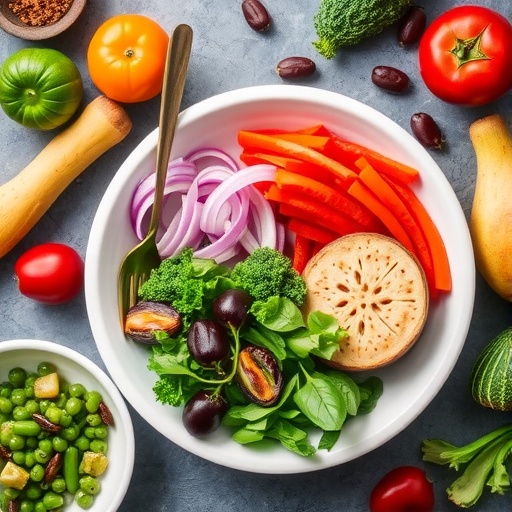
A vegan diet may change not only what people eat, but also how much energy is packed into every bite, according to a secondary analysis of a randomized clinical trial published in JAMA Network Open. The investigation examines whether adopting a diet that excludes meat, dairy products, eggs, and other animal-derived foods is associated with lower dietary energy density—a nutritional measure increasingly linked to body weight, appetite regulation, and long-term metabolic health.
Energy density describes the amount of energy a food provides relative to its weight, usually expressed as kilocalories per gram. Foods rich in water and fiber, such as vegetables, fruits, legumes, and many whole grains, tend to have a lower energy density. By contrast, foods containing substantial amounts of fat or refined carbohydrates can deliver more calories in a smaller physical volume. Two meals may look similar on a plate, yet the higher-energy-density meal can contain far more calories.
The study’s central question is whether a vegan eating pattern changes this balance in a meaningful way. Rather than simply comparing people who already follow different diets, the researchers conducted a secondary analysis of data from a randomized clinical trial. Randomization is important because it reduces the likelihood that differences in health outcomes are explained entirely by pre-existing characteristics, such as age, income, physical activity, health awareness, or previous dieting experience.
The analysis focuses on dietary composition and the relationship between plant-based eating and energy density. A vegan diet can lower energy density when it emphasizes vegetables, fruits, beans, lentils, peas, and minimally processed grains. These foods often contain considerable water and fiber, which add bulk without contributing the same number of calories found in concentrated fats. However, vegan does not automatically mean low-energy-density: oils, fried foods, sweets, refined snacks, and highly processed meat substitutes can all be vegan while remaining calorie dense.
That distinction is central to the science. Energy density can influence how much food people consume before they feel satisfied. Because the stomach responds partly to volume, a meal containing more water and fiber may provide a larger portion for fewer calories. This does not mean that appetite is controlled by a single nutritional variable. Hormones, sensory cues, eating speed, sleep, stress, habitual portion sizes, and the protein and fat content of meals also affect hunger and satiety. Still, energy density offers a measurable pathway through which dietary patterns may influence total energy intake.
The investigators’ approach also highlights why randomized trials can provide a stronger foundation for nutrition research than observational studies alone. In observational research, people who choose vegan diets may differ from nonvegan participants in many ways beyond food choices. They may exercise more, avoid smoking, consume less alcohol, or be more likely to seek preventive health care. A randomized intervention cannot eliminate every source of bias, particularly when participants know which diet they are following, but it can make the comparison more rigorous by assigning the dietary intervention rather than merely observing personal preferences.
If a vegan diet is associated with lower energy density in the trial data, the finding could help explain why plant-based eating patterns are often studied in relation to weight management and cardiometabolic health. Lower-energy-density meals may allow people to eat satisfying portions while consuming fewer calories, potentially creating an energy deficit without requiring strict calorie counting. This mechanism is different from the idea that a diet works solely because it restricts a particular nutrient. Instead, it emphasizes the physical structure of food—the combination of water, fiber, fat, and carbohydrate that determines how much energy is concentrated in each gram.
The analysis should nevertheless be interpreted with care. A secondary analysis examines existing trial data, meaning the research question may not have been the original primary endpoint. Dietary intake is also difficult to measure accurately because participants must remember or record what they eat, and self-reported food data can contain omissions and estimation errors. In addition, the health effects of a vegan diet depend heavily on food quality, duration of adherence, nutritional adequacy, and the comparison diet. Removing animal products without planning for nutrients such as vitamin B12, iron, calcium, iodine, and omega-3 fatty acids can create avoidable risks.
The study therefore does not establish that every vegan diet is inherently healthier, nor does it show that energy density is the only reason a plant-based eating pattern might affect health. Its contribution is more specific: it investigates whether the shift toward vegan eating is accompanied by a measurable change in the amount of energy delivered per unit of food. As interest in plant-based diets continues to surge, that technical detail may prove more informative than broad claims about dietary labels. The question is not simply whether a diet is vegan, but which foods replace animal products—and how those choices reshape the calorie density of the overall diet.
Web References: https://doi.org/10.1001/jamanetworkopen.2026.27483
References: Kahleova H, et al. Secondary analysis of a randomized clinical trial on vegan diet adoption and dietary energy density. JAMA Network Open. DOI: 10.1001/jamanetworkopen.2026.27483.
Cite Scienmag News
Daisy Hatcher. (August 7, 2026). Vegan Diets and Dietary Energy Density: What Science Shows. Scienmag. https://scienmag.com/vegan-diets-and-dietary-energy-density-what-science-shows/
Daisy Hatcher. "Vegan Diets and Dietary Energy Density: What Science Shows." Scienmag, 7 August 2026, https://scienmag.com/vegan-diets-and-dietary-energy-density-what-science-shows/. Accessed 4 September 2026.
Daisy Hatcher. "Vegan Diets and Dietary Energy Density: What Science Shows." Scienmag. August 7, 2026. https://scienmag.com/vegan-diets-and-dietary-energy-density-what-science-shows/


