


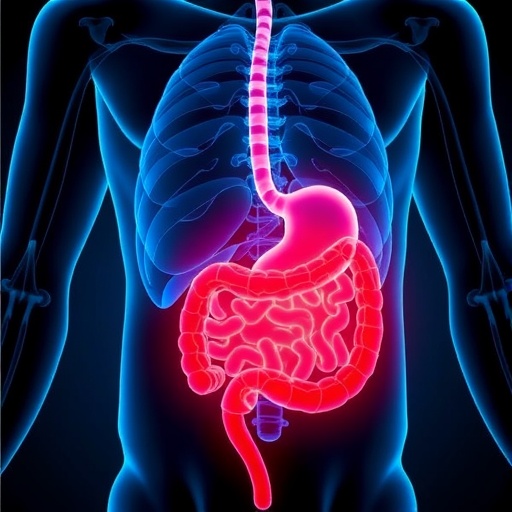
Mechanical forces are emerging as powerful biological signals in the digestive system, and a new review identifies Piezo1 and Piezo2 ion channels as key translators of those forces into cellular activity. These mechanically gated channels respond to tissue stretching, fluid movement, pressure, and compression by opening their pores and allowing sodium and calcium ions to enter cells. The resulting electrical and biochemical signals influence gastrointestinal movement, secretion, immune activity, barrier integrity, pain perception, and cancer progression. The review, published in Genes & Diseases, presents Piezo channels as potential biomarkers and therapeutic targets for a wide spectrum of digestive disorders.
Discovered in 2010, Piezo channels have transformed scientists’ understanding of mechanobiology—the study of how physical forces regulate living cells. When mechanical stress changes the shape of a cell membrane, Piezo proteins undergo conformational changes involving their curved membrane domains, C-terminal regions, and inner helices. This opens a central ion-conducting pore, producing a rapid influx of calcium and sodium. Calcium, in particular, acts as a versatile intracellular messenger, activating networks that control gene expression, cytoskeletal organization, secretion, inflammation, proliferation, and cell survival.
Within the digestive tract, Piezo1 and Piezo2 appear to perform overlapping but distinct functions. Piezo1 is broadly expressed in the stomach, intestinal epithelium, liver, pancreas, enteric nervous system, and other digestive tissues. It helps cells detect changes in pressure and tissue deformation, contributing to ghrelin secretion, intestinal peristalsis, mucus production, bile flow, epithelial repair, and communication between the gut and its microbial inhabitants. Piezo2 has a more specialized role in sensory biology. It is particularly important in mechanosensory neurons, where it helps detect distension, coordinate gastrointestinal reflexes, regulate serotonin release, and transmit signals associated with visceral pain.
The review explains that Piezo-mediated calcium entry can activate several major signaling pathways. These include MAPK cascades, which regulate proliferation and stress responses; RhoA/ROCK signaling, which controls actin remodeling and cellular contractility; PI3K–Akt pathways, which support growth and survival; and the YAP/TAZ system, a mechanosensitive transcriptional network that links tissue stiffness and cell shape to gene expression. Through these pathways, mechanical stress can influence whether cells divide, migrate, produce inflammatory mediators, or remodel their surrounding extracellular matrix. This molecular connection helps explain why abnormal pressure, stiffness, or fluid flow can contribute to disease.
Cancer is one of the most significant areas in which Piezo signaling is being investigated. In hepatocellular carcinoma, increased Piezo1 activity has been associated with tumor invasion, angiogenesis, epithelial–mesenchymal transition, and metastasis. The channel can interact with FAK/Src signaling, transforming growth factor beta pathways, and mechanisms that stabilize HIF-1α under low-oxygen conditions. Together, these effects may help malignant cells survive in physically altered tumor environments, move through surrounding tissues, and recruit blood vessels. High Piezo1 expression has also been linked to more aggressive disease and poorer outcomes in some clinical studies.
In gastric cancer, both channels may contribute to tumor progression, although their effects are not identical. Piezo1 has been connected with cancer-cell proliferation and migration, while Piezo2 expression has been associated with advanced tumor stage, lymph-node involvement, immune-cell infiltration, and reduced survival. The review highlights a signaling axis initiated by Helicobacter pylori infection, in which NF-κB-driven inflammation may increase Piezo1 activity and stimulate YAP1-dependent changes in the tumor microenvironment. This could create a feedback loop in which infection, inflammation, mechanical remodeling, and oncogenic signaling reinforce one another.
Colorectal cancer provides another example of how mechanically sensitive channels may influence malignancy. Piezo1 appears to support the maintenance of cancer stem-like cells, invasion, and metastatic behavior. Piezo2, meanwhile, has been implicated in lymphatic vessel formation and tumor dissemination through the SLIT2/ROBO1/VEGFC pathway. Because tumor growth changes tissue stiffness, interstitial pressure, and extracellular matrix structure, cancer cells may experience mechanical conditions that continuously stimulate Piezo-dependent signaling. These observations raise the possibility that Piezo channels could eventually help predict tumor aggressiveness or guide combination treatments, although their clinical value remains under investigation.
The channels are also involved in inflammatory and functional gastrointestinal diseases. In inflammatory bowel disease, excessive Piezo1 activity may amplify NF-κB signaling and activate the NLRP3 inflammasome, a molecular complex that promotes the release of inflammatory cytokines. Increased calcium signaling can also intensify oxidative stress and weaken epithelial barrier function, allowing damaging substances to cross the intestinal lining. Piezo2 may contribute to visceral hypersensitivity by increasing the responsiveness of sensory neurons to intestinal stretching. In disorders such as irritable bowel syndrome and functional constipation, abnormal Piezo2 signaling could therefore help explain pain, altered sensation, and disrupted serotonin-mediated communication.
One of the clearest examples of pressure-related injury is pancreatitis. In pancreatic acinar cells, mechanical stress can activate Piezo1 and produce excessive calcium influx. Calcium overload may impair mitochondria and trigger premature activation of digestive enzymes inside the pancreas rather than in the intestine, initiating tissue damage and inflammation. Experimental studies suggest that blocking Piezo1 can reduce pancreatic injury in animal models. This finding has attracted interest because pressure-induced activation of the channel might represent an early event that could be targeted before extensive pancreatic damage develops.
Despite the promise of Piezo biology, converting these findings into treatments will be difficult. The channels are widely distributed and perform essential functions in healthy organs, so a systemic drug could interfere with normal touch sensation, vascular regulation, immune responses, or tissue repair. Researchers are therefore exploring more precise strategies, including tissue-selective inhibitors, gene-silencing methods, CRISPR-based interventions, organoid models, and nanoparticle delivery systems. The development of drugs that can distinguish pathological from physiological Piezo activity will be especially important. As mechanobiology becomes increasingly central to digestive disease research, Piezo1 and Piezo2 offer a compelling explanation for how physical forces can become inflammation, pain, tissue damage, or cancer—and may provide new ways to interrupt those processes.
Web References: https://doi.org/10.1016/j.gendis.2025.101925
References: Xiangyun Yan, Weijian Zeng, Peitao Ma, Junpeng Yao, Tingting Ma, Ying Li, “Piezo ion channels in the digestive system: Mechanotransduction pathways and therapeutic targeting strategies,” Genes & Diseases, Volume 13, Issue 5, 2026, Article 101925.
Cite Scienmag News
Nathaniel Bowman. (August 6, 2026). Piezo Ion Channels Identified as Therapeutic Targets in Digestive Diseases. Scienmag. https://scienmag.com/piezo-ion-channels-identified-as-therapeutic-targets-in-digestive-diseases/
Nathaniel Bowman. "Piezo Ion Channels Identified as Therapeutic Targets in Digestive Diseases." Scienmag, 6 August 2026, https://scienmag.com/piezo-ion-channels-identified-as-therapeutic-targets-in-digestive-diseases/. Accessed 4 September 2026.
Nathaniel Bowman. "Piezo Ion Channels Identified as Therapeutic Targets in Digestive Diseases." Scienmag. August 6, 2026. https://scienmag.com/piezo-ion-channels-identified-as-therapeutic-targets-in-digestive-diseases/


