


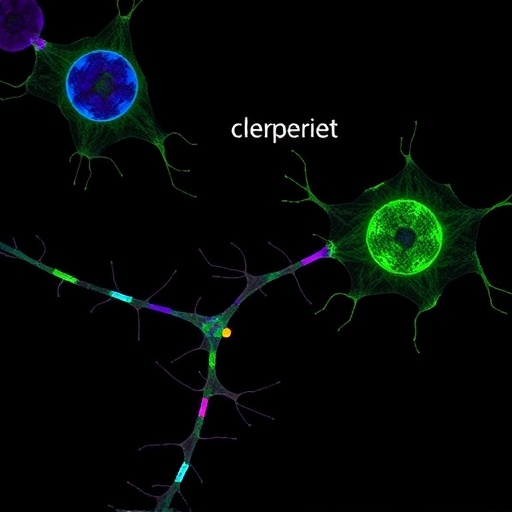
Myotonic dystrophy type 1, or DM1, has long been recognized as a disease of defective RNA processing, but new research suggests that its damage begins even earlier in the formation of muscle fibers. In a study published in Nature Communications, V. Todorow, X. Lornage, S. Hayashi and colleagues report that depletion of the RNA-binding protein MBNL drives abnormal behavior in muscle stem cells and produces immature populations of myonuclei. The findings offer a new explanation for how molecular defects in DM1 become embedded within the cellular architecture of skeletal muscle.
DM1 is caused by an expanded stretch of CTG DNA repeats in the DMPK gene. When the gene is transcribed, the resulting RNA contains long CUG repeat sequences that accumulate inside the nucleus and bind proteins required for normal RNA maturation. Among the most important of these proteins are MBNL1 and MBNL2, members of the muscleblind-like family. By trapping MBNL proteins, the expanded RNA disrupts alternative splicing, a process that enables cells to produce different protein versions from the same gene. This molecular disturbance contributes to muscle weakness, myotonia, respiratory complications and other symptoms associated with the disease.
The new study focuses on a less explored consequence of MBNL loss: its effect on muscle stem cells, also known as satellite cells. These cells remain largely quiescent until muscle is damaged, then activate, multiply and fuse with one another or with existing muscle fibers. Fusion allows the developing fiber to acquire additional nuclei, called myonuclei, which support the enormous biosynthetic demands of mature skeletal muscle. Because each myonucleus controls gene expression in a local region of the fiber, the timing and quality of stem-cell fusion are crucial for maintaining healthy muscle tissue.
According to the researchers, reducing MBNL activity changes this regenerative program. Instead of behaving solely as a defect in mature muscle cells, MBNL depletion appears to influence how stem cells progress toward fusion and how their nuclei mature afterward. The result is an abnormal cellular landscape in which muscle fibers contain nuclei retaining features associated with earlier developmental stages. These immature myonuclear states may be unable to perform the specialized gene-expression programs required for efficient contraction, structural maintenance and metabolic adaptation.
The finding is significant because skeletal muscle is not a uniform tissue at the molecular level. A mature fiber can contain hundreds of nuclei, each positioned beneath the cell membrane and assigned regional responsibilities. Some nuclei regulate neuromuscular junction components, while others support the contractile apparatus or respond to mechanical stress. The study indicates that MBNL depletion may disturb this division of labor by altering the origin and developmental trajectory of newly incorporated nuclei. In DM1, muscle weakness could therefore reflect not only faulty splicing within established fibers but also the continual addition of inadequately matured nuclear units.
Stem-cell fusion is a highly coordinated process involving cell adhesion, membrane remodeling, cytoskeletal reorganization and changes in gene activity. MBNL proteins are best known for controlling RNA splicing and stability, but their loss can affect multiple layers of cellular regulation. By connecting MBNL depletion to fusion behavior, the researchers place RNA-processing defects upstream of a physical remodeling event in muscle tissue. This provides a mechanistic bridge between the expanded repeat RNA at the heart of DM1 and the long-term deterioration of muscle regeneration.
The study also helps explain why DM1 can be difficult to treat with approaches aimed only at mature muscle fibers. If satellite cells are exposed to abnormal MBNL activity during activation and fusion, they may generate myonuclei with persistent developmental defects. Those nuclei could remain within fibers and continue expressing inappropriate or incomplete gene programs. A therapy that removes toxic repeat RNA from existing cells might therefore need to be combined with strategies that restore healthy stem-cell function and promote the maturation of newly formed myonuclei.
The researchers’ observations may have implications beyond DM1. Muscle regeneration depends on the ability of stem cells to produce nuclei that are correctly specified, positioned and integrated into existing fibers. Similar principles may apply to other disorders in which regeneration is incomplete or abnormal. The work also reinforces the idea that RNA-binding proteins can influence tissue organization indirectly: by controlling the fate of individual cells, they can reshape the architecture and performance of an entire organ.
Important questions remain. It is not yet clear how long immature myonuclear states persist in human DM1 muscle, whether they can be reversed after MBNL function is restored, or which individual RNA-processing events are most responsible for the altered fusion response. Future studies will need to determine whether correcting MBNL depletion in satellite cells improves regeneration in animal models and patient-derived systems. For now, the research presents DM1 as a disease that disrupts both the molecular identity of muscle cells and the cellular construction process that builds muscle fibers in the first place.
Cite Scienmag News
Drew Townsend. (August 6, 2026). MBNL Loss Drives Stem Cell Fusion and Immature Myonuclei in DM1. Scienmag. https://scienmag.com/mbnl-loss-drives-stem-cell-fusion-and-immature-myonuclei-in-dm1/
Drew Townsend. "MBNL Loss Drives Stem Cell Fusion and Immature Myonuclei in DM1." Scienmag, 6 August 2026, https://scienmag.com/mbnl-loss-drives-stem-cell-fusion-and-immature-myonuclei-in-dm1/. Accessed 4 September 2026.
Drew Townsend. "MBNL Loss Drives Stem Cell Fusion and Immature Myonuclei in DM1." Scienmag. August 6, 2026. https://scienmag.com/mbnl-loss-drives-stem-cell-fusion-and-immature-myonuclei-in-dm1/


