


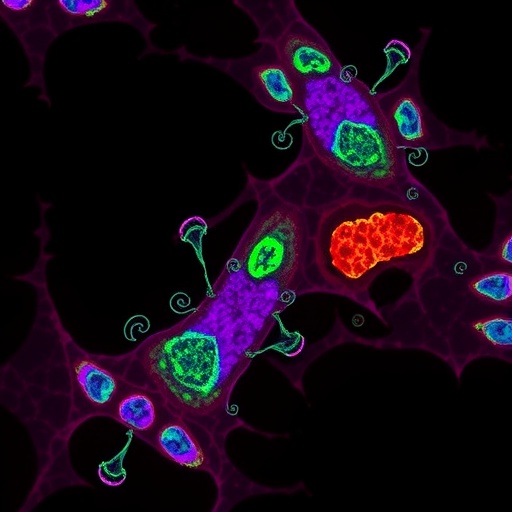
A new study reports that infection with a mouse-adapted form of the Omicron BA.1 variant can leave behind prolonged inflammation and fibrotic changes in the lungs, challenging the assumption that Omicron-lineage viruses necessarily cause only short-lived or mild respiratory disease. Published in npj Viruses, the work by J.M. Powers, S.R. Leist, L.E. Adams and colleagues examines how viral adaptation and host responses may shape the longer-term consequences of coronavirus infection. The findings add to growing evidence that the severity of acute disease and the persistence of tissue damage are not always directly linked.
Omicron BA.1 emerged with a large collection of mutations that enhanced its ability to spread in human populations and altered its interactions with host cells. Compared with earlier variants, BA.1 generally showed differences in tissue tropism, immune evasion and the efficiency with which it used cellular entry pathways. In the study, researchers used a mouse-adapted version of BA.1, an experimental virus modified through adaptation to replicate efficiently in mice. Such models allow scientists to investigate disease mechanisms under controlled conditions, although their results must be interpreted carefully before being applied to human infection.
The central observation is that the infection was associated with inflammation that persisted after the initial phase of viral illness. Inflammation is normally a protective response: immune cells detect infected or damaged tissue, release signaling molecules and coordinate the removal of pathogens. When this response does not resolve appropriately, however, it can become a source of injury. Continuing recruitment of immune cells, sustained production of inflammatory mediators and repeated damage to the epithelial lining of the airways can interfere with the lung’s ability to restore its normal structure.
The report also describes pulmonary fibrosis, a process in which injured lung tissue is progressively replaced or reinforced by excessive extracellular matrix, including collagen. Fibrosis can make the normally flexible lung stiffer and reduce the efficiency of gas exchange. The alveoli, the microscopic sacs where oxygen enters the bloodstream and carbon dioxide is removed, depend on a thin and carefully organized barrier. Inflammatory damage and abnormal repair can thicken this barrier, disrupt alveolar architecture and reduce respiratory performance even after infectious virus has declined.
The study’s importance lies partly in the distinction between viral clearance and recovery of the organ. A host may control or eliminate active virus while inflammatory programs remain switched on. Damaged cells can continue to release danger signals, and immune pathways activated during infection may persist after the original trigger has diminished. Fibroblasts, the connective-tissue cells responsible for producing structural proteins, may then adopt an activated state and deposit collagen in places where temporary repair would normally be sufficient. This separation between the end of acute infection and the end of tissue injury is a major concern in respiratory viral disease.
Mouse-adapted models are particularly useful for examining these processes because they can reveal changes across the entire course of infection, from early viral replication to later remodeling of lung tissue. They also make it possible to compare pathological responses under standardized genetic and environmental conditions. At the same time, mice differ from humans in airway anatomy, immune regulation and susceptibility to coronavirus infection. The adaptation process itself can introduce biological features that are not identical to those of viruses circulating in people. The findings therefore provide mechanistic clues rather than a direct forecast of outcomes for every human case of Omicron infection.
The observation of persistent pathology after BA.1 infection raises questions about which viral and host factors determine whether lung inflammation resolves or progresses toward scarring. Viral proteins may influence innate immune signaling, while the amount and location of viral replication can determine which cell populations are injured. Host genetics, age, pre-existing lung disease and the timing of immune responses are also likely to affect the balance between protection and pathology. In addition, inflammation in the lung is shaped by communication among epithelial cells, macrophages, lymphocytes, endothelial cells and fibroblasts, creating a complex network that can either restore tissue function or sustain damage.
The findings may also help explain why respiratory recovery can be uneven after coronavirus infection. Symptoms such as persistent cough, breathlessness and reduced exercise tolerance can arise from several causes, including airway irritation, vascular changes, impaired immune regulation and structural remodeling. Fibrosis is only one possible contributor, and the presence of inflammatory or fibrotic changes in an experimental model does not establish that the same process occurs at the same frequency in humans. Nevertheless, identifying the cellular pathways associated with prolonged injury could support the development of biomarkers for patients at risk of incomplete recovery.
From a therapeutic perspective, the study underscores the need to consider both antiviral and anti-inflammatory strategies. Antiviral treatment is most effective when it limits replication before extensive tissue injury occurs, while carefully selected immunomodulatory approaches may be useful when excessive inflammation becomes the dominant problem. Treatments aimed at fibrotic pathways are more challenging because repair mechanisms are necessary for healing, and broadly suppressing them could create new complications. Understanding when inflammation changes from protective to harmful will therefore be essential for designing interventions that preserve antiviral immunity without accelerating tissue scarring.
Powers and colleagues’ report adds a cautionary dimension to the study of Omicron biology. A variant that causes less severe acute disease in one setting may still produce substantial and persistent tissue responses under particular conditions, especially in a susceptible host or an experimental model with enhanced replication. The work reinforces the importance of monitoring the aftermath of infection rather than focusing exclusively on early symptoms or viral load. It also highlights a broader principle in viral science: the long-term effects of an infection are determined not only by the virus itself, but by the duration, location and regulation of the host response.
Cite Scienmag News
Kristina Jarvis. (August 5, 2026). Mouse-Adapted Omicron BA.1 Infection Causes Persistent Lung Inflammation and Fibrosis. Scienmag. https://scienmag.com/mouse-adapted-omicron-ba-1-infection-causes-persistent-lung-inflammation-and-fibrosis/
Kristina Jarvis. "Mouse-Adapted Omicron BA.1 Infection Causes Persistent Lung Inflammation and Fibrosis." Scienmag, 5 August 2026, https://scienmag.com/mouse-adapted-omicron-ba-1-infection-causes-persistent-lung-inflammation-and-fibrosis/. Accessed 4 September 2026.
Kristina Jarvis. "Mouse-Adapted Omicron BA.1 Infection Causes Persistent Lung Inflammation and Fibrosis." Scienmag. August 5, 2026. https://scienmag.com/mouse-adapted-omicron-ba-1-infection-causes-persistent-lung-inflammation-and-fibrosis/


